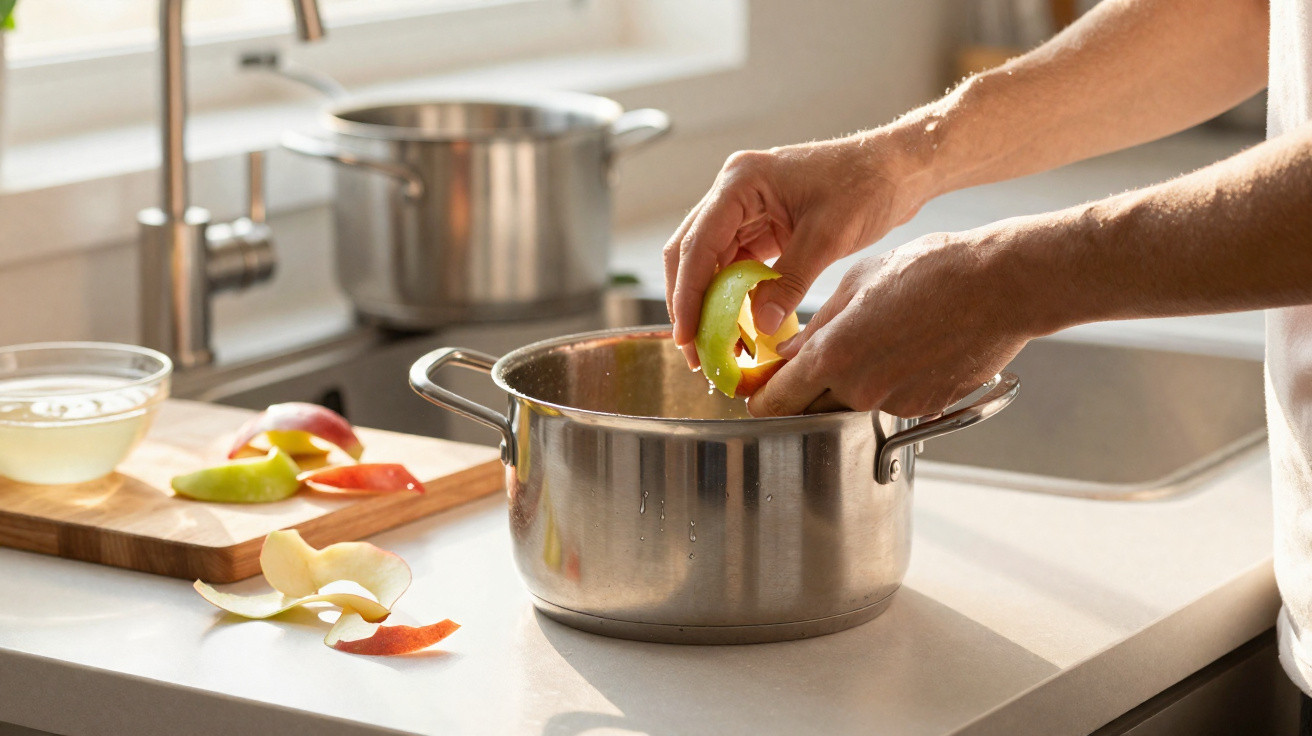
You scour, you groan, and you consider buying yet another bottle with a lemon fragrance. Then a strange old suggestion comes back to you: the apple peels destined for the bin may make your cookware brighter than polish can. It is the sort of advice a grandmother insists upon, but never gets around to recording.
I recall seeing an elderly neighbour quietly transform a lacklustre stockpot. Her hands moved swiftly and confidently while peels floated in a small pan of boiling water, and condensation clouded the kitchen window. The steam carried the scent of an unsweetened apple pie, while the metal slowly began to brighten in patient glints around its curve. Once the pot had cooled, she worked the warm peels over the steel before polishing it with a soft cloth, until her reflection was clear again in the lid. Watching the steel come alive felt like discovering a modest bit of magic at the back of a kitchen drawer. Just apple peels.
Why apple peels can outperform polish
Although apple peels appear to be mere scraps, they contain a blend of mild acids and natural compounds that stainless steel responds to surprisingly well. Malic acid helps ease away mineral cloudiness and heat marks, while their light waxes and pectins create enough slip for a cloth to glide rather than scrub harshly. Heating the peels releases more of this understated cleaning ability, making kitchen waste into an effective cleaner that does not sting, produce harsh fumes or leave an artificial lemon smell.
What remains with me is that the pot was not glossy in an ostentatious way; it had an honest brightness, like sunlight after rainfall. My neighbour said her mother had taught her the method, having learnt it from a teacher in a wartime domestic-science class where nothing was squandered - certainly not shine, and never peels. At a time when approximately one third of edible food is binned, a small habit like this sends waste back into service and gives it another purpose.
There is practical chemistry behind the idea too, making it more than inherited kitchen wisdom. Malic acid is a mild chelator, meaning it can bind to calcium and magnesium deposits from hard water and lift them away like a gentle lever. Heated peel water can soften heat discolouration without harming the chromium oxide layer that makes stainless steel stainless. This is important because forceful abrasives may scratch the grain and allow stains to return more quickly. A peel is a gentle implement, rather than a sledgehammer, and that is precisely its advantage.
How to make your stainless steel shine with apple peels
Begin with a fresh surface: wash the pot or pan as usual with mild washing-up liquid to remove grease that could prevent the peels from working, then rinse it and leave it slightly damp. Put a handful of fresh apple peels into the pot, add enough water to cover them by 2.5–5 cm, and bring it to an active simmer for 10–15 minutes so that the liquid takes on a mildly tart quality. Allow the water to cool until it is comfortably warm, then rub the peels over the steel in slow strokes following the grain. Finish by drying and buffing with a soft microfibre cloth, taking the surface from respectable to gleaming.
For persistent rainbow colouring caused by high heat, repeat the simmering stage and leave it to sit a little longer, allowing the warmth to loosen the tint before rubbing. A small pinch of fine salt on the peel provides just enough extra friction for difficult areas without scratching, while a drop of water on the cloth helps prevent streaks as you dry. Realistically, this is not something anyone does every day, so think of it as a monthly refresh or a before-the-dinner-party routine that makes you pleased to put a pot on the table.
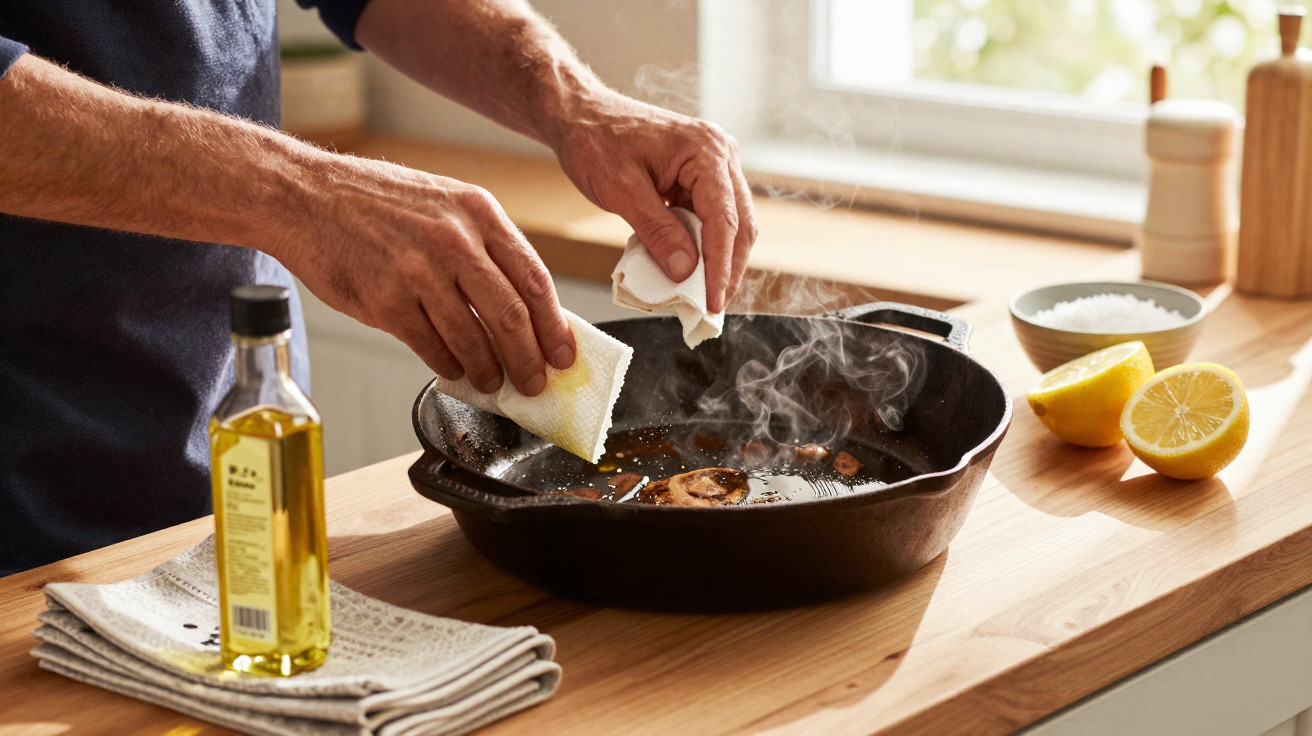
A few minor issues can arise, though nearly all are easy to avoid. Do not use peels on non-stick interiors or seasoned cast iron, and avoid soft aluminium, where the acid can be too strong and leave a dull area. Rinse thoroughly after rubbing so that no trace of sugar remains to caramelise the next time you cook. Keep every movement in the direction of the grain to maintain the subtle natural sheen that stainless steel develops.
“It feels like cheating,” my neighbor said, holding the lid up to the light, “but it’s the kind of cheating that saves you money and keeps one more plastic bottle on the shelf.”
- Choose fresh peels; old, dried peels will not release sufficient malic acid.
- Simmer the peels in the exact pot you wish to restore for focused results.
- Polish with a clean, lint-free cloth so fine dust does not leave streaks.
- A pea-sized amount of mineral oil can enhance shine on exteriors; do not use it inside.
- Where water is particularly hard, use filtered water for the final rinse.
Beyond the shine
What appeals to me about this method is not only the mirror-like finish, but also how it returns the kitchen to a calmer, more thrifty place: the last bit of an apple restores the last bit of a pan. Everyone knows the feeling of facing a piled-up sink, when spending money on a solution seems more tempting than noticing the straightforward answer already close at hand. A peel is about as straightforward as it gets. The resulting shine is not flashy but deserved, and when you next glimpse a clear reflection in a lid, you may think of the hands that passed such knowledge on and the small, persistent pleasures that still make a home feel like home.
| Key point | Detail | Benefit for the reader |
|---|---|---|
| Malic acid from peels | Gently removes hard-water marks and heat tints without scratching | Brings back shine while preserving the steel’s passive layer |
| Simmer, then rub | A warm peel infusion strengthens cleaning action, and the peels act as a soft scrubber | An inexpensive, non-toxic approach with visible results |
| Finish by buffing | Microfibre and gentle strokes along the grain prevent streaking | Delivers a mirror-like look that lasts longer between cleans |









Comments
No comments yet. Be the first to comment!
Leave a Comment