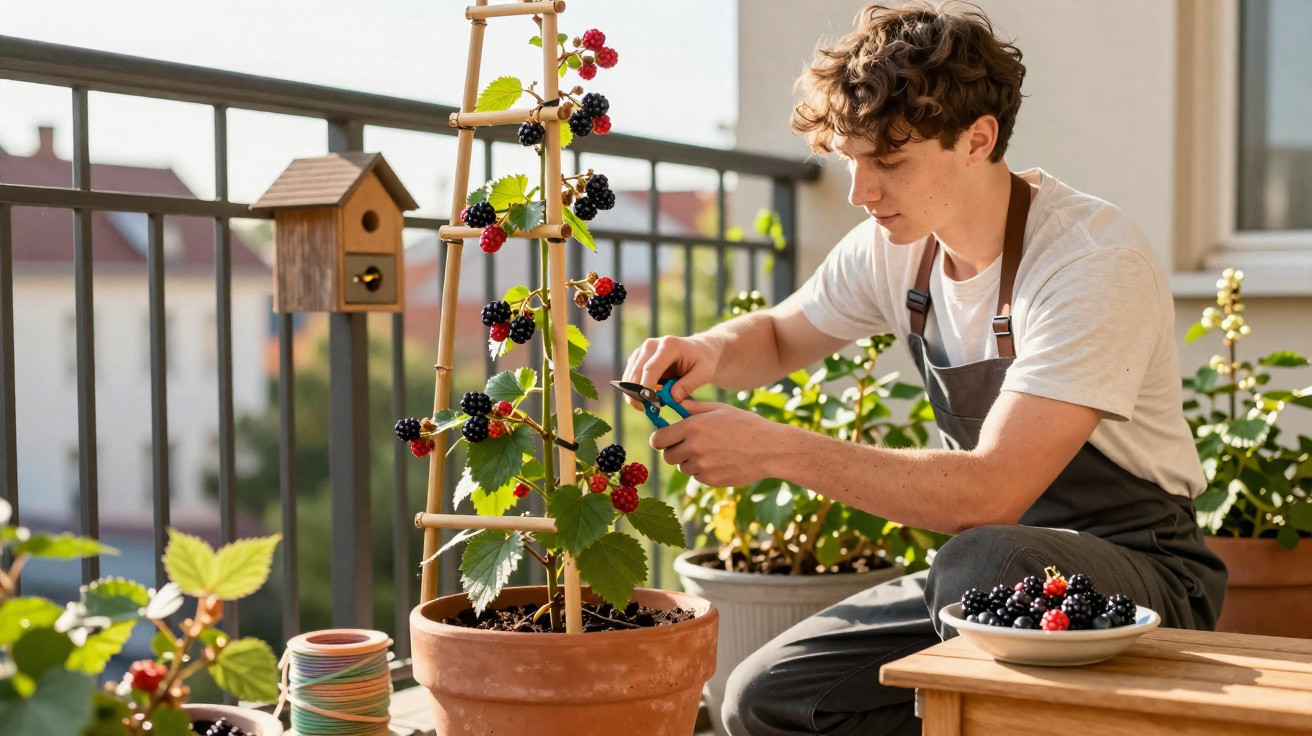
Across cities in the US and UK, increasing numbers of gardeners are transforming tight outdoor spots into fruitful mulberry patches. With sharp secateurs, generous containers and plenty of patience, they are drawing remarkably sweet crops from the smallest of spaces.
Why mulberries are enjoying a small-space revival
Mulberries were once associated with grand gardens and historic estates. Their trees grew enormous, their fruit had a brief shelf life, and their tendency to create a mess was infamous. That perception is rapidly evolving. Plant breeders are introducing more compact cultivars, container-growing methods are advancing, and home gardeners want fruit that is both practical and evocative of the past.
Mulberries now sit in the same conversation as dwarf apples and patio figs: real fruit trees scaled down for renters and balcony gardeners.
Compared with fussier fruit crops, mulberries cope better than many trees with pruning, irregular watering and less-than-perfect soil. They begin fruiting young, commonly within two to three years, while certain cultivars produce over several weeks rather than during one hectic weekend.
For households facing higher food costs alongside ever-smaller outdoor areas, this mix has real appeal. One carefully maintained mulberry in a container can yield bowls of fruit for eating fresh, freezing, jams and syrups, all without needing a lawn.
Choosing the right mulberry for tight spaces
A courtyard or roof terrace is not suitable for every mulberry. Given the chance, some varieties will still try to reach 9 m. The current move towards urban growing is being led by compact, or naturally less vigorous, cultivars that tolerate firm pruning well.
Varieties that stay relatively manageable
- Dwarf everbearing mulberry – Usually reaches 1.8–3 m in a container, crops across a long season, and typically produces dark, sweet berries.
- ‘Illinois Everbearing’ – Not a genuine dwarf, but exceptionally productive and highly responsive to pruning; it suits larger patios and small gardens better.
- Black mulberry (Morus nigra) – Slow-growing and naturally compact, producing some of the most fragrant and complex-flavoured berries.
In the UK, gardeners commonly choose black mulberry for its flavour, whereas many urban gardeners in the US favour dwarf everbearing forms that tolerate containers on hot decks and fire escapes. Suppliers in both markets are seeing a steady rise in orders for grafted, container-ready trees instead of field-grown whips.
| Priority | What to look for in a mulberry |
|---|---|
| Space | A compact habit, described as dwarf or suitable for patios, ideally grafted onto a restrained rootstock. |
| Flavour | Black or deep-purple fruit, which offers more sugar and a richer flavour than many white types. |
| Climate | Cold-hardy forms for northern states and most of the UK; heat-tolerant selections for southern US cities. |
| Use | Long-cropping cultivars for fresh snacking; a heavier single flush for making jam or wine. |
Growing mulberries in containers: the practical shift
This new enthusiasm for mulberries in limited spaces is less about novelty than technique. Gardeners are handling these trees as though they were oversized berry bushes: giving their roots a restricted yet fertile setting, then controlling the canopy through annual pruning.
Creating a portable mulberry “home”
Most specialists now favour substantial, robust containers over slim ornamental pots. A larger vessel allows the roots to secure the plant and retain sufficient water without requiring continual emergency watering.
- Container size: 40–75 litres for a balcony tree, with larger tubs or half-barrels for small gardens.
- Drainage: Use several suitably large holes and lift the pot slightly on feet or bricks so that water can drain freely.
- Growing medium: Combine peat-free compost, loam, and coarse grit or bark to provide structure.
- Position: Give the tree at least six hours of sunshine in most climates, while allowing some afternoon shade in exceptionally hot cities.
Think of a potted mulberry less as décor and more as a long-term fruit appliance that needs a solid, breathable container and regular servicing.
Watering routines can determine whether these trees thrive or fail. During their first two seasons, young mulberries in pots need reliably moist compost, particularly as their roots spread through the entire soil volume. Afterwards, many gardeners move to occasional deep watering instead of daily small doses. This promotes hardier roots and reduces sulky growth during heatwaves.
Pruning mulberries for sweet fruit in small spaces
Most social-media images of compact mulberry “lollipops”, or trees fan-trained against courtyard walls, are the result of a disciplined winter routine using sharp tools. In a confined area, pruning has two key purposes: it maintains a low, open canopy and directs the tree’s energy towards fruit rather than upward growth.
An annual routine for compact trees
Gardeners who make mulberries work in small spaces generally follow a schedule centred on two main pruning sessions:
- Structural prune in late winter: Take out crossing branches, cut back tall leaders to the preferred height, and thin congested shoots from the centre.
- Summer tidy: Pinch out or shorten vigorous water shoots and any growth likely to shade balconies or neighbours’ windows.
In the UK, this winter pruning often takes place from February to early March. Across much of the US, it is done after the worst cold has passed but before the sap begins to rise. The aim is not an immaculate, symmetrical outline; it is a tree that can be picked comfortably without ladders, while allowing enough light to reach its fruiting spurs.
Regular, confident pruning tends to give fewer but better berries, with higher sugar and fuller colour, especially on black mulberry cultivars.
Urban gardeners find that drastic, infrequent cutting can trigger stressed growth and long, unproductive branches. Smaller, regular annual cuts appear to limit that response, training the tree into a dependable compact shape that carries fruit close to its main framework.
Patience, pollinators and the first genuinely sweet harvest
The turn towards mulberries for small spaces reflects a broader change: fruit trees are increasingly treated as long-term housemates rather than instant decoration. A tree’s first year in a pot may produce only a few berries, and many specialists now recommend removing most flowers in year one so the roots can become established.
The sugar timeline
Mulberries have an understated secret: their flavour develops as the tree gets older. Gardeners in both warm and cool regions see a comparable progression.
- Year 1–2: Light crops, with fruit that can be less flavourful, particularly on stressed young trees.
- Year 3–4: Clearly sweeter berries, more dependable sizing and heavier sets following balanced pruning.
- Year 5 and beyond: Consistent yields and deeper, wine-like flavours in many black and dark-purple cultivars.
Pollinators can support this progression. In built-up areas, the availability of bees and hoverflies, as well as wind movement, may be inconsistent. Some balcony gardeners address this by placing small pots of flowering herbs-thyme, marjoram and chives-around the mulberry container. This creates a miniature route for insects between windowsills and courtyards.
The sweetest mulberries usually come from trees that have been allowed to settle in one spot for several seasons, with a fairly calm routine of water, light and pruning.
Managing mess, neighbours and the realities of balcony fruit
The longstanding criticism of mulberries remains true: ripe berries stain. On terraces and in shared courtyards, this creates genuine practical concerns. The newer approach is to manage the issue through placement and timing rather than deny that it exists.
- Put containers where fallen berries land on soil, gravel or a sacrificial mat, rather than light-coloured paving.
- Angle the canopy slightly towards your own area, instead of allowing it to overhang shared walkways or parked vehicles.
- Pick frequently during the height of the season-every day or two-to minimise fallen fruit.
Some landlords now include fruit trees within planting plans but require dark, textured surfaces below them. Others request that tenants restrict a tree’s height and spread, again making regular pruning essential. Discussion of “edible landscaping” is slowly moving beyond herb boxes towards fully fruiting trees in mixed-use developments.
Beyond the berry bowl: why the trend is enduring
Mulberries grown in small spaces offer more than food for the people who own them. They provide gentle summer shade, attract birds to hard-landscaped courtyards and offer children raised far from traditional orchards a quiet lesson in the seasons.
Health researchers observe that caring for fruit trees can encourage people to go outside for brief, recurring jobs, such as watering, checking ripeness and trimming an errant shoot. These low-impact periods of activity throughout the week closely match public-health advice on gentle, sustainable exercise.
There is also an unspoken financial consideration. As soft-fruit prices rise and production falls in some commercial areas because of heat and water pressure, a dependable balcony crop can seem less like a pastime and more like modest protection against uncertain supply-particularly for households that already enjoy cooking and preserving at home.
What comes after mulberries: related ideas for tiny fruit gardens
After mastering containers, pruning and patience with mulberries, many gardeners apply the same principles to other crops. Columnar apples, cordon pears and fan-trained peaches can occupy unused corners beside walls and fences. Tayberries and blackberries can be trained along balcony rails, making use of vertical space instead of taking up floor area.
Some designers now describe “fruit stacks”: combining early and late cultivars, varied root depths and contrasting heights within one compact spot. A large mulberry container might stand behind shallow planters of alpine strawberries, while a lightweight trellis above supports autumn raspberries.
The challenges are genuine: balconies can be overloaded, plants may become rootbound, water can drip on neighbours, and trees may struggle with heat held by glass and concrete. Yet for city residents prepared to learn, measure and adapt, the benefits are clear: warm, sun-softened berries picked within reach, no car trip, no packaging, and the quiet pleasure of helping a tree flourish where, until recently, people assumed only geraniums could survive.















Comments
No comments yet. Be the first to comment!
Leave a Comment