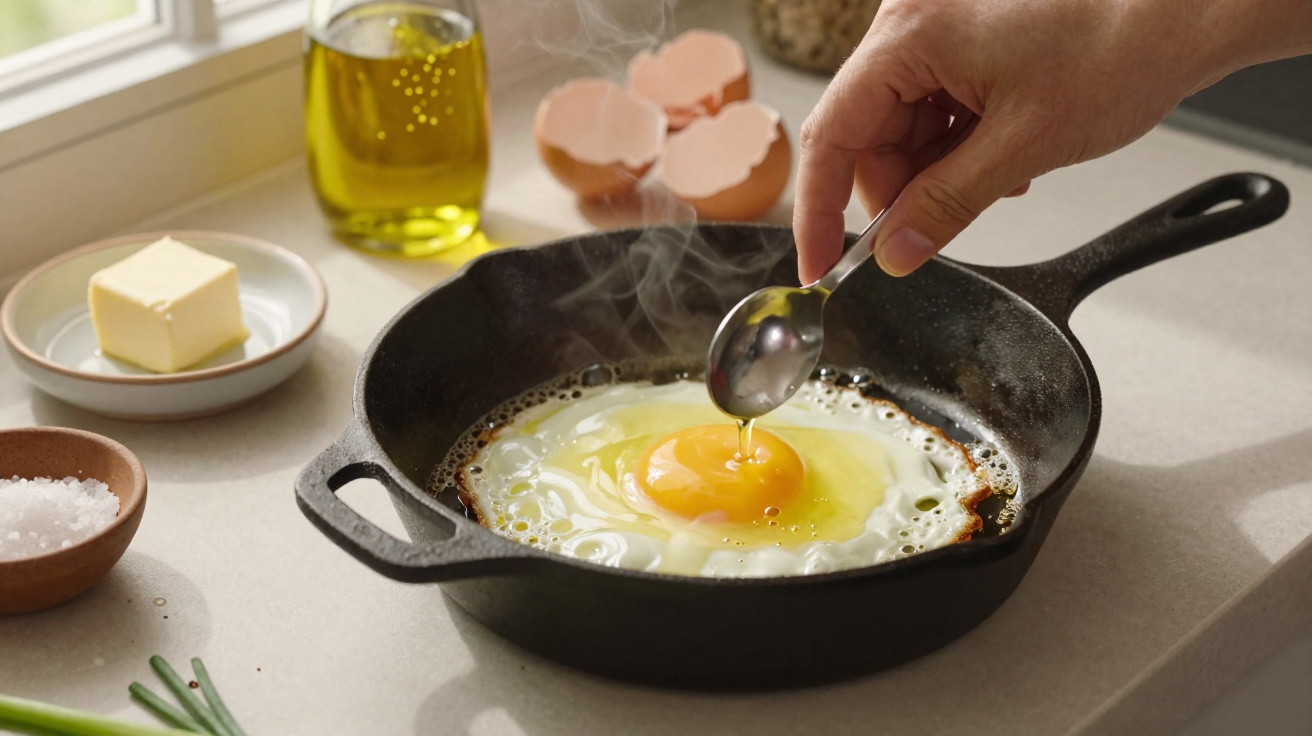
Fried eggs are often treated as a beginner’s recipe. Crack an egg, put it in the pan and wait – job done. In reality, things frequently go wrong: scorched edges, rubbery whites, or eggs that tear when turned or lifted out. A US celebrity chef explains why choosing the fat is not a matter of “either/or”, but of “both” – and precisely how the combination works.
Why fried eggs are not as simple as they seem
Anyone who cooks regularly will know the issue: fried eggs stick to the pan or split as they are removed. Stainless-steel pans make the task even trickier, although non-stick pans are not completely foolproof either. Then there is the aim of achieving the ideal texture:
- gently crisp, golden edges
- whites that are set without becoming rubbery
- a yolk that remains soft and creamy inside
Getting all three elements right at once is something of an art. Two things are crucial: the temperature of the pan and the fat added to it.
Butter or oil – the enduring kitchen debate
Many kitchens are divided into two camps. Some cooks swear by oil, while others favour butter. Each has compelling advantages:
- Oil generally handles higher temperatures and helps prevent sticking.
- Butter adds flavour and creates attractively browned edges.
Yet neither option is without drawbacks. Butter on its own browns quickly and may burn well before the egg has cooked through. Oil alone often contributes too little flavour and does not create the same delicate toasted notes as butter.
The professional chef’s trick: he combines oil and butter, making use of the strengths of both fats at the same time.
How Gordon Ramsay combines butter and oil
For his fried eggs, the television chef uses a blend rather than relying on a single fat. The method is straightforward to recreate at home:
- Preheat a pan over a medium to moderately high heat.
- Pour in a generous amount of neutral vegetable oil.
- Add a good knob of butter – not too little, as it should visibly melt.
- Wait until the butter is foaming but has not yet turned dark.
This is when the eggs go in: the chef cracks them straight into the pan. The hot fat rapidly sets the proteins in the whites without overcooking the yolks.
Why this combination works so well
| Component | Main role in the pan |
|---|---|
| Butter | Provides flavour, delicate toasted notes and lightly crisp edges on the egg whites. |
| Oil | Raises heat resistance, acts as a non-stick layer and stops the butter from burning too quickly. |
The oil forms a thin layer across the pan, reducing the risk of severe sticking. Butter supplies a nutty flavour and allows the edges to sizzle appealingly without immediately blackening, as the oil moderates sudden spikes in temperature.
The crucial movement in the pan
The celebrity chef does not depend on the fat blend alone. The manual technique matters too. As soon as the eggs are sitting in the foaming mixture, the next move follows: briefly take the pan off the hob straight away.
The key technique then begins. By moving the pan in a circular motion, the chef lets the eggs “travel” around it. As the pan is swirled, the hot butter-and-oil mixture continually runs around and over the egg whites.
By circling the pan, the fat coats the eggs like a mantle – the whites cook evenly while the yolk stays soft.
The result is similar to the classic technique of basting with hot fat, except that the whole pan is moved instead. Its advantage is that no spoon is needed, while the egg whites cook very evenly within seconds.
Seasoning and finishing touches like a restaurant
While the eggs are cooking, the chef scatters over salt, freshly ground pepper and a little heat – chilli, for example, or another spicy element. Just before the eggs leave the pan, it is returned to the hob once more. The eggs remain there for only a few moments.
At this final stage, sauces such as Sriracha or Worcestershire sauce can be added to the fat, where they lightly bind to the surface of the eggs. This creates a savoury coating with an extra layer of flavour. It is not essential, but it is an interesting option for anyone who enjoys more boldly seasoned fried eggs.
Practical tips for home cooking
Anyone wanting to try this method can adapt several details to suit their own taste:
- Choose the oil: Neutral oils such as rapeseed or sunflower oil work particularly well. Olive oil is also suitable, although it brings a distinctive flavour of its own.
- Adjust the butter quantity: Do not be overly restrained if you want an intense flavour. Anyone looking to save calories can reduce it slightly while keeping the blend.
- Monitor the heat: The butter should foam but must not turn dark brown, otherwise bitter notes can develop quickly.
- Select the pan: A non-stick pan makes the method easier for beginners. With some practice, it also works in stainless steel.
For several eggs, a slightly larger pan is advisable so there is enough room to keep them moving. If swirling the pan feels daunting, use a heatproof spoon to repeatedly baste the egg whites with the hot fat instead.
Why this extra effort for fried eggs is worthwhile
At first glance, the technique may seem elaborate: two fats, careful temperature control, a swirling motion, seasoning and perhaps sauces. On an ordinary day, simple fried eggs are often enough. But anyone seeking a hotel-style breakfast or a quick supper with restaurant-level results will benefit noticeably from this approach.
The pairing of crisp edges and a soft yolk gives simple dishes a more polished feel. Fried eggs served on a slice of farmhouse bread, with mashed potatoes, on a burger or as a topping for fried rice become considerably more refined as a result.
Health considerations and useful variations
Those watching their fat intake can adjust the quantities: a smaller knob of butter and a little less oil will also work, provided both can still spread thoroughly. The flavour remains, while the calorie count falls slightly.
Combinations with additional ingredients are also worth exploring. Finely chopped chives, spring onions, a hint of garlic in the fat or smoked paprika open up fresh variations. Even a dash of soy sauce at the finish can suit fried rice or Asian-inspired dishes.
The underlying principle is simple: rather than choosing between butter and oil, use both deliberately. It makes cooking a little more active – the wrists work and the pan circles – while giving breakfast eggs more attention than their reputation might suggest. Anyone who has tasted the difference is unlikely to want to return to the neglected single-oil version drying out in the pan.

















Comments
No comments yet. Be the first to comment!
Leave a Comment