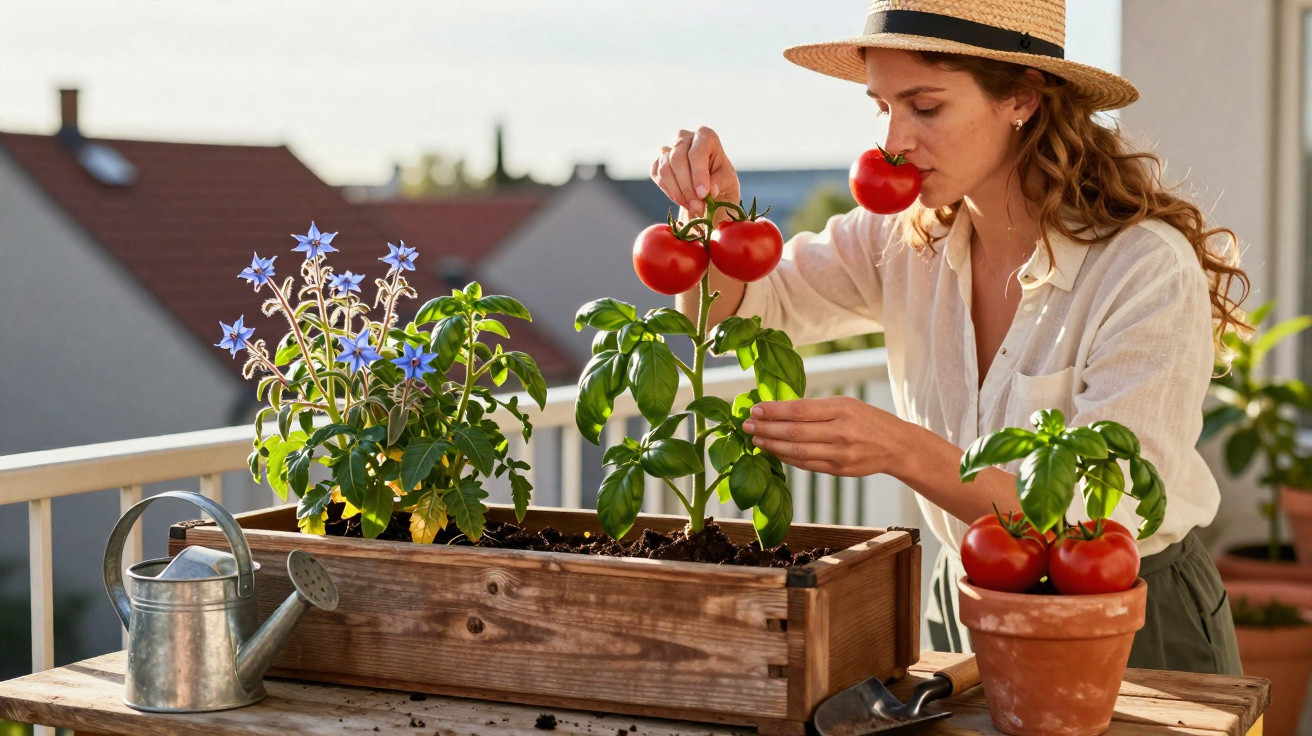
A simple culinary herb could make all the difference.
Anyone who has tasted the contrast between a supermarket tomato and a sun-warmed fruit picked from their own garden knows that flavour is no accident. Variety, position and watering all have a part to play. Yet one modest, very familiar herb is said by many gardeners not only to help tomatoes grow better, but also to give them a noticeably fuller flavour.
Why a classic culinary herb makes tomatoes more flavourful
Tomatoes and basil are a classic pairing both in the kitchen and in the vegetable garden. According to many gardeners, the combination that works so well on a plate is equally well matched in a bed. Specialists refer to this as companion planting or mixed cropping.
“In a bed, tomatoes and basil create a small, stable mini-ecosystem: less stress, fewer pests, more flavour.”
The key factor is basil’s strong scent. Its intense aroma can deter several common pests found around tomato plants, including:
- whiteflies, which suck sap from leaves
- aphids, which weaken young shoots
- various small beetles that nibble foliage
When these insects stay away, or appear in smaller numbers, tomato plants are under less stress. A plant that can grow and ripen undisturbed produces more sugars and flavour compounds in its fruit. This is exactly what many home gardeners report: once basil is growing among their tomatoes, the fruits seem sweeter, rounder in flavour and less sharply acidic.
Gardening guides online point to another possible benefit: in trials and in many private gardens, this pairing has sometimes increased yields by 20 to 30 percent. More fruit, fewer pests and steadier growth can all contribute to flavour, even where no laboratory study has measured every individual flavour compound.
How basil improves the soil and microclimate
Basil does more than influence insects. As a low-growing companion, it shades the soil around tomato plants. This limits evaporation, prevents the ground from drying out as quickly and helps moisture remain more even.
Tomatoes are sensitive to major swings in watering. Soil that is bone-dry one moment and very wet the next can cause growth problems, splitting and a watery taste. Basil planted between the supports can often make conditions more consistent.
Typical effects include:
- more evenly moist soil
- less stress during dry spells
- stronger root development
- hardier plants that appear less prone to illness
Because tomato plants can remain healthy for longer under these conditions, their fruit can stay on the plant until fully ripe. Fully ripened tomatoes contain more sugar, develop more complex flavours and generally taste less harsh.
A protective barrier against disease and a natural yield booster
Basil may also provide tomatoes with indirect support against fungal diseases such as blight. The herb’s essential oils create a strong scent in the surrounding air and nearby area. Many gardeners observe that beds containing basil can shift the balance in favour of beneficial insects and micro-organisms.
“More beneficial insects, fewer plant-protection products – that keeps the flavour of tomatoes unadulterated.”
There is another advantage: basil’s delicate, usually white or purple flowers attract bees, bumblebees and other pollinators. Tomatoes are self-pollinating, but their flowers respond strongly to vibration and movement. When bumblebees and other insects move through the bed, they gently shake the plants and help pollination. The result is more fruit set and often higher yields per plant.
A powerful trio: tomatoes, basil and borage
Some experienced gardeners take the idea a step further by adding borage to the bed. This plant, with its striking blue star-shaped flowers, offers several benefits:
- attracts numerous pollinators
- develops deep roots that loosen the soil
- brings nutrients up from deeper layers
Together, tomatoes, basil and borage create a particularly lively garden area. Beneficial insects find food and shelter, while pests have a harder time becoming established. Tomatoes benefit from improved soil structure, increased pollination and a stable natural balance.
How to plant basil properly with your tomatoes
The best time to establish this partnership is late spring. Once there is no longer any risk of overnight frost, tomatoes and basil can go outside. In many parts of the UK, this is typically from mid-May to early June.
For planting outdoors, this straightforward layout has proved effective:
| Tomato-to-tomato spacing | Basil spacing | Bed layout |
|---|---|---|
| 50–60 cm | 30–40 cm | alternating tomato – basil in one row |
In practice, plant one tomato, then a basil plant with a little space beside it, followed by another tomato, continuing this pattern across the whole bed. Basil can be planted somewhat closer together, provided enough light still reaches the tomato leaves.
Combining basil and tomatoes in a container
Anyone with only a balcony or patio can easily try this combination in a pot. One large container with a capacity of 40 to 60 litres is enough for one tomato plant and one basil plant together. The important points are:
- choose a very bright, warm position
- water regularly, but avoid waterlogged compost
- cover the pot with a layer of mulch, such as grass clippings
- regularly pinch out basil, meaning remove the growing tips
Pinching out the tips encourages basil to branch more, grow bushier and produce more leaves. It also prevents the plant from flowering too early, which can make its flavour slightly more bitter.
Practical tips for maximum flavour in the tomato season
For truly flavoursome tomatoes, several factors need to work together. Basil has an important role, but other measures also have a significant effect on the result:
- choose flavourful varieties rather than focusing only on yield
- plant tomatoes deeply so they develop plenty of roots
- keep foliage dry and water only at soil level
- allow fruits to ripen fully rather than picking them too early
Patience pays off in many gardens: the final fully ripened tomatoes of late summer or early autumn often have the most intense flavour. If basil has been planted right beside them, you can pick a few fresh leaves at the same time for a salad, bruschetta or a quick pasta dish.
What companion planting means
The tomato-and-basil approach is one example of companion planting. Rather than filling large areas with a single species, gardeners grow suitable plants together. This creates a more resilient system that can regulate itself.
“Companion planting uses natural interactions between plants instead of relying solely on fertiliser and sprays.”
Some plants complement one another through different rooting depths, others through their scents, while others provide shade. Basil is one of the uncomplicated companions: it stays relatively small, grows quickly and works well with tomatoes both visually and practically, whether in a bed or a container.
Anyone keen to experiment can easily extend the method: calendulas against nematodes, French marigolds to improve soil, and herbs such as thyme or oregano as fragrant, low-growing companions. Tomatoes are then not growing in isolation, but within a living environment that can noticeably influence flavour, health and yield.

















Comments
No comments yet. Be the first to comment!
Leave a Comment