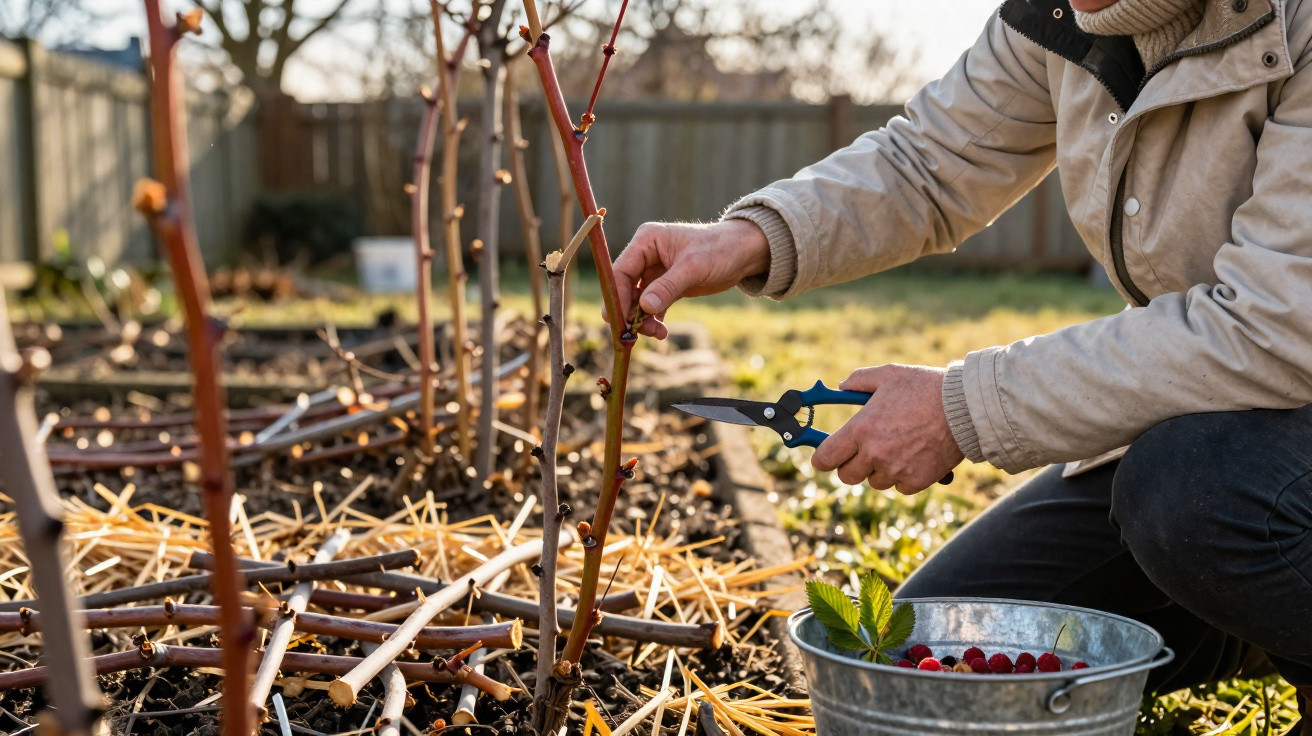
Ignore them now, and you pay in July.
At the beginning of the year, most gardens seem suspended in time. The branches appear dead, the ground is firm, and the gardening tools remain in the shed. But beneath that apparent inactivity, raspberries are quietly balancing between renewed growth and decline.
The deceptive calm of winter: what your raspberry canes are really telling you
Viewed from the kitchen window, a row of raspberries in January can seem like nothing more than a mass of sticks. There are no moving leaves, no flowers and no obvious urgency. For that reason, many gardeners overlook the vital sign that determines whether their plants flourish or struggle through spring.
The clue is not in the leaves, as they disappeared long ago. Instead, look at the canes: their colour, texture and overall form. In mid-winter, one raspberry clump commonly contains two completely different types of growth:
- young, healthy canes preparing to grow strongly and produce fruit later in the year
- old, depleted canes that have finished their cycle and are beginning to decay
From a distance, they may appear identical. A closer look reveals a very different picture.
The key January signal: dull, cracked, grey-brown raspberry canes that look tired and brittle instead of smooth and coloured.
These lifeless, flaking canes are not merely untidy. They hold moisture around the base of the plant, cast shade where air circulation is needed, and offer fungal diseases an opening when the plant's natural defences are at their weakest.
Reading the wood: how to tell dead canes from next summer’s fruit
Raspberries follow a two-year cycle. In their first year, canes known as primocanes primarily create leaves and structure. In the second year, floricanes produce most of the crop. Once that is complete, their job is finished. Keeping them in place allows dead wood to take light, room and energy away from the younger canes that will provide the following season's fruit.
Gardeners throughout the UK and US often make the same admission: they planned to sort out their raspberries “later”, only for spring to arrive and growth to take off everywhere at once. At that stage, the problem has already started.
Simple field test: three clues on every cane
You do not need specialist equipment to assess a raspberry plant. A brief inspection will show which stems should remain and which need removing.
- Colour: Healthy canes generally have a greenish or reddish cast beneath the bark, with a smoother, fresher appearance. Dead canes become dull brown or ash-grey, often looking faded or dusty.
- Flexibility: Carefully bend the tip. A live cane will flex and slightly spring back, whereas a dead one breaks like dry spaghetti.
- Bark condition: Bark on exhausted canes peels and flakes off in strips, leaving a rough, uncared-for look.
If a cane looks grey, feels brittle and sheds bark, treat it as finished wood, not future fruit.
This inspection takes only a few minutes, but it influences plant health for months. It is not simply pruning for appearance; it is more like a hygiene task that removes weak material which could otherwise shelter disease and block new growth.
Cutting back to move forward: the January clean-out
After identifying dead or spent canes, the timing of removal is important. Dry, cold winter weather offers a short but valuable opportunity, when sap movement is low and fungi spread more slowly. This is the point at which gardeners growing raspberries commercially reach for their secateurs.
Step-by-step: how professionals clear a raspberry row
A straightforward technique used in commercial berry fields can be followed at home.
- Sharpen and disinfect your secateurs using alcohol or a bleach solution.
- Identify canes that carried fruit last season or are plainly dead.
- Remove these canes at ground level, cutting as near to the base as is safely possible.
- Take out broken, crossing or rubbing live canes to improve airflow through the centre of the clump.
- Gather all pruned material, keeping it separate if disease is suspected.
Aim to leave a bright, airy clump with room between the remaining canes instead of a solid thicket.
Neat, short cuts heal sooner and limit the possible entry points for rot and pests. Stumps left several inches high are prone to splitting and softening, creating ideal conditions for cane borers and fungi.
Different timing for summer and autumn raspberries
Raspberry types do not all behave in the same way, so what you prune in January depends on the variety.
| Type | Typical fruiting | January action |
|---|---|---|
| Summer-bearing | One heavy crop in early to mid-summer | Remove all canes that fruited last summer right to the base, keep strong one-year canes. |
| Autumn-bearing (everbearing) | Main crop from late summer into autumn | Either cut all canes to the ground for a single late crop, or only remove those that fruited heavily. |
Many gardeners with autumn-fruiting varieties opt to cut every cane down. This makes the task simpler and delivers a dependable later harvest, although the first berries will appear slightly later in the year.
Why this winter sacrifice boosts yield later
Hard winter pruning can look severe. Wood is removed, the patch seems much smaller, and the plants are reduced to a skeletal outline. For the raspberry, however, the result is closer to relief.
Raspberry roots hold a limited supply of carbohydrates during winter. When temperatures begin rising, the plant must choose where to direct that stored energy. If dead canes overcrowd the clump, energy is wasted on failing tissue while the shoots that should replace it are shaded.
Pruning dead canes in January funnels the plant’s limited reserves into buds that can actually flower and fruit.
Removing exhausted stems redirects these reserves towards two main outcomes:
- stronger buds and bigger berries on the remaining healthy canes
- vigorous new basal shoots that will form next year's fruiting wood
This redistribution can also improve raspberry resilience during hot or dry weather. With fewer unproductive stems using water and nutrients, the roots can sustain active growth more effectively.
Finishing touches: protect the base before temperatures rise
A newly cleared raspberry row can look rather exposed after pruning. Bare earth becomes visible, while each plant crown is suddenly open to cold and wind. This is the right time to provide a basic protective layer.
Apply a generous mulch around the canes, but do not pile it directly against them, to create a protective buffer. Suitable materials may already be available in the garden:
- shredded prunings from healthy wood
- well-rotted garden compost
- chipped bark or untreated wood chips
- dry leaves mixed with a little soil or compost so they do not blow away
This covering moderates temperature changes, retains moisture around the roots and suppresses early weeds that would compete with spring growth. As it decomposes, it also nourishes soil life and improves both drainage and structure. Raspberries respond especially well to fertile, airy soil that remains slightly moist.
Hidden risks when you ignore the January signal
Missing winter maintenance does more than lower the crop. It gradually changes the entire microclimate of a fruit patch. Thick, tangled canes hold humidity around their bases, particularly during mild, wet winters, which are increasingly common in both the UK and many US areas.
That ongoing dampness encourages cane blight, spur blight and other fungal problems. These may only become visible months later, through dead patches on canes and poor fruit set. When symptoms emerge in June or July, infection may already have spread through the plant base.
Rows left long and unpruned are also harder to harvest. Gardeners can tread on young shoots, snap tender canes while reaching for concealed fruit, and harm the wood intended to bear next year's crop. Spending a few minutes pruning in January may prevent hours of frustration in summer.
Taking it further: spacing, supports and succession planting
Once you understand this winter signal, it is easy to take a more ambitious approach to raspberries. Many small-scale growers now manage their berry rows as a crop rather than treating them as an informal hedge.
Canes secured to horizontal wires or simple posts remain upright, dry more quickly after rain and bear fruit more evenly along their length. Reducing growth to a planned number of canes per metre of row enables each plant to perform fully without internal competition.
Some gardeners arrange several varieties along a fence: early summer-fruiting types followed by mid-season varieties, then autumn-fruiting raspberries. Combined with effective winter pruning and renewal, this arrangement can extend picking from early summer until the first frosts.
Raspberries also work well alongside other deciduous soft fruits requiring similar winter care, including blackcurrants and gooseberries. The same January signs often apply: dead wood, congested centres and poor airflow. Once you can interpret the structure of one plant, you will begin noticing subtle requests for attention throughout the garden, well before they become lost harvests.
















Comments
No comments yet. Be the first to comment!
Leave a Comment