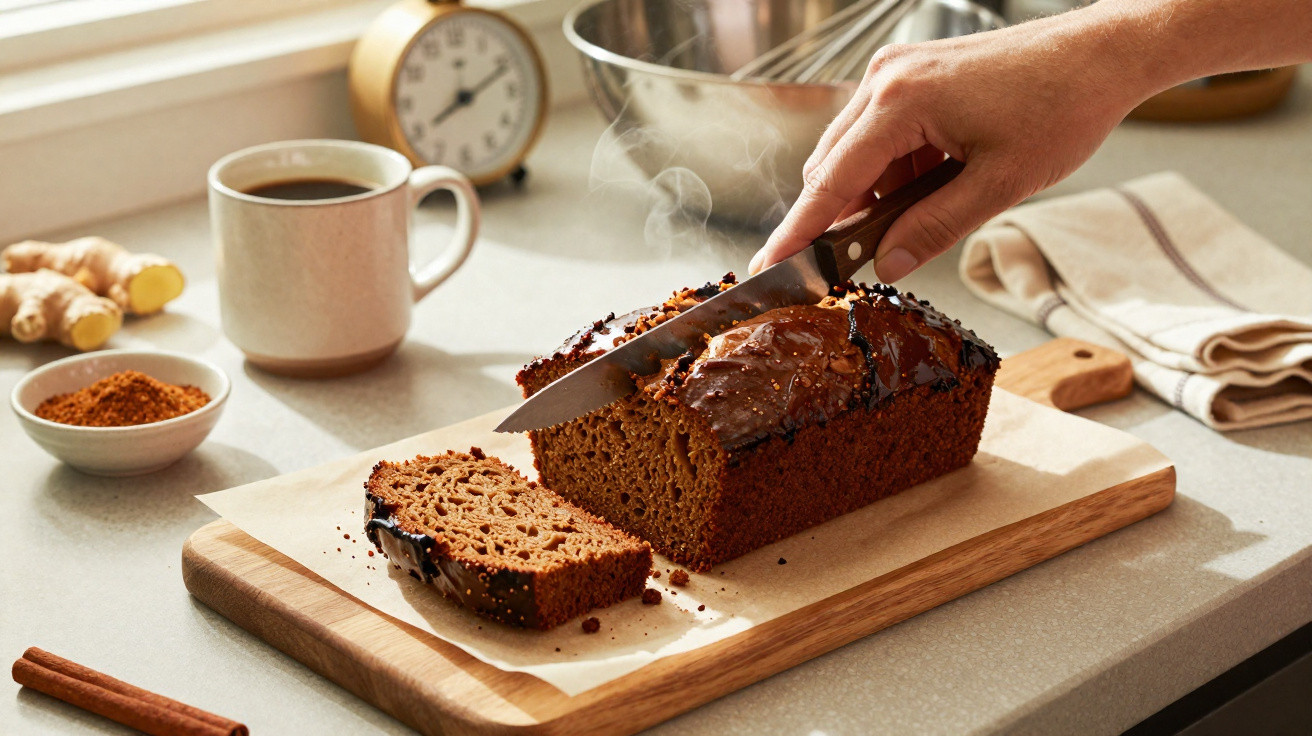
When people think of childhood, winter evenings and cosy get-togethers with tea or coffee, this is often the exact scent that comes to mind: cinnamon, ginger, a little honey and perhaps a hint of orange. A moist gingerbread loaf can be baked with just a few ingredients, virtually no specialist equipment and in under an hour – ideal for anyone who wants to put something homemade on the table without much effort.
What makes this gingerbread loaf so special
Classic gingerbread often brings to mind elaborate biscuits, cookie cutters and hours of work in the kitchen. This recipe takes a different route: a quick, spiced batter that bakes into a light, moist gingerbread loaf in a loaf tin or Bundt tin. It is perfect with coffee, tea or simply a glass of milk.
The combination of ginger, cinnamon, nutmeg and honey creates a warming flavour that immediately evokes holidays and family celebrations – without it needing to be a holiday.
Its biggest advantage is that the batter does not require a stand mixer. A whisk, two bowls and an oven are all you need. That is precisely why this recipe is also ideal for people who do not usually bake much, or for making something spontaneously with children.
Ingredients for a moist gingerbread loaf
These quantities make one loaf tin and around ten slices, depending on how thickly they are cut.
- 250 g wheat flour (Type 405 or 550)
- 2 tsp baking powder
- 2 tsp ground ginger
- 1 tsp ground cinnamon
- ½ tsp freshly grated or ground nutmeg
- ½ tsp ground cloves (optional, but very aromatic)
- 120 g brown sugar (or cane sugar)
- 2 medium eggs
- 100 g melted butter, cooled slightly
- 180 ml milk
- 2 tbsp honey or sugar beet syrup
- finely grated zest of 1 organic orange (optional, for freshness)
- 1 pinch of salt
For a slightly more rustic result, replace some of the wheat flour with spelt flour. This makes the crumb a touch denser and adds a nuttier flavour.
Step by step: how to make this quick recipe
Preparing the tin and oven
Before mixing the batter, it is worth doing a quick mise en place, meaning that everything is prepared in advance:
- Preheat the oven to 180°C conventional heat.
- Grease a loaf tin thoroughly and dust it with flour, so the gingerbread loaf can be turned out easily later.
- Melt the butter gently and allow it to cool slightly so that it does not cause the eggs to set.
Mixing the dry and wet ingredients separately
The texture of the batter determines how moist the finished loaf will be. Overmixing at this stage can produce a tough cake, so the following division helps:
- In one bowl, thoroughly combine the flour, baking powder, ginger, cinnamon, nutmeg, cloves, sugar and salt.
- In a second bowl, briefly whisk the eggs, then stir in the butter, milk, honey and orange zest, if using.
Now bring the two mixtures together: add the wet ingredients to the dry ingredients. Using a whisk or spatula, stir only until no visible flour remains. Small lumps are not a problem – they will disappear during baking.
Mixing for too long makes the batter firm. A brief mix rewards you with a tender, moist crumb.
Baking time and testing for doneness
Transfer the batter to the prepared tin and roughly level the surface. Place it in the preheated oven and bake for around 35 minutes. The exact time will depend on your oven and the tin.
A wooden skewer is ideal for checking whether it is done: insert it into the centre of the loaf. If it comes out with a few moist crumbs but no raw batter, it has reached the perfect point. The gingerbread loaf should not be bone dry – a little moisture gives it the desired “squidgy factor” on the first bite.
How many calories are in gingerbread loaf?
Anyone watching their diet or fitting the loaf into a meal plan can use the following guide values per slice, based on ten slices:
| Nutritional value per portion | Amount |
|---|---|
| Calories | approx. 210 kcal |
| Fat | approx. 7 g |
| Carbohydrates | approx. 34 g |
| Protein | approx. 4 g |
The figures vary according to the butter, milk and type of sugar used. Reducing the sugar or replacing part of it with sweetener changes not only the calories, but also the texture and browning.
Decoration and variation ideas
A refined look with minimal effort
A gingerbread loaf can look far more impressive in just a few minutes. These are classic, quick options:
- Dust lightly with icing sugar for the look of freshly fallen snow.
- Cover with a thin icing made from icing sugar and orange juice.
- Sprinkle roughly chopped nuts, such as walnuts, hazelnuts or almonds, over the icing while it is still wet.
If serving the loaf with coffee during Advent, individual slices can also be decorated with a slice of orange or a small star cut from orange peel.
Flavourful extras for more experienced bakers
The basic batter can handle several additions without losing its balance. For example:
- 50 g chopped chocolate or chocolate chips for a slightly melting centre
- a handful of chopped almonds or walnuts for extra crunch
- small cubes of preserved ginger for more intense heat
- a splash of espresso in the milk to emphasise the spices
The spices are the backbone of the recipe. If you experiment with additions, do not change them completely; simply adjust them subtly.
What does gingerbread loaf go best with?
In many households, gingerbread appears on the table mainly in December. The loaf in this recipe, however, works throughout the year. It is especially well suited to:
- breakfast, lightly toasted with a little butter
- an afternoon coffee or tea break
- a sweet finish to a simple winter meal, for example with vanilla ice cream or cream
- a snack for a girls' night or games night, cut into finger-food strips
If you enjoy experimenting with hot drinks, pair the gingerbread loaf with chai, rooibos or a robust black tea. The spices complement one another and enhance the comforting effect.
Storage and make-ahead tips
A well-spiced gingerbread loaf develops more depth with each passing day. Stored airtight, such as in a bread bin or tightly sealed container, it will keep without issue for three to four days. If the room air is dry, put a small piece of apple in the container – it releases moisture and helps preserve the loaf’s softness. Replace the apple after one or two days.
For longer-term planning, slice the loaf and freeze it. Place baking parchment between the layers so that nothing sticks together. To serve, simply thaw briefly at room temperature or give it a short turn in the toaster.
Why the spices do more than simply smell good
Ginger, cinnamon, nutmeg and cloves do not only define the flavour; they also have interesting properties. Ginger is considered warming and is traditionally used when you feel a cold coming on. Cinnamon is suspected of affecting blood sugar, but because of its coumarin content it should not be consumed in extreme quantities.
Nutmeg and cloves are highly intense spices. Even small quantities are enough to create a clearly noticeable flavour. If you are unsure on your first attempt, start with a slightly smaller amount and adjust it next time. This keeps the taste harmonious and ensures that nobody feels overwhelmed by the heat.
Particularly during stressful times, the ritual of baking a loaf like this can be more than simply preparing food. The scent throughout the house, waiting at the oven door, the first slice while still slightly warm – all of it creates small anchors in everyday life, without much effort or a complicated ingredient list.

















Comments
No comments yet. Be the first to comment!
Leave a Comment