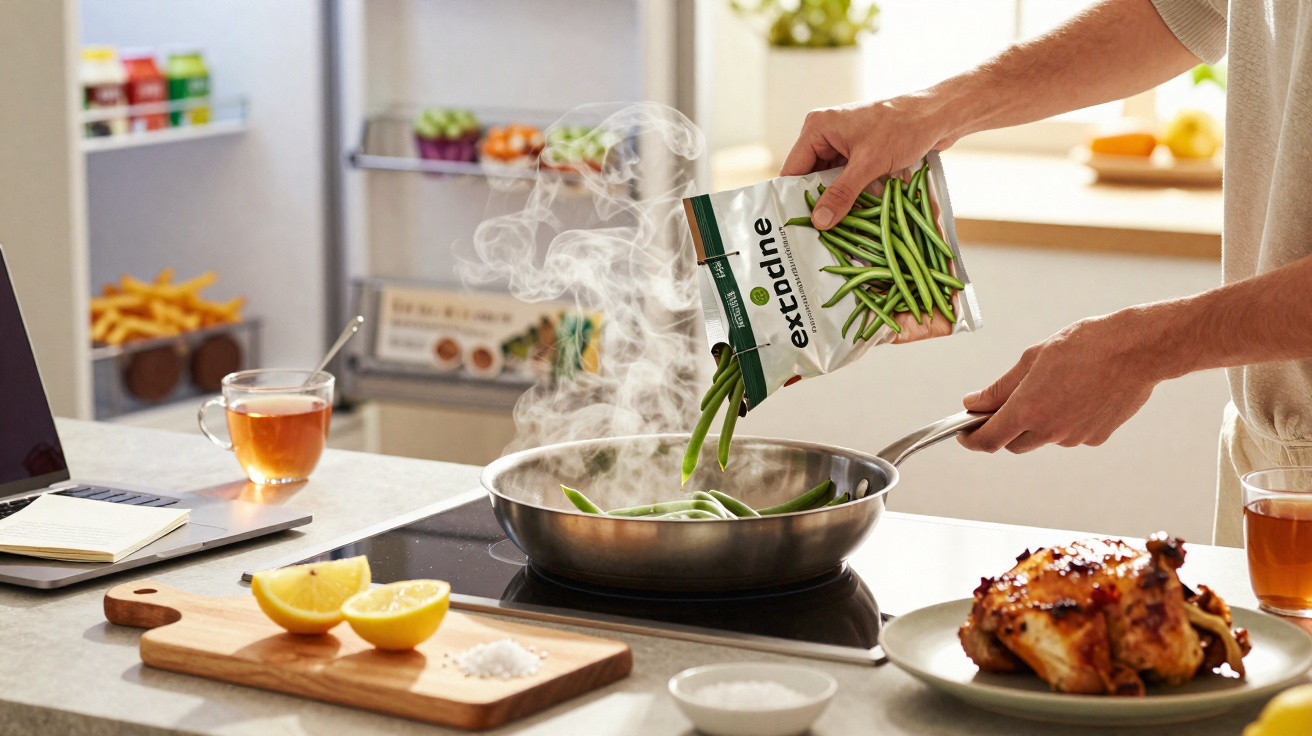
In a year when comfort food dominated freezer aisles, Picard’s biggest success was not the product anyone might have predicted.
As shoppers filled their baskets with frozen chips and rich chocolate desserts, the French frozen-food specialist quietly named a very different product as its 2025 champion. Its popularity reveals much about how people actually eat during the working week.
Picard, France’s frozen-food favourite
For many households in France, Picard is not simply a supermarket but part of the weekly routine. The retailer sells frozen food exclusively, ranging from everyday vegetables to elaborate pastries and limited-edition dishes inspired by cuisines from around the world.
When meal ideas disappear and cooking from scratch feels too demanding, the freezer provides a useful fallback. Rather than peeling onions or washing up pans, shoppers can turn to prepared lasagne, creamed spinach or breaded fish fillets. Picard has earned its reputation through that proposition: dependable quality, familiar flavour and a broad choice capable of turning a nearly empty fridge into a proper meal.
Unlike the frozen aisles in mainstream supermarkets such as Auchan, Aldi or Intermarché, Picard provides a more carefully selected offer. Shoppers expect to find the company’s own recipes, seasonal additions and responsibly selected ingredients, encouraging return visits and the type of customer loyalty conventional retailers would like to achieve.
Why Picard’s range suits so many lifestyles
A key strength of the chain is its ability to appeal to very different shoppers while retaining a clear identity. Students, families and older customers can each find products that match their habits and spending limits.
Students short on time: the “Formule Express” range
For students and young professionals with little time and limited funds, Picard developed “Formule Express”, a collection of individual meals that can go straight from the freezer to the microwave within minutes.
- Single portions help prevent waste
- They are ready in a standard microwave within a few minutes
- Costing between €2 and €3.65, they remain within reach for restricted budgets
These meals can be warmed at work, in university microwave areas or in a compact studio flat. They are not gourmet dining, but they offer more variety and are often more balanced than takeaway chips or an improvised sandwich.
Families seeking comfort: the “esprit de famille” dishes
Parents generally need something else. They are looking for generous portions, comforting food and the sense of a home-cooked meal without spending hours preparing it. Picard’s “Esprit de Famille” range answers that need with large trays of well-known recipes, including lasagne, gnocchi, cannelloni and other popular pasta dishes.
Made for sharing, these products fill plates fast on hectic weekday evenings and appeal to adults and children alike. Add a salad beside one large dish and the evening meal is sorted.
Ready meals nearly claimed first place
Picard reported that ready meals in its “Formule Express” collection led its bestseller rankings in 2025. In fact, two of its three highest-selling products came from that range.
Their chicken curry with coconut milk and rice, and a creamy chicken-and-pasta dish with mushroom sauce, both landed on the podium of sales in 2025.
Each meal combines reassuring flavours with an affordable price. They seem more “cooked” than industrially made, yet remain convenient enough for a meal between lectures or after a lengthy journey home.
Even so, the ready meals did not become the retailer’s number-one product. The actual bestseller belonged to an entirely different category.
The unexpected winner: ultra-fine green beans
Picard’s best-selling item in 2025 was neither meat, dessert nor a main meal. It was a bag of ultra-fine green beans.
Picard’s extra-fine French green beans, sold at €2.69 for a 1 kg bag, were the brand’s most-purchased item of the year.
Grown in France, the beans are frozen rapidly after picking to help retain their flavour, colour and texture. Customers have described them as “stringless”, with a “tender” texture and a mild, pleasant flavour after cooking.
They also suit time-pressed households particularly well. Steaming takes roughly 11 minutes, while boiling requires around 5 minutes. This is quicker than topping and trimming fresh beans, and frozen beans are available throughout the year rather than only during the brief summer season.
A handful of reviews mention one minor drawback: some beans may still have small stems attached, so they need a brief inspection before being served to fussy eaters. That small issue has clearly not prevented customers from repeatedly adding them to their baskets.
What the result reveals about everyday eating
Picard’s 2025 ranking offers a subtle insight into current eating patterns. Rich pasta dishes and indulgent desserts may draw attention, but the items people buy consistently are often practical, adaptable ingredients that work across several meals.
Frozen vegetables meet several needs at once. They can be portioned easily, need neither washing nor trimming, and help reduce food waste. A 1 kg bag of green beans can cover several meals: served beside roast chicken one evening, added to a stir-fry the next, then used in a salad or soup.
| Product type | Main benefit | Typical use |
|---|---|---|
| Ready meals (“Formule Express”) | Speed and convenience | Solo lunches, late-night dinners |
| Family trays (“Esprit de Famille”) | Portion size and comfort | Family dinners, weekend meals |
| Extra-fine green beans | Versatility and year-round availability | Side dishes, salads, mixed recipes |
Why frozen vegetables continue to gain freezer space
Outside Picard, frozen vegetables have generally been becoming more popular in Europe and North America for years. They suit changing habits in which people cook less often but still want a basic level of nutrition and freshness.
Compared with tinned vegetables, frozen products often keep more texture and taste fresher. Because they are frozen soon after harvesting, vitamin loss is slowed. For green beans specifically, freezing helps preserve their vivid colour and gentle crunch.
Frozen vegetables also help budget-conscious shoppers avoid waste. Fresh beans bought on Sunday may be limp by Thursday, whereas frozen beans can wait in the freezer for weeks or months until they are needed.
How to make a meal from a bag of green beans
Ultra-fine green beans may sound unremarkable, but they can form the basis of many fast meals. A standard working evening might involve the following:
- Boil a handful of frozen beans for 5 minutes.
- Fry a chicken breast or warm up leftover roast meat.
- Finish the beans with a drizzle of olive oil, lemon, salt and pepper.
In fewer than 15 minutes, this creates a full plate containing protein, vegetables and flavour. The same beans can also be mixed with cherry tomatoes, feta and a mustard dressing for a cold salad, or stirred into pasta with garlic and parmesan for an easy variation.
Parents also use them to make ready meals more substantial. A tray of frozen lasagne becomes a better-balanced evening meal when steamed beans are served alongside it. That versatility helps explain why such a modest vegetable outsold so many more elaborate products on Picard’s shelves.
Frozen versus fresh: a practical comparison
The green-bean bestseller raises a useful question: when is frozen more sensible than fresh? Frozen vegetables ease the pressure for people with limited kitchen space or unpredictable schedules. There is no urgency to cook them before they spoil, and quantities can be adjusted precisely for the number of diners.
There are compromises, however. Fresh beans at the height of their season may have a slightly crisper bite and more distinct flavour. Certain dishes, especially those served cold, may benefit from very lightly cooked fresh beans. Yet for everyday cooking - side dishes, stir-fries, grain dishes or pasta - frozen beans are sufficiently similar for convenience to win out.
What Picard’s 2025 ranking can teach shoppers
Green beans finishing ahead of chocolate cakes and creamy pasta does not mean shoppers have abandoned treats. Instead, it indicates that when purchases are counted over a full year, dependable everyday staples are bought more frequently than indulgent extras.
At home, this can mean viewing the freezer as an extension of the cupboard rather than a place only for snacks. Keeping several basic frozen vegetables - green beans, peas and spinach - alongside a few ready meals provides a flexible set of ingredients. Fast main dishes can then be paired with simple sides, instead of depending only on one-dish meals.
For people managing a budget or seeking to change their diet, this approach can also limit temptation. When a freezer mainly contains vegetables and useful meal ingredients, desserts and rich comfort food become occasional extras rather than habitual choices.
The quiet victory of Picard’s extra-fine green beans shows that, even in a nation famous for pastry, everyday practicality still drives what people actually buy.

















Comments
No comments yet. Be the first to comment!
Leave a Comment