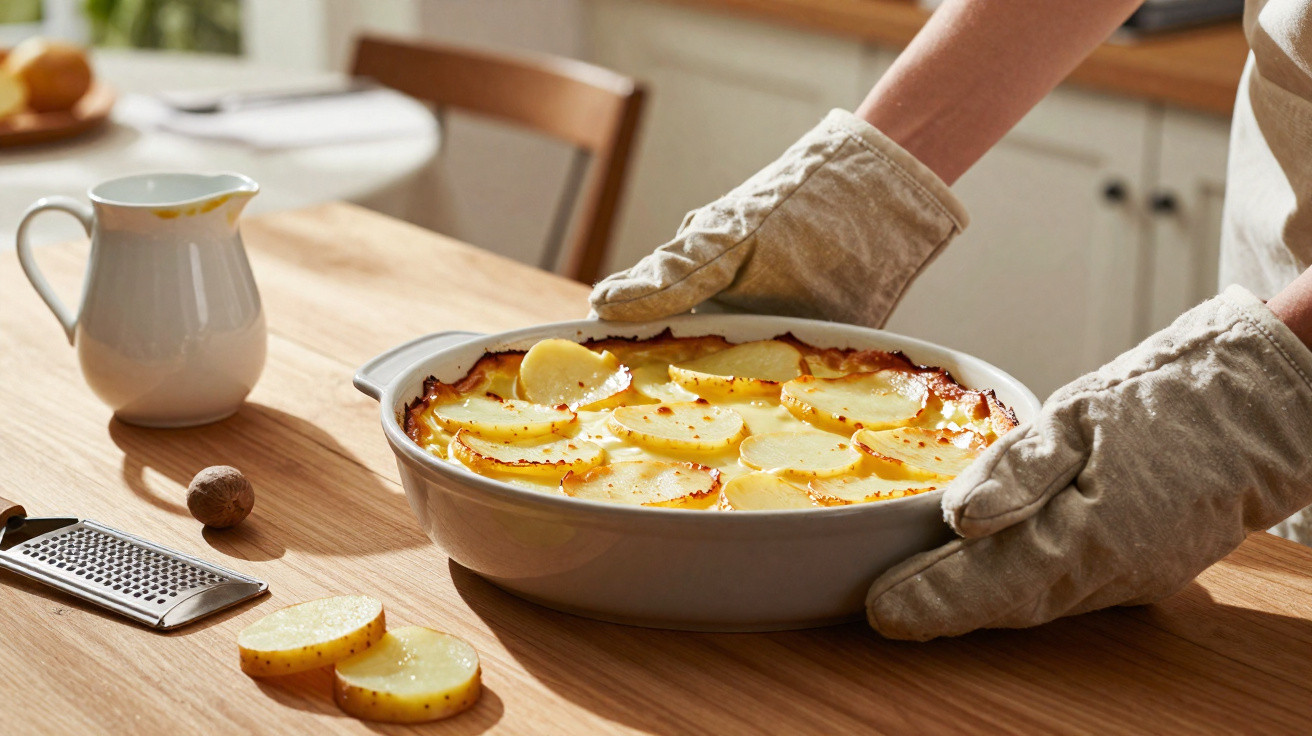
French home cooks insist that gratin dauphinois can be wonderfully silky without being awash with cream - provided you alter one simple habit.
Throughout France, this age-old potato bake continues to provoke debate: cream or milk, garlic or none, cheese or outright sacrilege? A straightforward method, championed by television presenter Julie Andrieu, challenges the common urge to pour in extra dairy simply to guarantee a tender result.
From revolutionary banquets to Sunday family meals
For French people, gratin dauphinois is much more than “just a potato bake”. The earliest recorded written reference is dated 12 July 1788, when it appeared on the table of Duke Charles-Henri de Clermont-Tonnerre, lieutenant general of the Dauphiné region at the time, during a dinner for officers from the town of Gap. Within a year, France stood on the eve of the French Revolution.
Although its precise place of origin is still unclear, the route taken by the modest potato is more thoroughly traced. The tuber arrived in Italy during the 1560s, travelled into Switzerland before 1600, then crossed the Alps into south-eastern French kitchens sometime between the 16th and 17th centuries. It was not until the 19th century that the baked, golden-topped dish now known as gratin dauphinois became widespread in inns across the Vercors mountains.
It is now a winter favourite in both bistros and family kitchens, commonly served alongside roast chicken or lamb. It is also frequently warmed through the following day, when many believe its texture is better still.
What defines a proper gratin dauphinois
The appeal of this dish comes from its simplicity. Traditional recipes use only a small selection of ingredients that are already found in most cupboards and fridges.
- Waxy or all-purpose potatoes, cut into thin, consistent slices
- Thick cream, occasionally combined with milk
- Garlic, usually rubbed around the dish or finely chopped
- Salt, black pepper and a small amount of grated nutmeg
The golden crust on top comes from the caramelised milk and cream, not from melted cheese.
That detail carries weight in France. Add cheese, and plenty of cooks will say the recipe has crossed into “gratin savoyard” territory, a dish more closely associated with neighbouring Savoie than with an authentic dauphinois. The seemingly small difference continues to inspire friendly rivalries between Alpine valleys.
The frequent error: submerging the potatoes
In countless kitchens, the usual approach is to layer uncooked potato slices in a baking dish, pour cream over them, put it in the oven and hope it works. The outcome can be disappointing: some sections become dry and cardboard-like, while others remain pale and watery. Instead of a single creamy melt, the texture feels disjointed.
On her YouTube channel, French food presenter Julie Andrieu identifies an important cause. When potatoes are placed in the dish first and cream is simply poured over afterwards, the liquid does not properly work its way between every slice. Some layers cling together, creating gaps that cook at different rates.
When cream cannot reach each potato slice, you lose the smooth, custardy bond that defines a good gratin dauphinois.
The natural response is often to add still more cream in the belief that it will solve the issue. Yet this can swamp the surface, extend the cooking time and leave the middle soupy while the edges darken too much or burn.
The small gratin dauphinois step that transforms the dish
Andrieu recommends a technique that may sound insignificant but delivers major results: coat the potatoes with cream before placing them in the dish. Not afterwards, and not partway through cooking - beforehand.
How to use the “every slice coated” method
This method resembles dressing a salad more than assembling a casserole:
- Cut the potatoes into thin, even rounds.
- Put the slices into a large bowl.
- Add the cream, or a mixture of cream and milk.
- With clean hands, separate and turn the slices until every one is completely coated.
- Once all the potatoes are glossy with cream, move them to the baking dish and layer them loosely.
The objective is complete contact. Each side of every potato slice needs to touch the creamy mixture. As the gratin bakes, this allows starch from the potatoes to combine with the dairy, thickening the liquid into a smooth sauce that clings to and binds the gratin.
You do not need extra cream; you need better distribution of the cream you already use.
Andrieu uses cream only rather than adding milk, but the principle applies even when making a lighter version. Whether you use half cream and half milk, or merely enough liquid to coat the potatoes in the bowl, what matters is that the mixture reaches every slice instead of collecting in the corners of the baking dish.
Why this technique works in the oven
Several subtle processes take place once the gratin enters the oven. The potatoes release starch as they warm, while the cream and milk reduce and intensify. Meanwhile, proteins in the dairy brown on the top, producing the glossy golden crust.
If every slice begins coated in liquid, the starch and dairy remain in close contact throughout baking. They thicken consistently and bond the layers together. The result is the characteristic fondant texture: a neat square can be cut and will stay intact, yet it feels almost as soft as something eaten with a spoon.
With patchy cream coverage, certain layers cook in almost dry heat and become firm, whereas others sit in too much liquid. That imbalance prevents the restaurant-style slice that many home cooks hope to achieve.
Key ratios and oven settings home cooks ask about
Chefs may argue over precise quantities, but several general guidelines help prevent problems. This table provides approximate quantities for a classic gratin dauphinois for four people.
| Ingredient | Approximate amount |
|---|---|
| Potatoes | 1–1.2 kg (about 2.2–2.6 lb) |
| Cream (or cream + milk) | 500–600 ml (about 2–2.5 cups) |
| Garlic | 1–3 cloves |
| Baking temperature | 160–180°C (320–355°F) |
| Approximate cooking time | 1h–1h15, until tender throughout |
Many French cooks favour a fairly gentle oven temperature paired with a longer bake. This enables the potatoes to cook gradually and the cream to thicken slowly, rather than split or curdle. A knife inserted into the middle should pass through without any resistance.
Avoiding curdling and soggy results
Alongside coating the slices, two further points make a difference to the final texture.
Do not rinse sliced potatoes
Certain recipes advise rinsing potato slices to remove surplus starch. That can be useful for chips or fries, but in gratin dauphinois the starch is beneficial. It thickens the cream naturally and helps produce a firm, sliceable centre. Keeping the slices unwashed also cuts out an unnecessary step.
Avoid covering the dish too firmly
Foil during the first stage of baking can stop the top from catching too quickly, but the gratin needs an uncovered period near the end. Exposure to the oven heat browns the surface and reduces the liquid. When the dish remains covered throughout, steam accumulates and can create a pale, almost boiled result instead of a true gratin.
French rules and home adaptations
Purists draw firm boundaries: no cheese, no potatoes pre-cooked in water, and certainly no onion between the layers. In everyday kitchens, however, many people relax these rules for ease and comfort.
Some cooks simmer the potato slices briefly in milk to reduce the oven time. Others add a modest scattering of cheese over the top. A few swap some of the cream for chicken stock to make a lighter variation. The “every slice coated” method remains useful for all of these versions, helping to retain an appealing texture even when the recipe moves away from strict Dauphiné tradition.
Terms and techniques that can puzzle new cooks
French recipes often contain terms that sound appealing but conceal useful practical guidance. Two are especially common in recipes for gratins.
“Fondant” refers to food that seems almost to melt as it is chewed: tender without becoming mushy. For gratin dauphinois, the desired result is potatoes that retain their form but offer virtually no resistance to a knife or fork.
“Gratin” describes the browned crust that develops on the surface under the oven’s direct heat. It is more than decoration: it brings texture and a slightly nutty flavour that offsets the richness beneath.
Practical planning for gratin dauphinois guests
For anyone preparing dinner for visitors, gratin dauphinois can feel both reassuring and slightly stressful. It reheats reasonably well, and its texture often benefits from cooling and then being heated again as the starch sets. You may assemble it in the morning, refrigerate it and bake it in the evening; alternatively, bake it almost completely earlier in the day, then put it back in the oven to reheat and brown before serving.
The coating technique is helpful in these circumstances as well. Since the sauce develops uniformly, reheating is generally more reliable. The potato slices stay joined together rather than separating into dry layers surrounded by milky pools.
Health, balance and sensible serving ideas
Nobody claims that gratin dauphinois is a light dish. Cream, potatoes and a lengthy oven bake make it substantial. Nevertheless, the accompaniments make a difference. Small, tidy portions served with a green salad, steamed vegetables or lean roast meat can create a balanced meal. Some cooks combine whole milk with cream to reduce the richness while preserving the silky mouthfeel.
Leftovers can be used for more than simply reheating. The following day, slices can be fried in a non-stick pan until their edges turn crisp, making a side dish for eggs or a filling for a toasted sandwich. The firm structure created by coating every slice makes these second-day options far easier, because the portions stay together rather than falling apart.

















Comments
No comments yet. Be the first to comment!
Leave a Comment