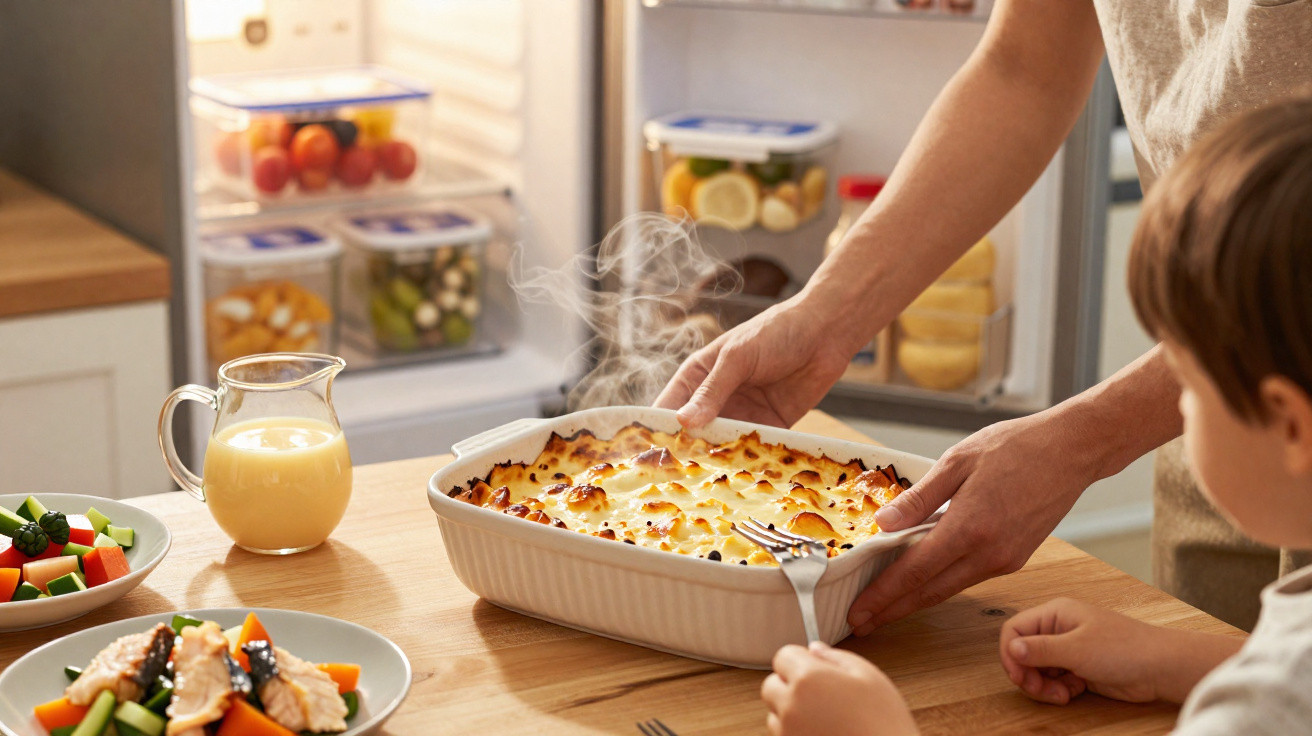
Weeknight mayhem, hungry children and a nearly empty fridge: this soothing fish gratin discreetly tackles all three in a single baking dish.
This family fish gratin has been gaining popularity in home kitchens this winter. Not because it is especially showy, but because it transforms ordinary cupboard ingredients into a warm, substantial dinner with very little fuss.
Why this modest fish gratin is trending now
Across France and the UK, online searches for “cheap oven dinners” and “family fish bake” have risen as households remain worried about food prices and energy bills. Social media is featuring fewer restaurant-inspired plates and more practical baking dishes: potatoes, mushrooms and flakes of white fish beneath a pale béchamel, bubbling under a cheesy topping.
This fish gratin fits the moment perfectly. It relies on supermarket basics, can be made with fresh or frozen fish, and suits evenings spent managing homework, packed lunches and an inbox still sending notifications after 7 p.m.
One baking dish, one sauce, a pile of cheap vegetables: that’s the new comfort-food formula reshaping family dinners.
Although it looks straightforward, the dish reflects a broader change. Families are increasingly choosing low-waste meals that make ingredients go further, use up fridge odds and ends, and still feel like a proper treat when served.
The basic formula for a modern family fish gratin
Its framework remains traditional: a filling carbohydrate base, generous chunks of fish, a mild vegetable, an uncomplicated white sauce and cheese over the top. Home cooks, however, increasingly use that framework as a flexible starting point.
Core ingredients most households use
- Firm white fish, such as cod, pollock, hake or a similar variety
- Cooked or parboiled potatoes, providing substance and comfort
- Mushrooms or leeks, for a mild savoury flavour
- Butter, flour and milk, for a simple béchamel
- Grated cheese that melts and browns well, such as cheddar or a mild hard cheese
- Seasoning: salt, pepper, plus a pinch of nutmeg or mild paprika
Most of these ingredients are already found in a typical Western kitchen. That is significant when so many households now plan meals around what is in the cupboard rather than buying every item a recipe specifies.
The real star is not the fish or the cheese, but the way the dish swallows leftovers without anyone noticing.
How it is really made on a weeknight
The popular versions shared on social platforms avoid elaborate techniques. The method is brief: prepare the ingredients, layer them, cover with sauce and bake.
A realistic step-by-step method
- Start with the potatoes: Leftover boiled or roast potatoes are often used. When starting with raw potatoes, cooks dice them small and parboil them in salted water for around 10 minutes, leaving the oven to complete the cooking.
- Prepare the dish: A quick coating of butter prevents sticking while adding flavour.
- Build the base layer: Spread the potatoes evenly across the dish. They give the gratin its shape and make it satisfying without needing additional side dishes.
- Add the fish: Cut fillets into large pieces, check carefully for bones, then distribute them over the potatoes.
- Top with vegetables: Add mushrooms or sliced leeks over the fish. Some cooks soften the leeks in a frying pan beforehand to remove their raw sharpness.
At this stage, the bake can appear almost too plain. It is the béchamel that changes everything.
Béchamel, the understated essential
In British home kitchens, béchamel is commonly tucked into lasagne or cauliflower cheese. In this recipe, it brings the entire fish gratin together: it stops the fish drying out and turns separate ingredients into a unified meal.
| Element | Role in the gratin |
|---|---|
| Butter and flour | Create the roux that thickens the sauce |
| Milk | Provides moisture and a gentle creamy flavour |
| Seasoning | Nutmeg, salt and pepper brighten the mild base |
Home cooks generally melt the butter, whisk in the flour until it forms a thick paste, then gradually add the milk while stirring. Several minutes over a low heat produce a smooth sauce that coats a spoon. Seasoning matters, as the sauce reaches every mouthful.
A good béchamel turns humble fish and potatoes into something that feels closer to a Sunday lunch than a fridge-clear-out.
Letting the oven do the work
After the béchamel has been poured over the layers, the dish begins to look intentionally put together. Grated cheese is scattered on top, often in a more generous quantity than the recipe recommends, as this is usually the first part children notice.
Most homemade versions cook at about 180°C for 35 to 45 minutes. During that time, the potatoes become fully tender, the fish cooks through and the surface develops a golden crust, with sauce bubbling around the edges. Leaving the gratin on the worktop briefly before serving allows it to firm up, making it easier to portion into reasonably neat squares rather than collapsing on the plate.
Anti-waste cooking: the gratin as a fridge recycler
The dish now brings together three major food trends: budget-conscious cooking, cutting food waste and eating less meat. For many families, it is a weekly reset meal that gathers up small leftovers before they can spoil.
Common “fridge clean-out” additions
- Cooked potatoes from an earlier meal, cut into slices or cubes
- Leftover cooked fish, flaked apart and checked for bones
- Half a leek, an extra carrot or the final broccoli florets, quickly blanched
- Grated cheese ends mixed together, even when they are not a perfect match
Rather than discarding a small piece of cod that is not enough for a meal on its own, cooks save it for a later gratin. The same approach works for a bag of frozen mixed vegetables left at the back of the freezer.
The fish gratin has become a quiet weekly ritual: use what you have, waste less, still give the family something that feels generous.
Nutrition, cost and the appeal for parents
As well as tasting good, this meal helps address the nutritional and financial concerns facing many households. White fish provides lean protein and iodine. Potatoes supply energy and fibre, particularly when their skins are left on. Mushrooms and leeks contribute some vitamins without putting off fussy eaters.
The cost is appealing too. Made with frozen white fish and everyday vegetables, the price per serving usually remains in the low-budget range, particularly where leftovers make up part of the dish. At present, that combination of comfort and spending control is attracting considerable interest on recipe websites and social media.
Parents also use the gratin as a gentle introduction to fish for children who object to plain fillets. Creamy sauce and a cheese topping reduce the psychological hurdle. Beneath the surface, the fish is mild, flaky and less daunting.
Adapting it for different households
The basic recipe can be adjusted easily for dietary requirements, preferences and even energy costs.
Lighter and allergy-friendly options
- To reduce fat: Choose semi-skimmed milk and use less cheese, while maintaining flavour with herbs such as chives or parsley in the sauce.
- For gluten-free diets: Replace the usual béchamel flour with a gluten-free blend or cornflour, and check the cheese label.
- For people sensitive to lactose: Use lactose-free milk alongside a hard cheese that is naturally lower in lactose.
Cooks mindful of energy use also alter how they use the oven. Some prepare the dish earlier in the day when energy tariffs are lower, then warm it gently before dinner. Others cook two trays at the same time and freeze one for the following week, making fuller use of a hot oven.
Practical ways to prevent common mistakes
This is a forgiving dish, though a few small details can significantly affect the outcome.
- Thoroughly dry frozen fish to avoid a watery sauce.
- Cut potatoes to a similar size so that they cook at the same rate.
- Season each layer lightly rather than relying only on the topping, ensuring flavour throughout.
- Do not hurry the béchamel: a few minutes of gentle cooking prevents a floury taste.
- Rest the gratin for 5 to 10 minutes before serving; it cuts more cleanly and is less likely to burn tongues.
Cooks who follow these points report fewer “soggy middle” mishaps and more empty plates. Ultimately, that is the only measure of success that matters to most families.
From a classic recipe to a weekly routine
This family fish gratin might resemble something once served in a school canteen, but it addresses several current concerns: reducing waste, controlling costs, feeding children well and eating less meat without repeated lectures. Its uncomplicated format also works across cultures; some households add a touch of curry powder, while others include smoked fish for extra depth.
For those reconsidering weekday dinners, the recipe offers a useful model: any lean protein, any root vegetable, any mild green vegetable, one adaptable sauce and some oven time. The approach can be taken beyond fish, using beans, leftover roast chicken or seasonal vegetables, giving households a quiet way to ease both budget pressures and mealtime stress.

















Comments
No comments yet. Be the first to comment!
Leave a Comment