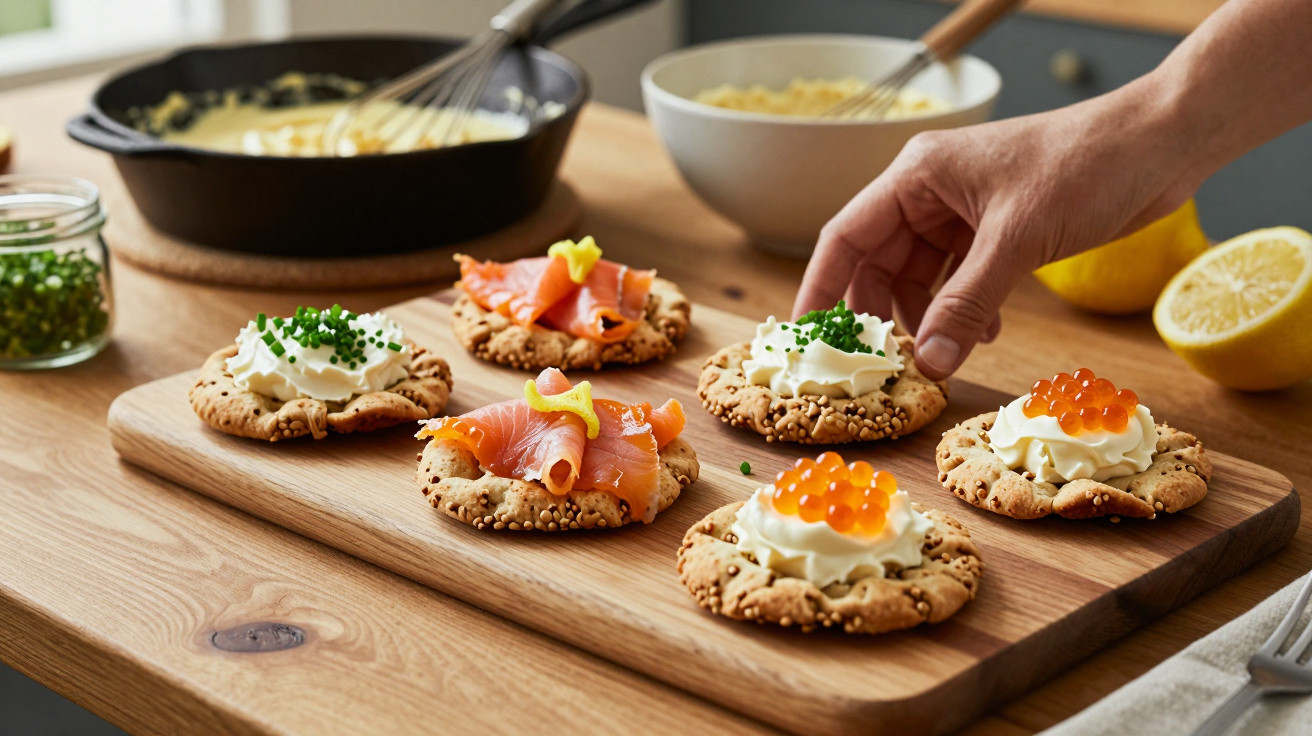
A quick batter, speedy cooking and a few carefully chosen ingredients can turn a simple homemade canapé platter into something special.
Small buckwheat pancakes have a rare advantage: they look elegant while requiring very little skill. Their gently toasted flavour works equally well with a creamy topping, smoked fish or fish roe. With a little planning, they can be served warm and topped at the last minute without any pressure.
A simple recipe for a dozen canapés
The batter needs just four everyday ingredients. To make between 12 and 16 small buckwheat pancakes, depending on their diameter, you will need 100 grams of buckwheat flour, one egg, 100 ml of warm milk and a pinch of salt.
- 100 grams of buckwheat flour;
- 1 egg;
- 100 ml of warm milk;
- 1 pinch of salt;
- a little neutral oil for the frying pan.
Warm milk makes the ingredients easier to combine and helps create an even batter. Buckwheat flour, sometimes called black wheat despite the misleading name, is naturally gluten-free. It has a stronger flavour than wheat flour and gives the batter its distinctive greyish colour.
“The ideal consistency sits between crêpe batter and cake batter: it should spread gently in the pan without becoming runny.”
A 30-minute rest transforms the texture
Put the flour and salt in a mixing bowl. Break the egg into the middle, then gradually whisk in the warm milk. It is best to add the liquid in several stages. Doing so reduces lumps and lets you keep an eye on the batter’s thickness.
When the mixture is smooth, leave it to rest at room temperature for 30 minutes. This waiting time is not merely optional. The flour absorbs moisture more effectively, making the batter more pliable. During cooking, the canapés stay soft in the centre rather than drying out quickly.
If the batter seems particularly thick after resting, add one tablespoon of milk, stir, then check the consistency again. Make adjustments gradually. Batter that is too thin spreads too rapidly, producing delicate discs that are less easy to top.
A moderately hot pan prevents dry buckwheat pancakes
Heat a frying pan over a medium heat. Use kitchen paper to spread a very thin coating of oil over its surface. An overly oily pan prevents the batter from colouring properly and leaves an oily feel in the mouth. Conversely, the first batches may stick if the pan is completely dry.
Spoon in small amounts of batter, leaving space between each disc. A diameter of around 5 centimetres works well: each canapé is easy to eat and can hold a generous topping. Cook for roughly two minutes on the first side, then for one to two minutes after turning.
- Wait until the surface looks matte and the edges have firmed up.
- Slide a small spatula beneath each disc.
- Turn them over without pressing down, to retain a soft crumb.
- Set them aside on a plate in a single layer.
Stacking hot pancakes beneath foil will keep them warm, but steam can also make them soft. If you need to make them slightly ahead of time, allow them to cool on a rack, then warm them for a few seconds in a dry frying pan just before serving.
Three easy topping combinations that always work
Buckwheat pairs well with fresh, savoury and lightly acidic ingredients. One batch can therefore become a varied canapé platter without requiring lots of complicated preparation.
Soft cheese and chives
Spread a small spoonful of soft cheese over each pancake while it is still slightly warm. Finish with chopped chives and a twist of black pepper. This fresh option also suits guests who do not eat fish.
Smoked salmon and lemon
Lay on a thin strip of smoked salmon, then add a few drops of lemon juice. A little dill works particularly well, provided it is used sparingly: its aroma should not overpower the toasted taste of the flour. For a neat finish, cut the salmon into narrow ribbons rather than broad slices.
Cream and trout roe
A small dab of crème fraîche, followed by a few trout eggs, is enough to give the platter a celebratory appearance. The roe bursts gently when eaten and brings an iodised note. Season cautiously, as fish roe is already salty.
“Add the toppings at the last minute: fresh ingredients stay crisp, herbs retain their colour and the small pancakes do not become soggy.”
Mistakes that spoil the result
The first pitfall is the cooking temperature. Heat that is too high burns the outside while leaving the middle undercooked. A medium heat gives more even colouring and allows the batter time to set.
The second issue is thickness. Discs that are too deep require lengthy cooking and lose their softness. Use a teaspoon or small ladle so that the portions remain similar. Consistent sizes also make plating easier.
Finally, do not prepare the toppings hours ahead without covering them. The soft cheese can form a skin, herbs can wilt and salmon can dry out. Cover each preparation and keep it refrigerated until it is time to assemble the canapés.
Useful variations based on what is in the fridge
This batter can be adapted in several ways. Unsweetened plant milk can replace ordinary milk. A pinch of mild paprika, cumin or fennel seeds adds a different note, but should be used with restraint. For a more substantial vegetarian version, combine soft cheese with cucumber strips and chopped walnuts.
These small buckwheat pancakes also freeze very well without their toppings. Let them cool completely, lay them flat in a freezer bag, then separate the layers with baking paper. They can later be reheated for a few minutes in a low oven or in a frying pan.
Black wheat takes its name from its dark colour and its historical use in Breton crêpes. Its assertive flavour is excellent with acidic ingredients: lemon, pickled red onions, thin slices of green apple, or even a spoonful of pear compote with goat’s cheese. A plate offering several toppings lets everyone build a canapé to suit their own taste.

















Comments
No comments yet. Be the first to comment!
Leave a Comment