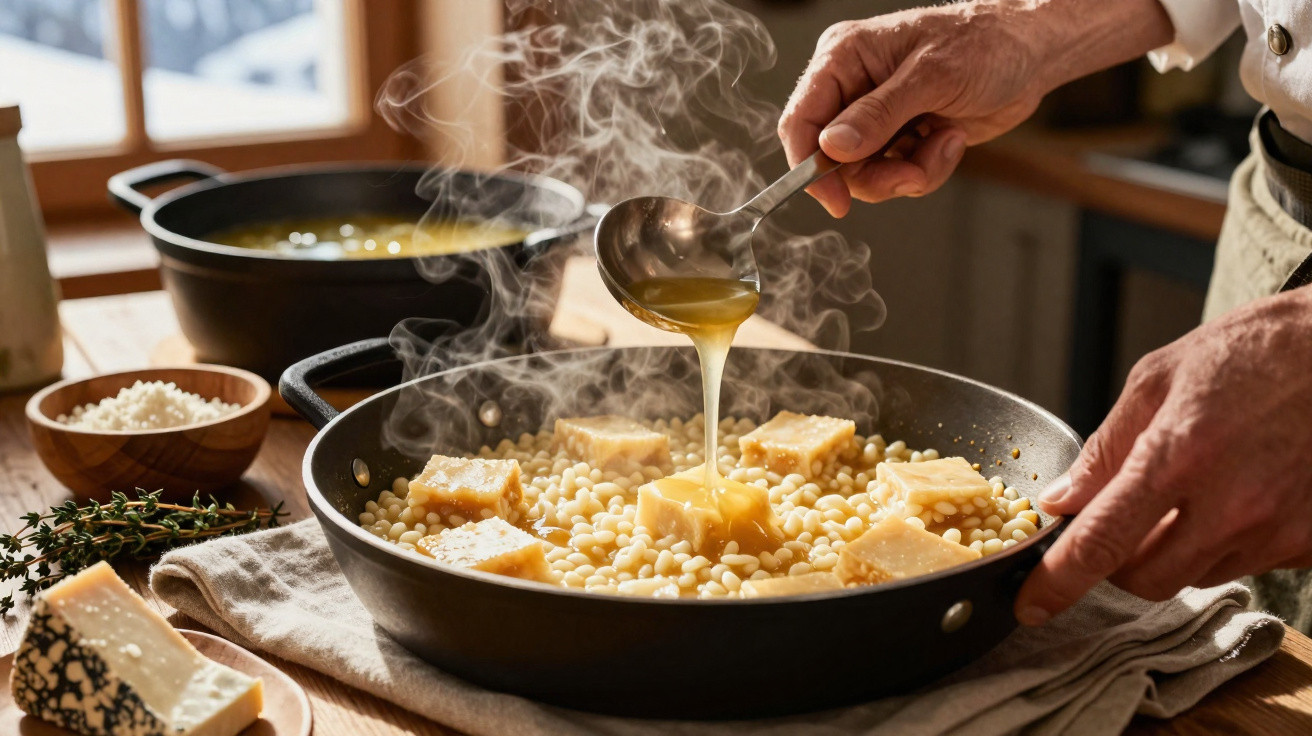
Throughout France’s Savoie region, crozets - modest little squares of buckwheat or wheat pasta - command an unexpected degree of reverence. Local cooks insist on one particular preparation, which discreetly defies the habits of many home cooks. After trying it, tipping crozets into a large saucepan of boiling water can seem distinctly wasteful.
What crozets are – and why Britons often cook them “wrong”
Crozets resemble very small, flat pasta cubes. Traditionally produced from wheat or buckwheat flour, they originate in Savoie’s high valleys, close to renowned ski resorts including Tignes and Val d’Isère.
Beyond this region, they are commonly cooked as if they were any dried pasta. They are boiled in a large pan of salted water, drained, and then heavily coated in cream and cheese.
Boiled like regular pasta, crozets swell, but much of their flavour leaks into the water and ends up down the sink.
Cooking them this way can bring two frustrations: muted flavour and a somewhat gluey, weighty consistency. Buckwheat crozets fare particularly badly. As the grain is more porous, it quickly takes on water while releasing minerals and delicate aromas into the cooking water.
In Savoie, cooks politely set this practice aside. They instead rely on a gentler, more gradual approach that retains all that flavour in the pan.
The Savoyard rule: crozets never go into plain boiling water
In Alpine kitchens, the essential rule is straightforward: crozets are fed rather than boiled. Instead of floating in water, they take up a full-flavoured, aromatic liquid, in much the same manner as risotto rice. The finished dish even has its own name: crozotto.
Think of crozotto as risotto’s Alpine cousin: same method, different grain, far more cheese.
Rather than putting the pasta straight into water, cooks first toast dry crozets in fat before gradually adding hot stock and wine, allowing every ladleful to be absorbed by the pasta squares. The released starch produces a naturally creamy finish, with no need for a whole tub of cream.
How the absorption method transforms crozets
The reasoning behind it is pleasingly simple. With absorption cooking, crozets take in more than just water. The liquid will generally be a combination of Savoy white wine and hot stock, already carrying seasoning, aromatics and fat.
While the crozets gently simmer, they absorb this mixture. Their starch gelatinises where it is, while the naturally occurring amylopectin forms a silky, almost sauce-like coating. Flavourful stock enters the pasta rather than disappearing down the drain.
Savoyard cooks usually use around one part crozets to two-and-a-half or three parts liquid. A gentle simmer of 15 to 20 minutes brings them to a soft yet slightly firm texture.
The classic Savoyard crozotto method, step by step
Although the method may sound restaurant-worthy, it is easily achievable at home using one wide pan and a small saucepan of hot stock kept alongside.
Core method for a creamy crozotto
- Heat a generous knob of butter, bone marrow or duck fat in a wide sauté pan.
- Tip in the dry crozets and stir over a medium-high heat for several minutes to “pearl” them – every piece should be lightly covered in fat and faintly toasted.
- Deglaze the pan with a splash of Savoie white wine, such as Apremont or Abymes, then allow it to reduce until almost fully evaporated.
- Pour in one ladle of very hot chicken or vegetable stock, stir, and let the crozets absorb nearly all the liquid.
- Continue adding stock one ladle at a time, stirring regularly while the crozets gradually swell and become creamy.
- When they are cooked, take the pan off the heat and mix in grated Beaufort, Comté or Reblochon, along with another knob of butter if desired.
The key rhythm: toast, deglaze, feed with hot stock, then finish with Alpine cheese off the heat.
This order of cooking keeps the result soft and spoonable rather than stodgy. The remaining heat melts the cheese, enveloping each pasta square in a shiny coating.
Ingredients that make a true taste of Savoie
The technique can be adapted, but Savoyard cooks rely on several key ingredients that give the dish its distinctive regional identity.
| Element | Typical Savoyard choice | Role in the dish |
|---|---|---|
| Pasta | Crozets, wheat or buckwheat | Base texture and nuttiness |
| Fat | Butter, marrow, duck fat | Toasting and depth of flavour |
| Wine | Apremont, Abymes (dry white) | Acidity and aromatic lift |
| Stock | Chicken or vegetable | Seasoning and moisture |
| Cheese | Beaufort, Comté, Reblochon | Creaminess and savoury finish |
Starting from this foundation, cooks adapt the dish readily: mushrooms fried with shallots make an autumnal version, leeks softened in butter create a milder one, and asparagus tips can be stirred through in spring.
Mistakes that ruin crozets – and how Savoyards avoid them
This regional approach includes several firm prohibitions, refined through many winters of cooking.
- No pre-boiling: Boiling crozets in plenty of water before moving them to the pan removes their flavour and minerals.
- No rinsing: Running cooked crozets under cold water washes away the surface starch that creates their creamy coating.
- No cold stock: Refrigerator-cold liquid shocks the pasta and delays cooking. Stock must be kept hot.
- No “dump and leave”: Adding all the stock in one go and leaving the pan produces an uneven texture and a soupy dish.
- No skipping the toasting: Nacring – lightly toasting the pasta in fat – stops it sticking and develops a deep, nutty flavour base.
Crozotto rewards attention. Small, regular stirs and hot stock create a creamy texture without a single drop of cream.
From ski chalet comfort food to weeknight dinner
In Savoie, the dish suits its surroundings: snow outdoors, cheese on the table and a pan that seems never to leave the hob during winter. For cooks in Britain or America, the same approach works throughout the year as a comfort-led meal somewhere between pasta, risotto and macaroni cheese.
One easy version is to fry mushrooms and garlic in the pan before adding the crozets, then proceed with the absorption method. After fifteen minutes, stir in Beaufort, or a good mature Cheddar when Alpine cheeses are difficult to find. Serve a green salad alongside to balance the richness.
Useful terms and tweaks for curious cooks
Two French terms regularly appear in Savoyard recipes. “Nacrer” refers to the point at which grains or pasta become slightly translucent and glossy after being toasted in fat. “Crozotto” simply combines “crozet” with “risotto” to indicate the cooking method.
For a lighter version, use less cheese and finish with a spoonful of crème fraîche and plenty of herbs. For a more substantial, almost one-pan mountain meal, some home cooks add lardons or smoked bacon at the outset, using the rendered meat fat in place of some of the butter.
The technique also lends itself to appealing variations: make a fish stock crozotto and top it with seared scallops, or prepare a vegetable version with roasted squash and sage. The central rule remains unchanged: no large pan of boiling water, no draining and no rinsing. The pasta remains with the flavour.

















Comments
No comments yet. Be the first to comment!
Leave a Comment