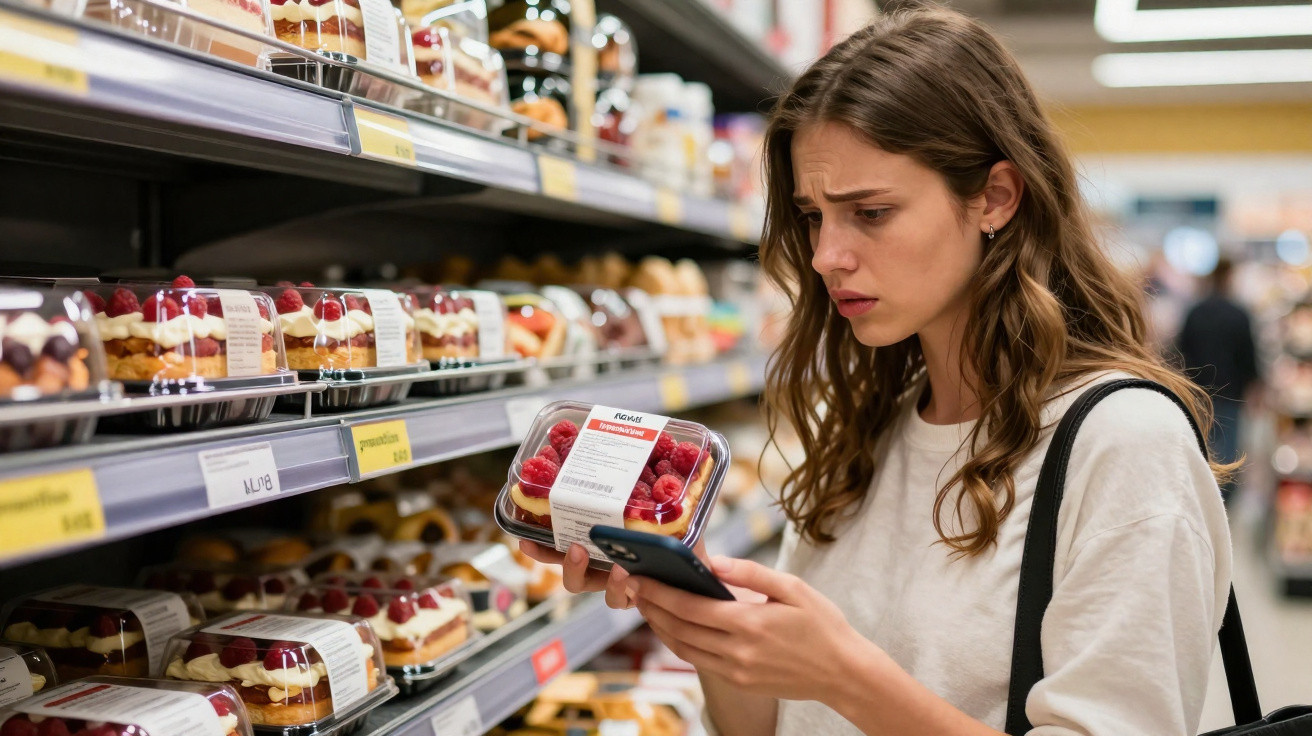
Shoppers in western France have been told to inspect a festive dessert after a contamination concern was identified at one local shop.
With the festive season bringing rich dishes and elaborate puddings to the table, a French supermarket has issued a significant warning over a traditional raspberry cake sold just days before Christmas.
Raspberry favourite removed from shelves following listeria alert
French retailer Leclerc has announced an urgent recall for a raspberry cake called a “framboisier”, a traditional layered dessert containing sponge, cream and raspberries. Although the warning covers products sold at only one supermarket in Brittany, it has attracted attention because the dessert is commonly served at family events and festive meals.
The recall appeared on the French government’s “Rappel Conso” platform, the national website used to track unsafe or faulty products. The notice states that testing confirmed the presence of Listeria monocytogenes, the bacterium responsible for listeriosis, a serious foodborne illness.
This specific raspberry cake, sold in one Leclerc store in Douarnenez-Tréboul on 13 December, may contain the listeria bacterium and should not be eaten under any circumstances.
The warning comes as many households in France stock their refrigerators with pâtés, stuffed poultry, cheeses and sophisticated desserts. This can increase food-safety risks as well as the likelihood of contaminated products being shared at large gatherings.
Which products are covered by the recall?
The recall applies to a particular batch of raspberry cakes sold from the fresh bakery and patisserie counter at the Leclerc hypermarket in Douarnenez-Tréboul, in Brittany’s Finistère department. Shoppers should check the details shown on the product label or their receipt.
Key identifiers for the recalled raspberry cakes
- Product: Raspberry cake (“framboisier”)
- Brand / retailer: E. Leclerc (in-store pastry)
- Store concerned: Leclerc Douarnenez Tréboul (Finistère, France)
- GTIN code: 020308.3000000
- Batch: 13/12/24
- Use-by date: 17 December 2024
- Date of sale: Mainly 13 December 2024
The Rappel Conso notice says that numerous customers purchased the dessert on 13 December for forthcoming meals. As a result, some cakes may still be stored in domestic freezers, while others may already have been consumed.
Anyone who purchased a raspberry cake with GTIN 020308.3000000, batch 13/12/24 and use‑by date 17/12/2024 at Leclerc Douarnenez Tréboul is advised to treat it as unsafe and return it or dispose of it.
Leclerc says this recall is limited to this one branch and this individual batch. Raspberry cakes purchased from other Leclerc supermarkets, or bearing different batch information, are not included in this particular alert.
What customers should do if they bought the cake
Health officials are unequivocal: the dessert must not be eaten, whether it was refrigerated or frozen. While heating can reduce risks for certain foods, this is a fresh cream cake rather than a product intended to be thoroughly cooked at home.
Immediate steps for consumers
- Do not eat the raspberry cake, even when its appearance and smell seem normal.
- Do not offer it to visitors, children, pregnant people or elderly family members.
- Leave it separate in its packaging while deciding whether to return it or throw it away.
- Wash any plates, knives or packaging that have touched the cake.
Leclerc will refund customers who return affected products to the shop. The recall notice gives customers several weeks to use the refund process.
| Action | Details |
|---|---|
| Return for refund | At Leclerc Douarnenez Tréboul customer service desk |
| End of recall procedure | Friday, 31 January 2025 |
| Customer helpline | +33 (0)2 98 74 29 00 |
Customers seeking advice can telephone the shop directly on 02 98 74 29 00, including where the packaging has been discarded and only a till receipt is available.
Symptoms to watch for after eating the dessert
Listeriosis can develop after an incubation period ranging considerably, from several days to several weeks. This may make it hard to associate symptoms with one particular food. The French notice restates the standard guidance for this type of contamination.
Anyone who has eaten the recalled raspberry cakes and experiences fever, headache or muscle pain is advised to contact their doctor and mention possible listeria exposure.
Common warning symptoms may include:
- Fever, which can initially be moderate.
- Headaches that can resemble flu symptoms.
- Muscle pain or unusual tiredness.
- Digestive symptoms, including nausea or diarrhoea in some cases.
In healthy adults, the infection is frequently mild and can even pass unnoticed. The main concern is for people in vulnerable groups. Pregnant women, older people, those with weakened immune systems and people with chronic illnesses face a far greater risk of serious complications, including sepsis or meningitis. In pregnant women, listeriosis may cause miscarriage, premature delivery or infection in the newborn, even if the mother has only limited symptoms.
Why listeria continues to prompt recalls in Europe
This case further demonstrates the vulnerability of chilled foods to listeria, particularly products that combine cream, eggs and fresh fruit. The bacterium can grow at refrigeration temperatures and survives particularly well in damp, cold settings, including industrial refrigerators and patisserie laboratories.
French authorities have issued a regular flow of alerts in recent years concerning soft cheese, charcuterie, smoked fish and ready-to-eat meals. Notices of this kind often increase during Christmas because larger quantities of higher-risk foods are sold and they frequently move through complicated supply chains.
Ready‑to‑eat chilled foods, especially those served without reheating, remain one of the main channels for listeria transmission in industrialised countries.
Launched in 2021, France’s Rappel Conso platform brings together official recall information for food, cosmetics and household items. Retailers are required to record their alerts there, providing consumers with a single source for current risks. Supermarkets also display notices in branches and on their websites, although many shoppers only discover recalls when they are reported by local or national media.
How consumers can cut listeria risk at home
This particular Leclerc case also raises a broader issue: how can people reduce listeria risk in daily food shopping and cooking? Few people want to scrutinise labels constantly or stop eating festive desserts, but several habits can substantially reduce exposure, particularly for vulnerable relatives.
Practical advice for higher-risk households
- Check recall platforms or notice boards regularly where you live in a country with a centralised system such as Rappel Conso.
- Pregnant women should avoid soft unpasteurised cheeses, refrigerated pâtés, smoked fish and chilled ready-to-eat meats unless they have been fully cooked.
- Follow use-by dates for chilled products rather than keeping them for several extra days.
- Keep the refrigerator below 4 °C (39 °F) and clean it regularly, especially shelves where cream or juices may have spilled.
- Place raw ingredients on lower shelves and ready-to-eat foods above them to prevent drips.
For desserts such as fresh cream cakes, the risk increases when products are transported for extended periods, left at room temperature during parties or kept for “just one more day” after their date. Even if a product appears and smells fine, bacteria may have multiplied to levels that do not meet safety standards.
The Leclerc recall concerns a small number of raspberry cakes in one coastal town, but it provides a useful real-world example. In a large family meal where the cake has been shared, one contaminated batch could quickly reach children, grandparents and pregnant guests in a single evening. This is why health authorities use such firm wording even for a local warning, and why supermarkets promote refunds instead of simply asking customers to dispose of products quietly at home.

















Comments
No comments yet. Be the first to comment!
Leave a Comment