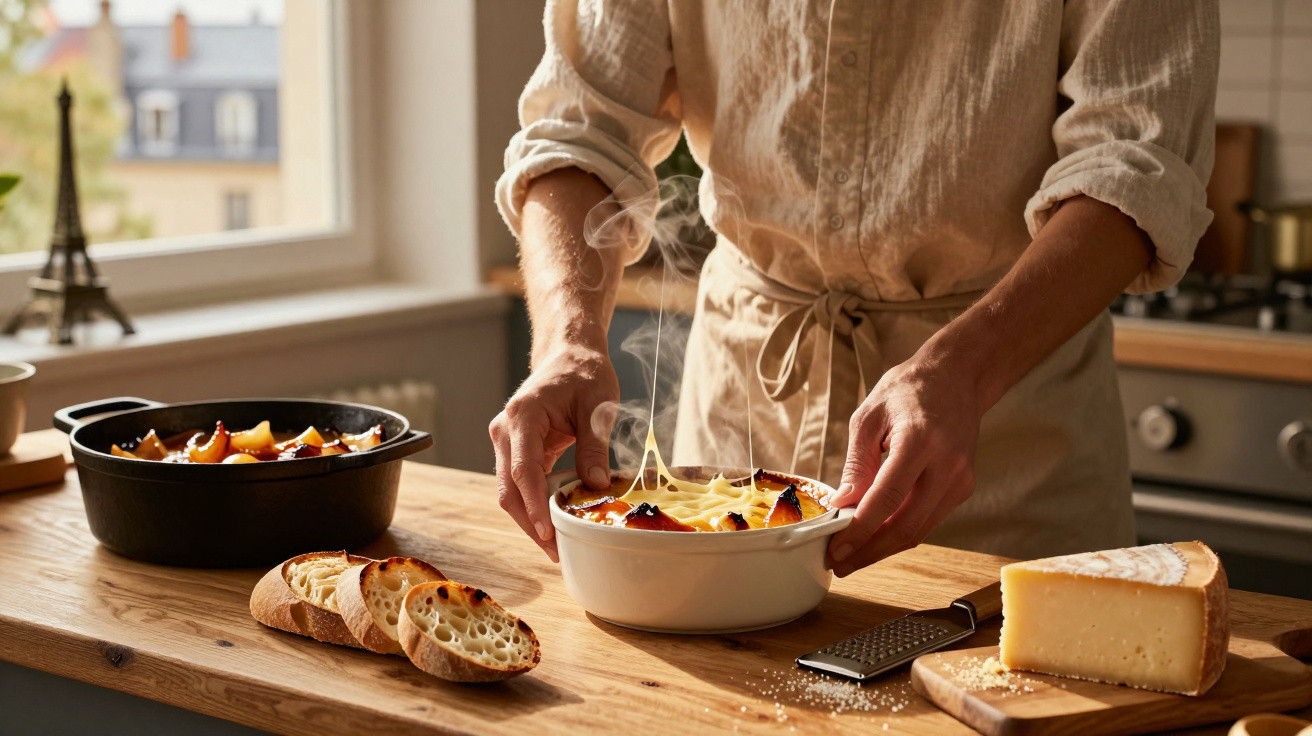
It is 10.30 pm, rain is clinging to the windows and, at the back of an almost empty bistro, a soup tureen is set down on a zinc-topped table. Beneath the blistered cheese, bread dissolves into a dark, rich, almost sweet broth: French onion soup has that unforgettable scent of a Parisian night. At home, you want to recreate it the very next day, only to look at the pale onions in the pan after 15 minutes and wonder where the magic went. It has not gone anywhere. It is simply waiting. Here is what many recipes leave out.
The secret is not the cheese, but the waiting
We all know the point at which we decide a golden onion must already be caramelised: it starts to smell appealing and the edges of the sauté pan finally take on some colour. In bistro kitchens, however, that stage is not the finish; it barely signals the beginning of the real work. The onions need to collapse, release their moisture, intensify and turn the mahogany shade that gives the broth its character. A successful soup does not merely taste of onions. It has a slight, refined bitterness, lasting sweetness and the savoury lift that makes you take another spoonful without thinking.
During a busy service, some cooks leave a large pot of onions cooking for 1 h 30 to 2 hours, or even longer depending on the quantity and the heat. At home, a soup made with one kilogram of yellow onions may need 75 to 90 minutes for this stage alone, although plenty of recipe cards promise a result in 30 minutes. The shortcut is appealing, particularly on a weekday evening. Yet it is rather like expecting jam after ten minutes of cooking: all the ingredients are present, but the depth has not had time to develop.
Caramelisation is often described as no more than a question of colour, which can be misleading. The onion's natural sugars brown gradually as its water evaporates, while the juices stuck to the base of the pan become valuable flavour. If the heat is too high, the pieces burn before softening; if it is too low and you never stir, they can steam in their own liquid and remain greyish. The right pace is less about performance than quiet attention: watch, stir, scrape and wait a little longer.
The bistro method for a standard home kitchen
Use a wide, heavy-based casserole and slice the onions without aiming for competition-level precision: evenly sized strips are enough to ensure they cook at the same rate. Sweat them in butter with a teaspoon of oil and a pinch of salt, then begin over a medium-low heat. The first 20 minutes can seem discouraging, producing a pale, wet mass that appears unwilling to change. Do not constantly interfere with the pan. Stir every five minutes, then more often once juices start collecting on the bottom: that is where the soup begins to tell its story.
Once the onions are properly brown, deglaze with a dash of dry white wine, port or even hot water if you do not cook with alcohol. Scrape the base with a wooden spoon, pour in a robust beef, chicken or vegetable stock, and leave it to simmer for another 30 minutes. Honestly, nobody really does this every day. But for a rainy Sunday or a supper when you want to please people without pretending to be a chef, this slow approach changes everything, without requiring inaccessible skills or expensive ingredients.
The most common mistake is adding sugar to speed things up. A small amount can soften a soup made with particularly sharp onions, but it never replaces the flavour built over time and may create a jam-like note. Onion soup should remain a soup, not a savoury dessert. Also, season sparingly before adding the stock, which is often already quite salty.
“The onions are ready when you no longer feel like squeezing them: they have almost dissolved by themselves.”
- Allow 1 to 1.2 kg of onions for four generous bowls.
- Plan for at least 75 minutes of gentle cooking before adding the stock.
- Use slightly stale bread: it absorbs the broth better without turning to mush too quickly.
- Grill the soup close to the grill with a cheese that melts and browns well, such as Comté or Gruyère.
Recreating that Parisian French onion soup flavour at home
The appeal of French onion soup also lies in its modesty. It begins with a vegetable forgotten in a basket, leftover bread and homemade or shop-bought stock, yet becomes something fit for a celebration once the cheese crackles in the oven. You may favour a very dark, almost powerful version, or keep the onions lighter for gentler sweetness. The essential point rests on a rare decision in everyday cooking: accepting that, for an hour, there is no need to rush.
One serving detail matters too: ladle the piping-hot soup into ovenproof bowls, place the toasted bread on top rather than at the bottom, then cover it generously with grated cheese. The contrast of golden crust, soaked bread and steaming broth is part of the pleasure. Serve immediately, even if that means warning everyone that the bowl will be scorching. The finest French onion soups are often eaten slightly too late and slightly too hot, with the patience that was missing at the start.
Ultimately, this dish expresses a reassuring idea: some spectacular results require no complicated technique, only time given to simple things. Next time the onions look sufficiently coloured, leave them for another five minutes, then five more. You will notice the difference in the spoon, but also in the aroma that lingers in the kitchen. And perhaps someone will ask, between mouthfuls of grilled bread, what exactly you did differently.
| Key point | Detail | Added value for the reader |
|---|---|---|
| Actual caramelisation time | Generally allow between 75 and 90 minutes for one kilogram of onions over a medium-low heat, adjusting for the width of the casserole and the onions' moisture content. | Prevents the pale, flat soup caused by overly quick cooking, while delivering the rounded, dark and gently sweet flavour associated with good Parisian bistros. |
| Managing the heat and pan juices | Stir regularly without fussing over the pan, then scrape up the brown juices with a little white wine, hot water or stock as soon as they begin to catch. | Recovers the flavourful residue instead of allowing it to burn, creating a more intense broth without relying on extra stock cubes, salt or artificial shortcuts. |
| Grilling at the last minute | Put toasted bread on the boiling-hot soup, cover with Comté or Gruyère, then place under a very hot grill for a few minutes immediately before serving. | Retains the sought-after contrast between crisp crust, melting cheese and soft bread, giving every spoonful its lively bistro character. |

















Comments
No comments yet. Be the first to comment!
Leave a Comment