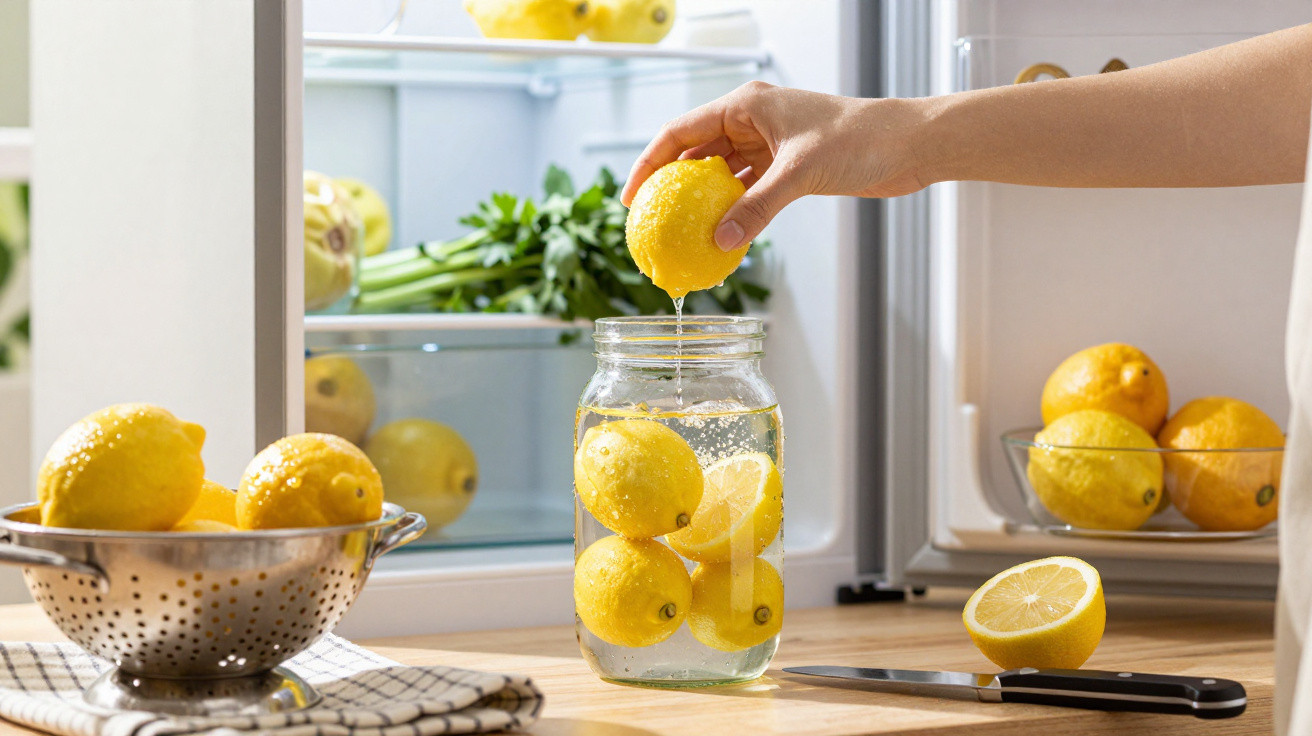
In France, lemons left too long in the vegetable drawer often end up dry or mouldy. A method shared on social media claims to slow this process.
Published on 3 June 2025, the original article reports advice from Kate Lewis, which she shared on TikTok: keep lemons fully submerged in cold water in the fridge. The approach is intended to prevent them drying out and keep them usable for several weeks.
Keeping lemons in cold water
The idea is straightforward: lemons gradually lose moisture when left at room temperature or stored in a low-humidity fridge. Their skin becomes wrinkled, the flesh produces less juice and, depending on the fruit's condition, mould may develop.
Kate Lewis therefore suggests putting lemons into a clean glass container with an airtight lid. They should then be completely covered with cold water before the jar is placed in the fridge.
According to Kate Lewis, lemons kept in cold water in the fridge can remain usable for up to four weeks.
This timeframe is not a universal guarantee. The lemons' initial condition, the fridge's actual temperature and the cleanliness of the container all have a significant effect. A fruit that is already damaged, cut open or has a soft patch should not be stored with the others, as it may speed up their deterioration.
To use this method in suitable conditions, several simple steps may help:
- select firm lemons with no mould or visibly damaged areas;
- use a thoroughly clean jar or storage box;
- make sure the fruit remains fully submerged in water;
- seal the container before refrigerating it;
- change the water regularly, as recommended by the content creator.
The original article advises replacing the water every two weeks. If it turns cloudy, gives off an unusual smell, or one of the lemons develops mould, it is better not to wait until then and to inspect everything in the container.
Washing lemons before storage
Before submerging them, Kate Lewis advises washing the lemons in a mixture of water and white vinegar. The stated ratio is one cup of vinegar to four cups of water, or roughly 240 ml of vinegar to 950 ml of water. The fruit should then be gently scrubbed with a brush used only for vegetables and rinsed under clean water.
This washing step is mainly intended to remove dirt that may be present on the skin. Lemon peel is often used in cooking, particularly for zest, cakes, sauces and drinks. Rinsing carefully before use is therefore still worthwhile, even if a lemon was washed before being stored.
A step to take with care
Vinegar is commonly used at home to clean certain surfaces and foods, but it does not replace basic food-hygiene practices. A lemon that is mouldy, very soft, leaking juice or has an abnormal smell should be discarded. Storage water cannot make spoiled fruit safe to eat.
You should also avoid keeping whole lemons and an already cut lemon in the same container. Once cut, citrus fruit is more fragile. It should be placed in a separate sealed container and eaten promptly.
Other ways to prevent lemons drying out
The article mentions another option: wrap lemons in cling film before placing them in the fridge. This barrier reduces their direct exposure to air and may limit moisture loss. It can suit people without enough fridge space for a jar of water.
Freezing is another option for lemons that are not expected to be used soon. They can be frozen whole, in wedges or in slices. Once thawed, their texture often becomes softer, making them less suitable for certain presentations, but they remain useful for cooking, making a sauce, flavouring water or adding juice to a recipe.
A frozen lemon does not necessarily retain the same texture as fresh fruit, but its juice and zest can still be used in cooking.
To reduce waste, lemons can be squeezed before their juice is frozen in small portions. The zest can also be removed before the fruit starts to dry out. These preparations make it possible to keep lemon on hand without waiting for a whole fruit to lose its freshness.
What to remember for French kitchens
In France, there is no specific rule requiring one particular storage method for shop-bought lemons. The best choice mainly depends on how soon they are due to be eaten. At room temperature, they remain easy to reach for near-term use. In the fridge, they generally retain their moisture better.
The water method requires a little more room and attention, but it may suit households buying several lemons at once. It can also prevent dried-out citrus fruit from being found at the bottom of the vegetable drawer a few days later.
Check lemons carefully before using them
Whichever method is chosen, the lemon's appearance remains the first indicator. Slightly wrinkled skin often signals moisture loss without automatically making the fruit unusable. Visible mould, unusually soft flesh or an unpleasant smell, however, should be reasons not to eat it.
A lemon that is still firm can be used in many ways: its juice brightens a vinaigrette, its zest adds flavour to a cake, and its wedges accompany drinks or fish dishes. Planning storage as soon as the lemons are bought makes it easier to use every fruit before it spoils.

















Comments
No comments yet. Be the first to comment!
Leave a Comment