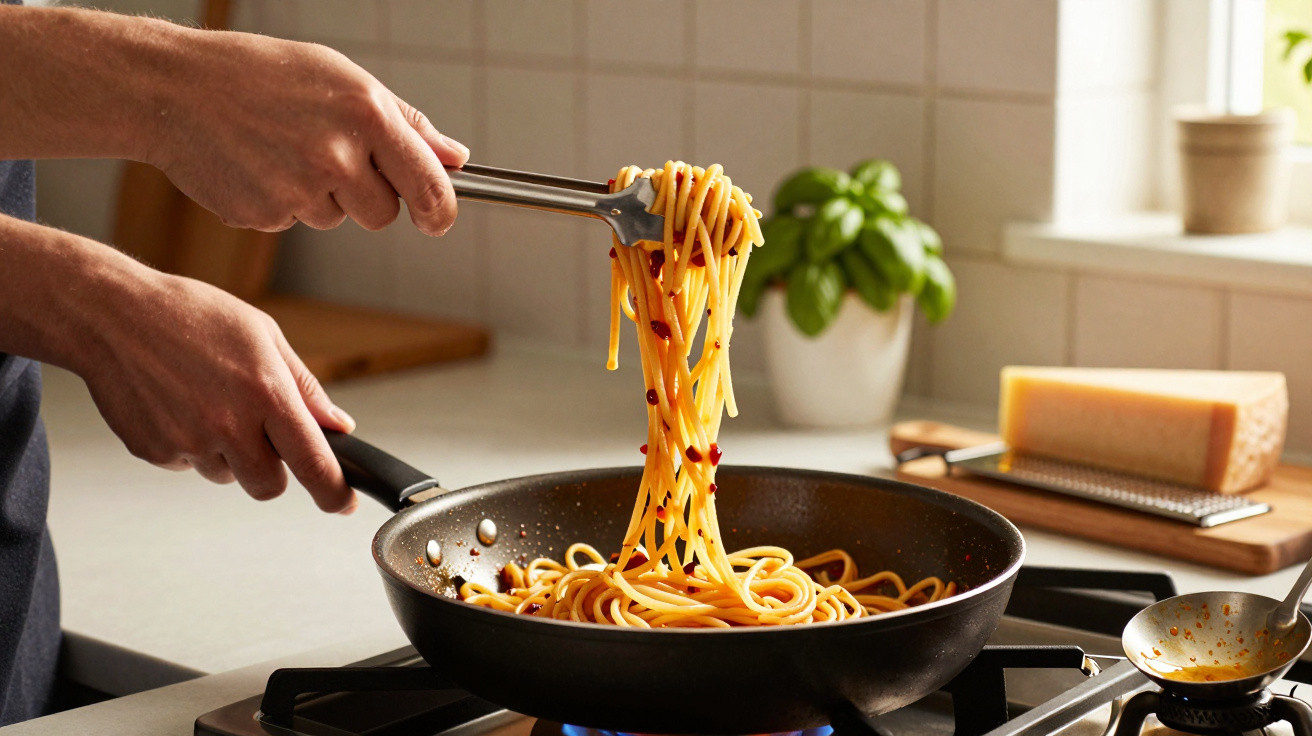
There are evenings when you get home late, the fridge looks almost empty, and a packet of spaghetti suddenly seems like the best idea in the world. The tomato sauce is gently warming, the pasta is cooking, and everything appears straightforward… until the plate reaches the table with that slight sense of “not bad, but something is missing”. We all know the feeling: dinner is perfectly acceptable, yet not genuinely memorable. The detail that makes all the difference, however, costs nothing, requires no unusual ingredient and happens during the final two minutes of cooking. Simply stop treating the pasta and sauce as separate preparations. It may seem like an ordinary step, but it turns an everyday plateful into a dish that makes you take another forkful, then another.
The step that transforms texture… and flavour
The usual habit is to drain pasta until every last drop has gone, place it on a plate, then spoon the sauce over the top. It looks neat, but it is often less satisfying to eat: the sauce slides off, pools at the bottom of the plate, and the pasta retains a slightly separate flavour. Instead, finish cooking the pasta directly in the sauce, adding a ladleful of its cooking water. Sometimes two minutes are all it takes. The change is immediate, and almost surprising if you have never tried it.
In a family kitchen, this small adjustment is quickly noticeable. Take a pan of penne with homemade tomato sauce, a little garlic, olive oil and basil: when the pasta is added while still firm, it absorbs some of the sauce as it finishes cooking. A sensory study published in culinary literature does not claim that it becomes scientifically “three times better”, of course, but the perceived contrast is real. The flavour feels fuller, rounder and more pronounced. That famous figure of three is mainly what you experience at the table.
The reason is starch. As it cooks, pasta releases a small amount into the water, and this white, slightly cloudy liquid is far from waste. When combined with fat, cheese or tomato sauce, it helps form a silky, glossy coating that clings to the food. The sauce then grips every piece instead of staying separate. This is not restaurant magic; it is simply delicious chemistry. It works equally well with a jar of shop-bought sauce or a ragù simmered for three hours.
How to finish pasta in the sauce without getting it wrong
First, cook your pasta in plenty of salted water, removing it one to two minutes before the time stated on the packet. Before draining it, scoop out a large cup of cooking water using a ladle or a heatproof mug. Transfer the pasta to a large frying pan where the sauce is already gently bubbling, then add some of the starchy water. Stir vigorously for one to two minutes. The mixture should become coating and silky, rather than watery. If it thickens too much, add another spoonful of water. If it seems too loose, let it reduce for a few seconds.
The most common mistake is rinsing pasta under cold water after draining it. We have all done it, particularly when trying to prevent it from sticking. The issue is that this washes away the fine layer of starch that allows the sauce to cling. Let us be honest: hardly anyone manages this perfectly every day, especially on evenings when children are hungry or the phone rings at the worst possible moment. But if you remember only one habit, make it this one: never rinse hot pasta that will be served with a sauce.
Getting the quantities right takes less accuracy than you might think. A creamy sauce often needs more cooking water, while an already loose tomato sauce may require only a small splash. The frying pan is your best ally: it gives you enough room to toss everything together without breaking the pasta or splashing the entire hob.
“Pasta should not wait for the sauce: it should finish its journey with it,” sums up a rule often repeated in Italian kitchens.
- Always reserve a cup of cooking water before draining.
- Take the pasta off the heat while it is still slightly al dente.
- Toss it through the hot sauce, never on a cold plate.
- Add cheese off the heat if the sauce contains cream or eggs.
A small pasta habit that revives even the simplest recipes
This method works for spaghetti with tomato sauce, small pasta with ham, linguine with lemon, or tagliatelle with mushrooms. It can also give new life to slightly flat sauces, the kind opened on a Tuesday evening with little enthusiasm. A knob of butter, a drizzle of olive oil or a handful of Parmesan added at the right time will intensify the result further. The sauce no longer merely covers the pasta: it becomes part of it. In a plate of food, that subtle difference changes a great deal.
There is also a quiet pleasure in watching the change happen in the pan. The sauce turns satiny, the pasta becomes glossy, the aroma suddenly rises, and you understand why certain simple dishes remain fixed in the memory. This is neither a technique reserved for chefs nor a rigid rule to follow exactly. It is a more generous way of cooking with what you already have. The next time you make pasta, keep that cloudy water for a few more minutes: it may become the ingredient you had never considered using.
| Key point | Detail | Added value for the reader |
|---|---|---|
| Finish in the sauce | Cook the pasta for one to two minutes with the hot sauce. | A more integrated flavour and a less dry plateful. |
| Keep the cooking water | Its starch helps bind sauce, cheese, butter or oil. | A glossy, coating texture without an expensive ingredient. |
| Do not rinse | Rinsing removes the starch that helps the sauce adhere. | Pasta that genuinely captures the sauce in every mouthful. |

















Comments
No comments yet. Be the first to comment!
Leave a Comment