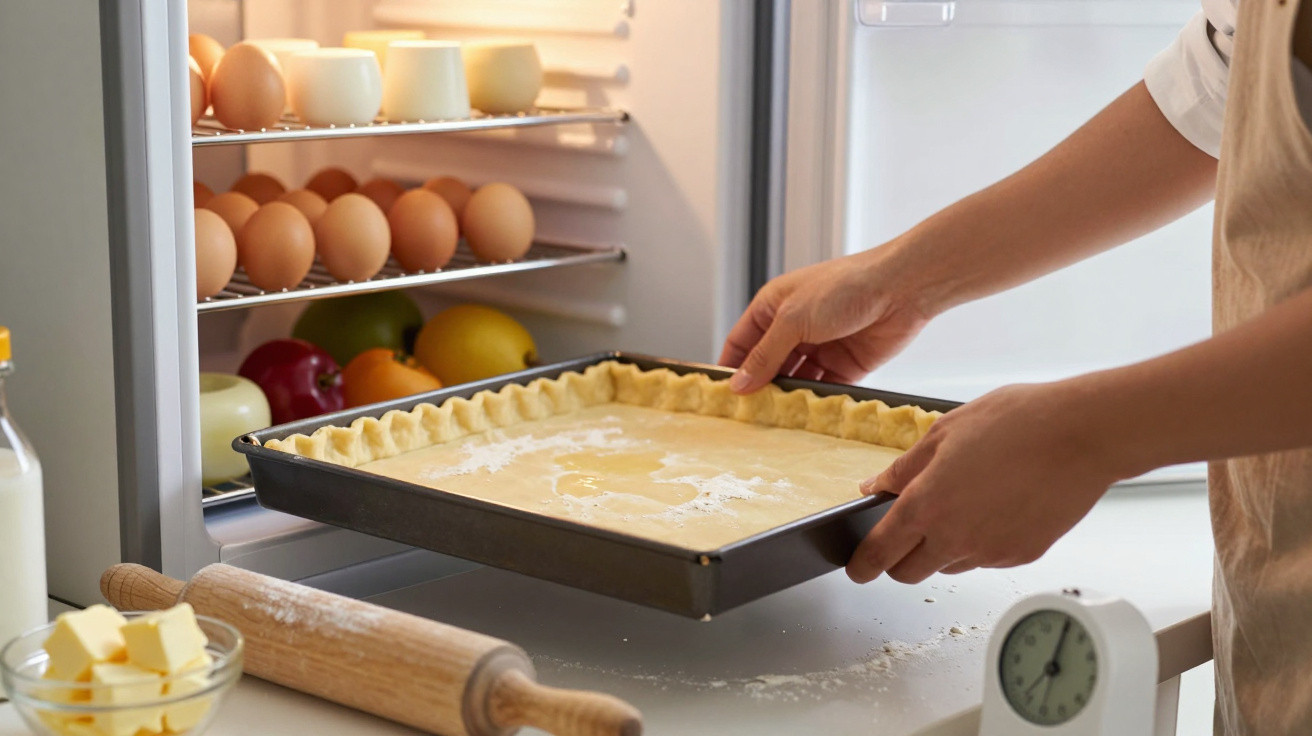
The tart was ready, the apples neatly arranged in a rosette and the oven already hot. Then comes that small disaster we all know: when you open the door, the pastry edges have slipped down towards the base of the tin, as though they have given up altogether. The recipe gets blamed, then the tin, the butter and sometimes even the weather. In truth, the culprit is usually hidden in a quiet step that feels almost irritating when time is short: chilling. Pastry chefs will not compromise on it, even when service is imminent and orders are piling up. This pause turns an overworked pastry into a neat, even and crisp tart case. That detail makes all the difference.
Why shortcrust pastry shrinks as soon as it meets the heat
Freshly made shortcrust pastry behaves like an elastic band that has just been stretched. Once it has been rolled out and placed in a tart ring or tin, the gluten network retains the tension created by handling; in the oven, it naturally tries to spring back. The sides sink, the corners pull in, and the carefully created height can disappear within minutes.
The same situation is often seen in professional pastry kitchens: an apprentice lines six tart rings, arranges them perfectly, then finds after baking that three cases are too small to hold their filling. Just a few millimetres can spoil the assembly of a strawberry tart. On a 22 cm ring, shrinkage of 1 cm can already be visible to the naked eye.
This is not caused by some mysterious lack of skill. Heat is responsible: the butter melts, water evaporates, proteins set and the pastry suddenly releases the tension built up during mixing and rolling. Pastry that is calm before it goes into the oven holds its shape better when everything around it becomes active. Chilling slows this process and gives the ingredients time to settle.
Chilling shortcrust pastry: the simple step that saves tart edges
The most dependable approach is to rest the pastry once after mixing, then again after lining the tin. Wrap the dough in film or put it into an airtight container, then refrigerate it for at least one hour. Once the tin has been lined, allow a further 30 minutes in the cold before baking: this is the time that professionals guard so carefully.
That second rest can seem excessive when lunch is approaching or the children are already asking for dessert. Honestly, hardly anyone does it every day. Preparing the pastry in the morning, or even the day before, makes the delay far less restrictive; it also becomes firmer, easier to prick and less sticky to handle.
A fridge set to around 4 °C works well, provided the pastry is not left uncovered, as it will dry out quickly. If time is genuinely tight, 15 to 20 minutes in the freezer after lining can help, although this is not a complete substitute for a longer rest.
“Pastry that has only just come off the rolling pin needs to breathe. If it goes into a hot oven while warm and tense, it reacts as best it can: it shrinks.”
- After mixing: rest the pastry in the fridge for at least one hour.
- After lining the tin: return the lined tin to the fridge for 30 minutes.
- Before baking: prick the base without pushing too aggressively through the sides.
- For blind baking: add baking parchment and suitable baking beans or dried pulses.
Small habits that stop a good rest from being wasted
Chilling cannot fix everything when the pastry has been overworked. Once the flour, butter, salt and water have come together, stop as soon as the mixture is uniform; prolonged kneading produces more elastic pastry, which is therefore more likely to contract. The right habit is to fraisage it briefly with the heel of your hand, without trying to achieve the smooth finish of bread dough.
When rolling it out, do not stretch the pastry to make it fit the tin. Lift it carefully, let it settle into the corners, then press only enough for it to follow the base and sides. Many tarts shrink because the pastry has been pulled across the edges; it simply waits until it reaches the oven to return to its original size.
Oven temperature matters too, particularly for blind-baked cases. A reasonably hot start, often around 170 to 180 °C depending on the recipe, helps the structure set before the butter spreads too quickly. Pastry chefs sometimes use perforated tart rings and vented mats to dry the base more effectively, but a standard tin and sound preparation remain more than adequate at home.
Another common mistake is adding too much water to bring the crumbs together. Shortcrust pastry does not need to be as pliable as modelling dough: it only needs to hold together when squeezed between your fingers. A few drops too many activate more gluten and make the pastry harder to manage. It is better to accept a slightly rustic dough at first than to end up with one that is smooth, shiny and impossible to control after baking.
If you are making a savoury tart, chilling becomes even more valuable because the filling is often moist and heavy. A properly chilled case stands up better to soft leeks, a vegetable quiche or juicy tomatoes. Shrinkage is not merely an aesthetic issue: it can allow filling to run beneath pastry sides that are too low and make serving distinctly less relaxed.
A brief wait that transforms the whole tart
There is something reassuring about chilling: it requires no expensive mixer, dramatic technique or secret recipe passed around in confidence. It simply asks you to slow down a little, which is not always easy when a tart is planned for that same evening. Yet seeing a tart case remain upright in its tin brings the quiet satisfaction familiar to baking enthusiasts: the feeling of having understood the ingredient instead of forcing it.
Next time shortcrust pastry shrinks, consider the time allowed between the rolling pin and the oven, as well as how it was handled. A successful tart need not be flawless; a slightly uneven edge also reflects a living, home-made kitchen. But when the outline stays sharp and the filling settles naturally into place, chilling is no longer a wait: it becomes a true gesture of generosity to share.
| Key point | Detail | Added value for the reader |
|---|---|---|
| Rest after mixing | At least 1 hour in the fridge, with the pastry well wrapped | The gluten relaxes and the pastry becomes easier to roll out |
| Rest after lining | 30 minutes in the fridge in the tin before baking | The sides retain their height and shape more effectively |
| Gentle handling | Do not over-knead or stretch the pastry into the corners | Less tension means less risk of shrinkage |

















Comments
No comments yet. Be the first to comment!
Leave a Comment