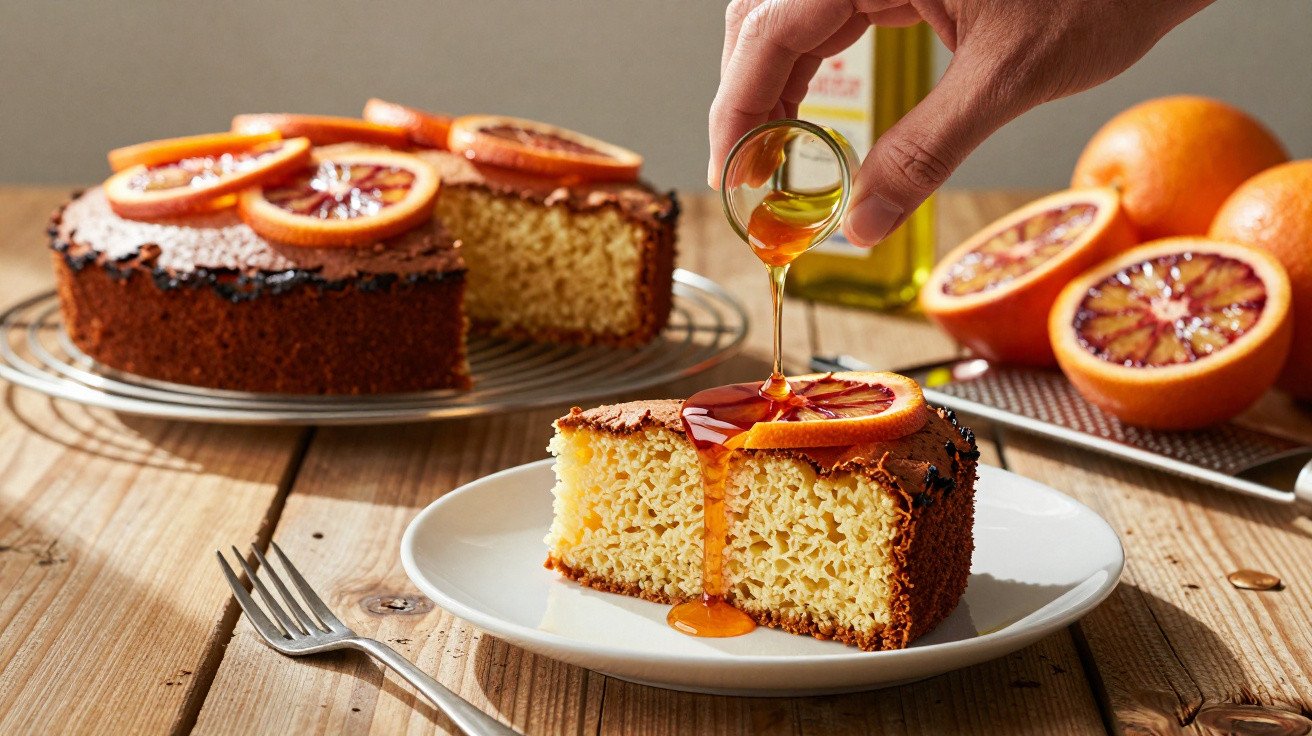
Between the final winter apples and the first strawberries, one citrus star has another moment in the spotlight: the blood orange. Its powerful fragrance and dark red flesh are ideal in a richly flavoured cake. It becomes particularly interesting when the batter uses something other than the usual mountain of butter: a fat many people associate solely with frying, and which means they may be missing out on a genuine baking highlight.
Why olive oil makes this blood orange cake so special
Butter usually takes centre stage in classic sponge cakes. In this blood orange cake, however, olive oil takes over – not as a substitute, but as an ingredient with its own character. The difference is clear as soon as the cake is sliced: the crumb stays tender and gently moist rather than becoming firm as it cools.
“Olive oil creates a delicate, elastic crumb that still feels moist the following day – without the refrigerator-induced ‘butter block’.”
Butter solidifies when chilled. This can make a cake seem denser and, at times, almost dry. Olive oil, by contrast, remains soft and barely alters its structure within the cake. Each slice therefore stays pleasingly tender and almost inevitably invites a second helping.
The pairing works remarkably well with blood orange. The fruit supplies freshness, a slight tang and vivid colour, while a mild olive oil adds subtle body and roundness. Chosen carefully, the oil enhances the flavour rather than making the cake taste like a Mediterranean starter.
The key ingredients for the perfect texture
The recipe relies on straightforward yet thoughtfully balanced ingredients, which together create a golden crust and soft centre.
- Flour with a raising agent for structure and lift
- Ground almonds for an almost creamy crumb
- Icing sugar, which disperses more finely than granulated sugar
- Olive oil as the main fat, mild and fruity
- Eggs to bind the mixture and carry air
- Blood orange juice and zest for acidity and fragrance
- A little bicarbonate of soda for extra lightness
- Water, sugar and sliced blood oranges for the glossy syrup topping
The quality of the oil is crucial. An especially strong or bitter variety will overpower everything else. Mild, fruity oils are best, often labelled “mild” or “mild and fruity”. They contribute a gentle nuttiness without making the cake taste savoury.
Making the syrup: blood oranges like stained glass
The cake is defined not only by its interior but also by its gleaming top, covered with candied slices. Put the water, blood orange juice and sugar into a saucepan, then warm them gently. Once the sugar has dissolved, let the orange slices steep in the liquid until they are soft and nearly translucent.
Leave the slices in the syrup until the cake has finished baking. This lets them absorb the liquid while gaining both bite and shine. Just before serving, arrange them over the cooled cake and brush or spoon over a little warm syrup. The result is an almost lacquered, highly tempting finish that recalls a patisserie creation.
The batter: stir gently rather than beating vigorously
When preparing the batter, technique determines the final texture. Start by placing the dry ingredients – flour, almonds, icing sugar and bicarbonate of soda – in a bowl and mixing them thoroughly to remove any lumps. Then add the eggs, olive oil, blood orange juice and finely grated zest.
“The most important step: stir only until the mixture is smooth – no longer.”
Overworking the batter develops more gluten, making it tougher and causing it to lose air. Especially when olive oil is involved, this can leave the crumb unexpectedly firm. The mixture should look smooth, light and pourable, without having excessive air beaten into it.
Bake the batter at a moderate temperature until the top is golden brown and a knife or wooden skewer emerges clean. If the surface colours too quickly, loosely cover it with a sheet of baking parchment. This prevents the cake from drying out while keeping the crust appetising.
After baking: patience is rewarded
Once baked, leave the cake in its baking frame until it has cooled slightly. This allows its structure to set. Only then should it be turned out, topped with the candied blood orange slices and drizzled with syrup.
Gradually, the syrup soaks into the crumb. This changes the texture for a second time: at first the cake seems fairly light, but after resting for a while it becomes even moister and denser without feeling heavy. Anyone who cuts it immediately will notice the difference – after one or two hours of resting, the flavour becomes more rounded.
How home bakers can avoid the typical “oil flavour”
Many people hesitate to use olive oil in cakes because they fear an overpowering flavour. A few simple guidelines can prevent this:
- Choose a mild oil: avoid intensely bitter, grassy varieties and opt for one with a gentle fruitiness.
- Do not overwork the batter: mix briefly, only until everything is combined.
- Balance the flavours: include sufficient citrus zest and juice.
- Keep to the proportions: do not use substantially more oil than the recipe specifies.
Citrus fruit softens harsh notes in the oil, while almonds provide a mellow, rounded base. Ideally, the olive oil is not consciously detectable; instead, all that comes through is moisture and a pleasant richness in the mouth.
Variations using other citrus fruits
If blood oranges are unavailable, there is no need to forgo the cake. Its basic structure is easy to adapt:
| Citrus fruit | Flavour | Character in the cake |
|---|---|---|
| Lemon | bold, fresh, distinctly sharp | very lively; needs a little more sugar in the syrup |
| Clementine | mild, sweet | a rounder, family-friendly flavour, ideal for children |
| Grapefruit | slightly bitter, aromatic | interesting for adults and more sophisticated in character |
The quantities of juice and zest remain broadly the same; only the balance of acidity and sweetness changes. For a more intense result, increase the amount of zest or spoon a little extra syrup over the top.
Serving the cake: from afternoon tea to a dessert plate
The flavours are most expressive at room temperature. This is when the blood orange, almond and olive oil come through most clearly. Served slightly warm, the cake becomes almost pudding-soft and goes particularly well with:
- a dollop of Greek yoghurt
- lightly whipped cream
- vanilla or yoghurt ice cream, for a warm-and-cold contrast
Thanks to its syrup soak, the recipe also works well as the final course of a meal. The sweetness can be adjusted through the amount of syrup used, while a little finely grated zest added just before serving makes every portion taste fresher.
Keeping, storing and freezing
Olive oil brings a further benefit: the cake stays enjoyable for longer. Stored in an airtight container, it remains moist for several days. The syrup prevents it from drying out, and the crumb keeps its supple texture.
For freezing, it is best to cut the cake into portions and wrap them individually. This makes it possible to defrost each slice as needed without damaging the surface. Once thawed at room temperature, the crust still looks pleasantly golden brown and the centre remains soft.
Why olive oil deserves more attention in sweet baking
In German-speaking countries, olive oil is generally used for frying or dressing salads, while butter dominates the cake tin. That is precisely what makes this alternative so appealing: it offers a different texture, more moisture and a subtle flavour that works especially well with nuts and citrus fruit.
Those wishing to experiment cautiously can first replace only part of the butter with oil and gauge the response from family or guests. In many cases, they simply notice that the cake is unusually moist – without asking why. Little by little, this encourages bakers to move beyond familiar butter-based bakes and experiment creatively with mild olive oils.

















Comments
No comments yet. Be the first to comment!
Leave a Comment