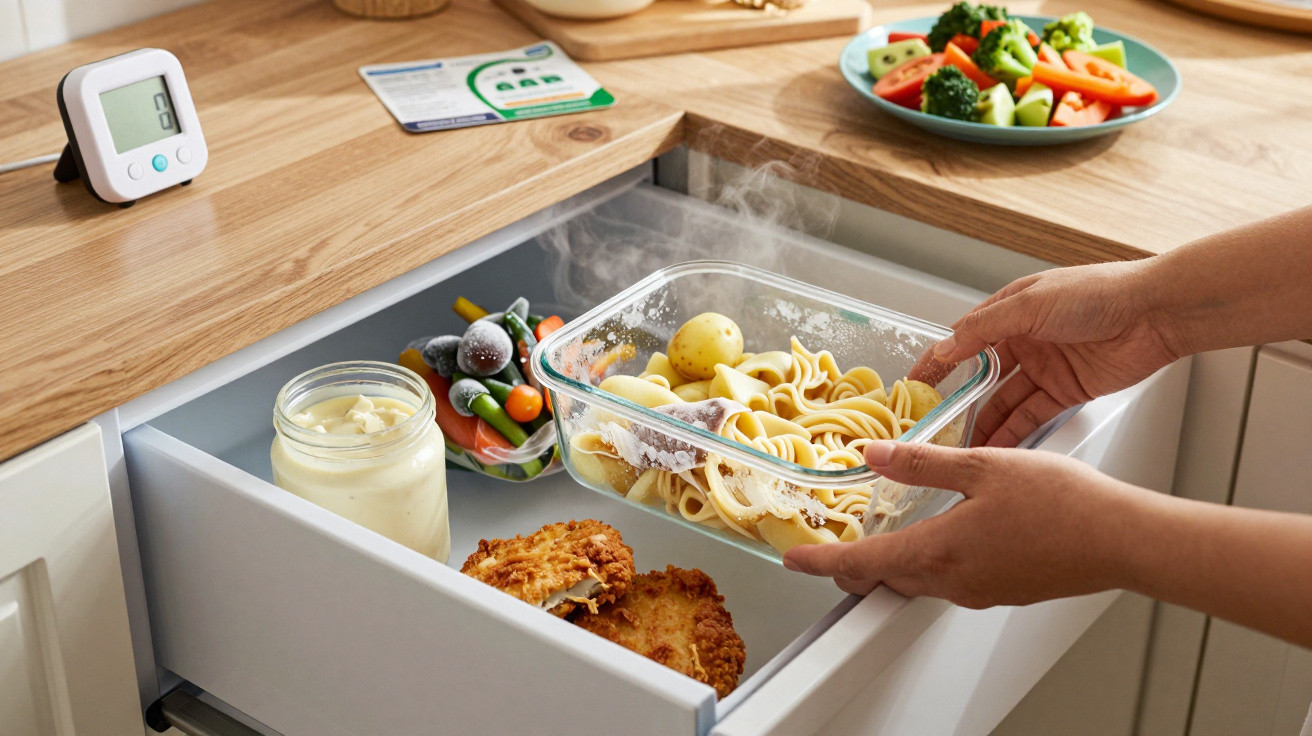
You fill your freezer with home-cooked meals because you think it will save time. Yet some ingredients cope very badly with freezing and can spoil the whole dish.
The consumer website on which this article is based warns against five everyday foods that do not freeze well in cooked meals, in France and elsewhere in Europe. If chosen poorly, they can turn a tasty gratin or pasta dish into a watery, lumpy or flavourless containerful once it comes out of the freezer.
Why certain foods spoil a frozen meal
Freezing does not affect every food in the same way. Water, fat and starch content all play a decisive part. As water turns to ice, it ruptures food cells. When defrosted, that water leaks out, altering the texture and potentially leaving the dish soft or waterlogged.
Some components, such as starch, milk proteins and emulsified sauces, react particularly badly to prolonged cold and separate as they thaw.
People often assume that an all-purpose dish such as a gratin, a vegetable skillet dish or a casserole will freeze without difficulty. In reality, everything depends on its ingredients. The source outlet points out that manufacturers develop recipes to withstand freezing, whereas home cooks often use the same ingredients as they would for a meal served straight away.
Potatoes: the first enemy of freezer containers
Potatoes are among the foods most frequently singled out. Whether whole, sliced or mashed, they cope poorly with an extended stay in the freezer once they have been cooked.
- Floury texture: the starch changes, leaving the flesh grainy and sometimes rubbery.
- Leaking water: after reheating, potatoes release water and soak the rest of the meal.
- Loss of flavour: their soft, subtly sweet character often disappears after several weeks in the cold.
In a home-frozen dauphinoise potato bake or a vegetable skillet dish, these texture changes can ruin the whole meal. The advice drawn from the source is straightforward: cook potatoes at the last minute instead. For meals intended for the freezer, replace them with vegetables that withstand freezing better, such as carrots or lightly crisp broccoli.
Pre-cooked pasta: a classic batch-cooking trap
Pasta is the second food often blamed. It features in many make-ahead dishes, but performs poorly when it has been cooked “as usual” before freezing.
Pasta that is perfectly al dente on the table can become soft, sticky and unable to hold its shape after time in the freezer.
The issue lies in the starch and water absorption. During freezing, water solidifies inside the pasta. When it is reheated, that water comes out again, the pasta swells and breaks down. In a tray of lasagne or pasta with sauce, this can result in:
- layers that collapse and merge together;
- sauce that is set in some areas but watery in others;
- a stodgy dish that is difficult to reheat evenly.
Manufacturers reduce the initial cooking time and adjust the sauce's water content to limit these effects. At home, the source advises against putting already cooked pasta into freezer containers. If you do want to include it, cook it very firm and use only a small quantity, with plenty of sauce.
Cream, béchamel and milk-based sauces: separation is inevitable
Most baked dishes and meats in sauce contain cream, milk or béchamel. These preparations, which rely on milk proteins, do not tolerate freezing well unless they were designed for it.
A smooth, creamy sauce before freezing can emerge lumpy and split into two layers, with water on one side and fat on the other.
The problems commonly seen in home-frozen meals include:
- Lumps: béchamel becomes grainy, particularly when it is thick.
- A curdled appearance: the sauce separates and fat rises to the surface.
- Rubbery cheese: melted cheese incorporated into a sauce or gratin can become elastic.
The consumer outlet behind these recommendations notes that brands sometimes use modified starches or particular fats to stabilise their sauces. Home cooks do not have these tools. Its advice is therefore to limit the amount of cream in meals for freezing, favour sauces made with tomato purée or stock, and, if desired, add a dash of fresh cream only after reheating.
Water-rich vegetables: the enemy of crunch
Courgettes, cucumbers, fresh tomatoes, mushrooms and aubergines all contain a great deal of water. When cooked and then frozen as part of a complete dish, they frequently turn into a soft mass as they defrost.
A vegetable that still seemed firm when cooked can become limp after freezing, release its water and dilute the sauce.
The most common effects in a freezer container are:
- courgettes and aubergines collapsing into a watery purée;
- mushrooms shrivelling and releasing a dark liquid;
- fresh tomatoes losing all structure and adding moisture to everything else.
To avoid this, the source recommends either choosing vegetables that handle freezing better, such as carrots, peas, green beans and leeks, or only par-cooking them so that they retain some bite. Another option is to add them while reheating, by quickly frying them, rather than incorporating them before freezing.
Eggs and breaded preparations: unpredictable textures
The final category to watch includes dishes containing a large quantity of egg or homemade breadcrumbs. Quiches, savoury custards and egg-based desserts can all change texture easily. Their filling may become spongy, crack or release water during defrosting.
For breaded foods, manufacturers use breadcrumbs formulated specifically for this purpose. At home, fine breadcrumbs or ordinary grated bread do not produce the same result:
- the coating comes away;
- the crust becomes soggy during reheating, even in the oven;
- the food looks noticeably greasy because oil trapped in the coating does not render properly.
A home-frozen quiche can have a soggy pastry case, a cracked filling and areas of standing water on its surface.
The recommendations from the source are cautious: avoid freezing cooked quiches or savoury custards for too long, and opt for a short freezing period if you want to prevent this culinary disappointment. With breaded items, it is often better to freeze the raw, breaded food and cook it directly from frozen to retain some crispness.
How to improve home-made freezer containers
The consumer outlet's warnings do not mean home-cooked meals should not be frozen; rather, they encourage adapting recipes. For people who batch cook, a few habits can reduce unpleasant surprises:
- Use fewer potatoes, or cook them separately on the day of serving.
- Avoid overcooked pasta: keep it firm and thoroughly coated in sauce.
- Cut back on cream and milk-based sauces in meals intended for freezing.
- Choose vegetables with less water, or keep them slightly crisp.
- Freeze delicate elements separately, including breadcrumbs, grated cheese and fresh herbs.
| Food concerned | Problem after defrosting | Tips |
|---|---|---|
| Cooked potatoes | Floury texture, leaking water | Add them fresh, or replace with other vegetables |
| Pre-cooked pasta | Soft, sticky, unable to hold its shape | Cook very firm, use a smaller portion and plenty of sauce |
| Cream and béchamel | Split sauce, lumps | Use less, thicken with starch, add a little cream after reheating |
| Very water-rich vegetables | Limp texture, lots of water | Par-cook briefly, choose firmer vegetables |
| Eggs and homemade breadcrumbs | Spongy texture, soggy coating | Freeze only briefly, cook directly in the oven at the final stage |
What food safety guidance in France recommends
In France, authorities such as the French Agency for Food, Environmental and Occupational Health & Safety (Anses) reiterate the key principles of freezing food at home. The centre of a dish must be completely cool before it goes into the freezer, to limit the formation of large ice crystals that damage food. Containers should be tightly sealed to prevent freezer burn and the transfer of odours.
French guidance focuses less on the final texture than on food safety: never refreeze a thawed meal, observe sensible storage periods and keep the freezer at a sufficiently low temperature. The consumer outlet underpinning this article adds a practical point: consider which ingredients go into prepared meals so their eating quality remains acceptable after several weeks in the freezer.
Freezer: useful guidance for households
For households that cook in advance, several approaches reduce disappointment without calling the value of the freezer into question:
- make sauce bases, such as tomato sauce, Bolognese or curry, without potatoes or pasta, then serve them with a freshly cooked accompaniment;
- cook sensitive starchy foods, including pasta, rice and potatoes, separately on the day they are served;
- freeze small portions to shorten defrosting time and reduce the risk of overcooking when reheating;
- label containers with their date and contents so that they are not forgotten for months.
Understanding how food reacts to cold makes it possible to adapt recipes without radically changing established habits. The same dish can be made in two versions: one to eat immediately, and another for freezing, with less cream, egg or very water-rich vegetables.
A note on ice crystallisation and freezer burn
One term comes up regularly in consumer advice: ice crystals. If a meal cools slowly before freezing, the crystals that form are larger and cause greater damage to the food's structure. By contrast, rapid cooling followed by freezing in a properly set appliance limits this damage. This is why commercially frozen meals often retain a better texture.
Freezer burn is another concern: it occurs when food is insufficiently protected from air. It can be identified by dry, whitish areas on the surface. It does not pose a direct food safety risk, but it seriously affects both texture and flavour. To prevent it, households should use airtight containers or bags made specifically for freezing, removing as much air as possible before sealing them.
By combining these safety measures with care around the five foods that need cautious handling, a domestic freezer can help organise weekday meals without routinely sacrificing texture and enjoyment.

















Comments
No comments yet. Be the first to comment!
Leave a Comment