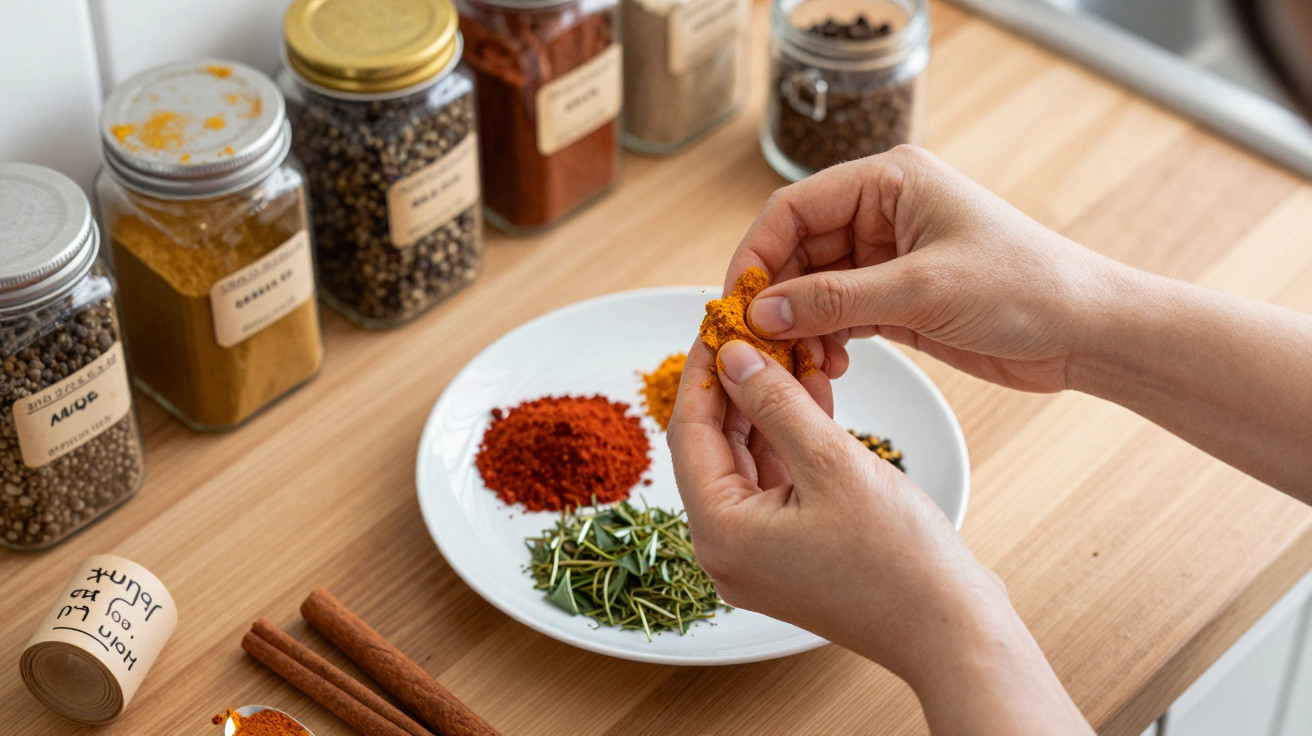
The jar of paprika is there, wedged behind the vanilla sugar, with a fine layer of dust on its lid. You open it before putting a roast chicken in the oven, bring it to your nose… and there is little, if any, aroma. We all know that mildly frustrating moment when we realise the dish will not be as fragrant as expected. A date may still be visible on the label; on other jars, it disappeared long ago beneath a splash of sauce. Spices do not necessarily become unsafe overnight, but they can lose everything that makes them worthwhile: their aroma, depth and character. In the kitchen, a lifeless powder does not always go unnoticed.
A date on the jar, but not necessarily an expiry date
Dry spices usually carry a best-before date. This marks the period during which the manufacturer guarantees optimum quality, rather than the exact point at which the product becomes unfit to eat. Ground cumin that has passed its date by a few months does not suddenly turn into poison. Its main risk is becoming bland, which is still disappointing when you are relying on it to lift a curry or a pan of vegetables.
In the cupboard, whole spices generally withstand time better than ground versions. Properly stored peppercorns, cloves and coriander seeds can retain their punch for three to four years, and sometimes longer. Powders, on the other hand, often lose much of their intensity after two to three years. Dried herbs such as basil, oregano and thyme fade even faster: after a year, their colour and scent already tell a different story.
The reason for this decline is straightforward: aromatic compounds are volatile. A little escapes each time the jar is opened, while air, light, heat and moisture speed up the process. Turmeric can retain its vivid yellow colour even when it has almost no flavour left; this is one of the most common traps. A spice may look perfectly fine while contributing very little to the plate. A date alone is therefore not always enough to decide.
Simple ways to tell whether a spice has lost all its flavour
The first check requires neither equipment nor particular skill: open the jar and smell it. A spice that is still lively should release a clear scent within the first few seconds, without having to put your nose right into the bottom of the jar. Rub a pinch of dried herbs between your fingers, or crush a peppercorn with the flat of a knife: its aroma should wake up immediately. If the smell is faint, dusty or non-existent, the spice has probably had its day.
Check the texture before cooking as well. Powder clumped into solid blocks, damp seeds, a musty smell or tiny white marks should all raise concerns: this is no longer just about flavour, but poor storage. Throwing the jar away is then the most sensible option. Let us be honest: hardly anyone does this every day, especially when the jar is almost full and waste is the last thing you want. Even so, replacing an old powder is preferable to trying to rescue a disappointing recipe.
The best routine is to buy small amounts, date jars when opening them and choose smaller packs for spices you rarely use. A smell test before cooking prevents many dishes from turning out disappointingly flat.
“If a spice no longer scents your fingers, it will struggle to scent your dinner.”
- A strong, recognisable smell: the spice is still worth using.
- A dull colour and no aroma: it deserves to be replaced.
- Moisture, mould or insects: it belongs in the bin.
- A jar opened years ago: test it before adding it generously.
Proper storage really does extend the life of your spices
The worst place for spices is not always the one you might expect. The small rack positioned directly above the hob is convenient, photogenic and almost traditional… but it exposes them to steam and temperature changes. Over time, paprika becomes bland, curry loses its aroma and blends absorb moisture. Choose a closed, dry cupboard away from the oven instead. A neatly arranged drawer can also work, provided it is not right beside a heat source.
One small detail makes a considerable difference: do not shake the jar straight over a steaming pan. Steam rises into the container, settles on the powder and encourages clumping. Instead, pour the amount you need into a spoon or your palm, away from the heat. Whole spices are also best bought whole and ground at the last minute. A few cumin seeds toasted in a frying pan are simply nothing like powder forgotten for three winters.
This is not about turning your kitchen into a laboratory or throwing away every jar past its date. Rather, it is about rediscovering the true taste of ingredients and stopping blaming a recipe when the problem is at the back of the cupboard. A fresh spice adds depth in a small quantity; a tired one often leads you to add too much without ever achieving the desired result. Sorting through them can become a small seasonal ritual, before autumn stews or summer barbecues. You may rediscover a surprisingly good pepper, a chilli that is still vibrant, or, conversely, that subdued cumin which was due for replacement.
| Key point | Detail | Benefit for the reader |
|---|---|---|
| Indicative date | The best-before wording mainly concerns aromatic quality. | Avoid automatically discarding a spice that is still sound. |
| Most reliable test | Smelling it, then rubbing it between your fingers, reveals its remaining strength. | Quickly determine whether the jar deserves a place in the recipe. |
| Good storage | A dry, dark cupboard away from steam preserves aromas for longer. | Retain flavour for longer and reduce waste. |

















Comments
No comments yet. Be the first to comment!
Leave a Comment