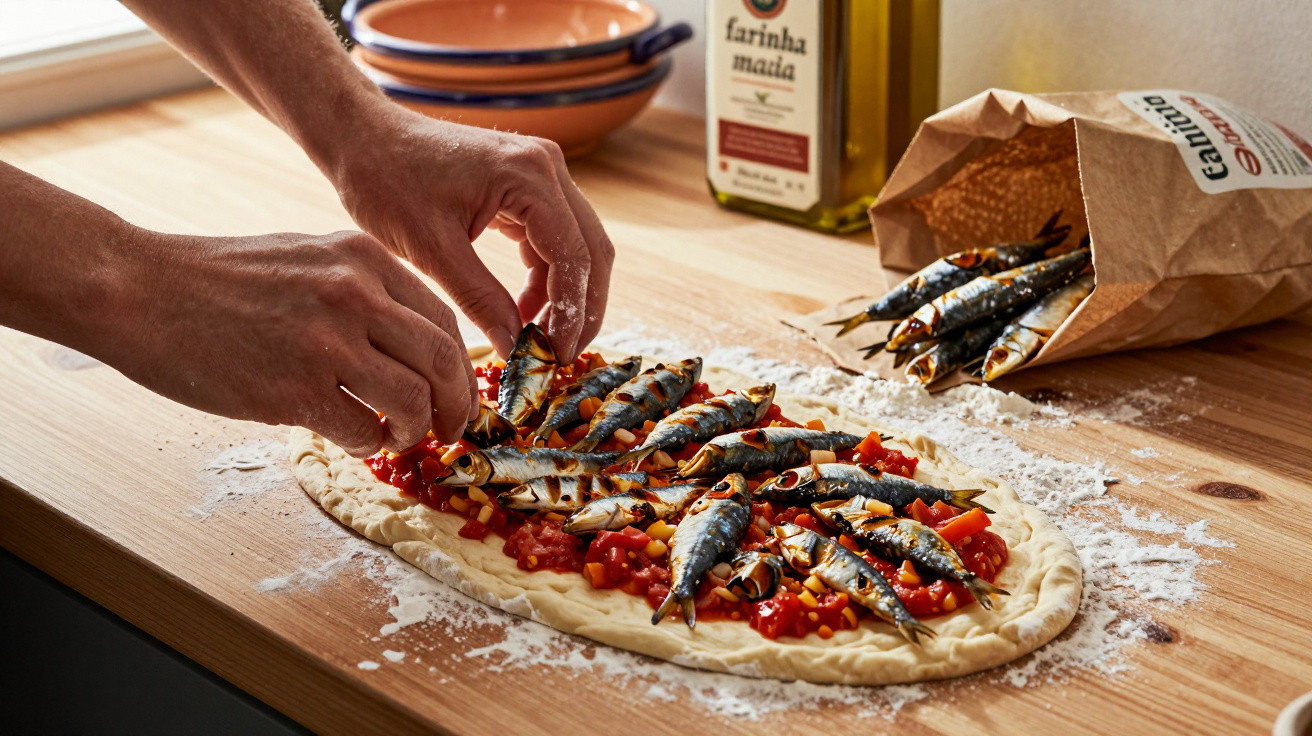
Maria Lo, MasterChef winner, has reignited a delicious Spanish cooking debate by saying that Galician empanada should not contain tuna, but 14 sardines and 400g of soft flour. Her recipe centres on a thin pastry, a juicy filling, a carefully prepared sofrito and a fish deeply rooted in Galicia’s culinary heritage.
Why does Maria Lo use sardines instead of tuna?
Maria Lo considers sardines the ingredient most faithful to traditional Galician empanada. Their more pronounced flavour, firm texture and distinctive character allow the fish to stand out rather than disappear into the filling.
The choice is also connected to Galicia’s coastal cooking, where fish, seafood, peppers, onions and olive oil feature in uncomplicated dishes with a strong sense of place. Sardines strengthen this more rustic profile, setting the recipe apart from the familiar tuna version.
What ingredients are used in this Galician empanada?
Maria Lo’s Galician empanada relies on two essentials: a thoroughly cooked filling and pastry with limited elasticity. The sardines are added after the sofrito so that they cook only briefly and retain their flavour.
- 14 medium sardines, cleaned and filleted, or well drained if using tinned sardines;
- two large sweet onions, thinly sliced;
- one red pepper, paprika, bay leaf, salt and olive oil;
- 400g of soft flour, 120g of olive oil from the sofrito, whole milk and salt.
Why does soft flour change the pastry texture?
Soft flour has less strength, producing a dough with less elasticity. In practical terms, this creates a thin base that is more tender and slightly crumbly when bitten, without the chewy effect that stronger flours can produce.
In Maria Lo’s recipe, the 400g of soft flour is mixed with some of the olive oil used for the sofrito. This brings flavour directly into the pastry and connects the outer layer with the filling, rather than leaving the empanada tasting like separate elements of bread and fish.
How should the filling be assembled without making the pastry heavy?
The filling should be moist but never watery. The onion and pepper need to cook slowly in olive oil until soft, without burning, as this aromatic base supports the flavour of the sardines.
- Cook the onion and pepper over a low heat until thoroughly softened;
- add the paprika away from intense heat so it does not turn bitter;
- add the sardine fillets for just a few minutes, only until they firm up;
- allow the filling to cool slightly before sealing the empanada.
What makes this version so closely linked to Galician tradition?
Galician empanada originated as practical food: easy to carry, share and preserve because the filling was enclosed in pastry. With sardines, olive oil, onion and pepper, Maria Lo’s version reflects a coastal cuisine that is economical and direct in flavour.
The final result depends less on luxury than on technique: thin pastry, evenly spread filling and a hot oven until golden. Replacing tuna with sardines, while using soft flour for a more delicate bite, gives the recipe an identity closer to that of old Galician tables.

















Comments
No comments yet. Be the first to comment!
Leave a Comment