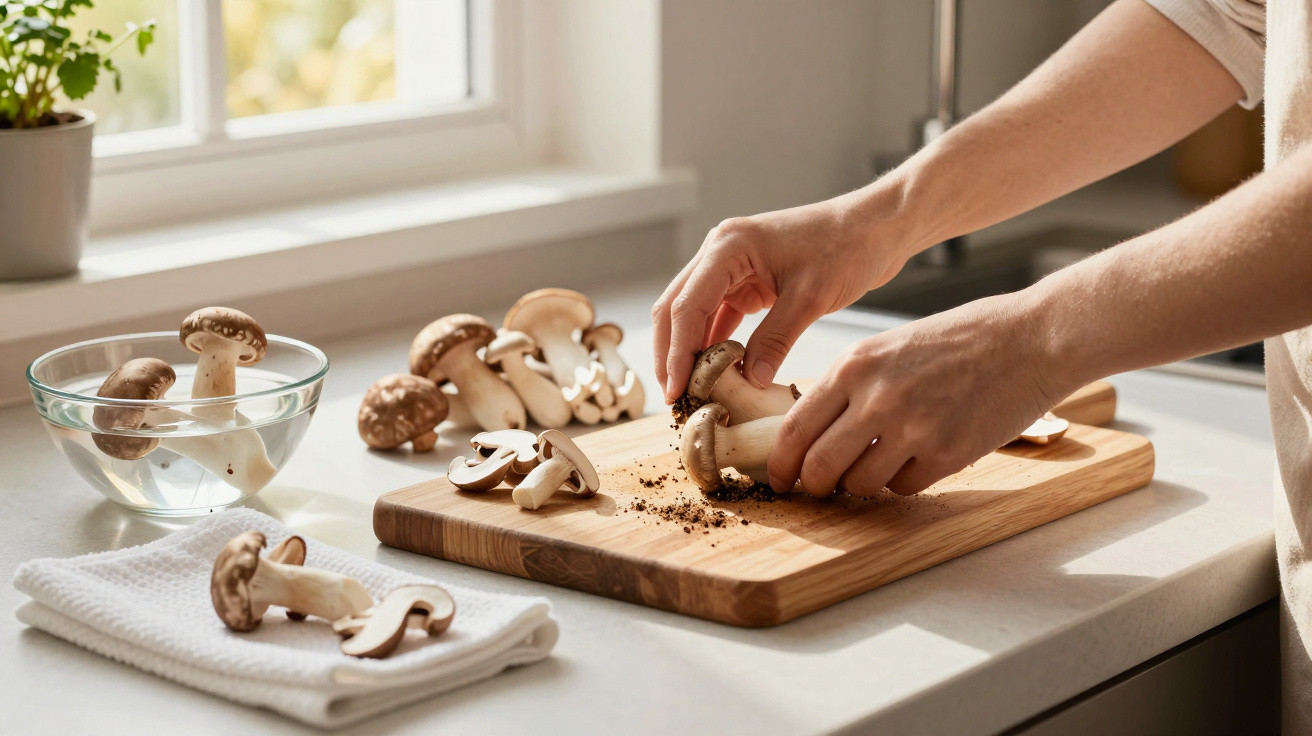
The basket has just come back from the market, still damp with dew, and the mushrooms are waiting by the sink. This is often when uncertainty creeps in: a thorough rinse under the tap, or merely a brush? From soil stuck to the stem of a button mushroom to the delicate folds of a chanterelle, it may seem like an insignificant decision. Yet it can alter the texture of an entire panful. We all know the moment when mushrooms release so much water that they end up simmering in their own juices, rather than developing the appealing colour we wanted. The key lies in what happens before the hob is even switched on. Chefs use a straightforward method to prevent this small dinner-time disaster.
Why mushrooms do not like long showers
On the worktop, a fresh mushroom looks firm and almost dry, with a thin skin and a subtle woodland scent. Leave it to soak in a bowl, however, and it behaves rather like a sponge: it takes in some of the available water, particularly if it has been sliced or damaged. Once in the frying pan, that water is released immediately, lowering the temperature. Instead of browning, the mushrooms begin to gently boil. The outcome is not unsafe, merely disappointing: less flavour, less bite and less of that attractive golden colour that whets the appetite.
Button mushrooms are particularly affected, as they are commonly bought in punnets and routinely rinsed beneath the tap. A frequently cited culinary study shows that a very quick rinse adds only a minimal amount to their moisture content, whereas lengthy soaking genuinely changes the way they cook. A few seconds beneath running water will therefore not spoil the meal. Ten minutes in a bowl, on the other hand, is enough to make a noticeable difference. This matters especially for an omelette, risotto or pan-fried mushroom dish, where the mushrooms need to remain properly golden.
The familiar instruction not to wash mushrooms therefore needs some qualification. They grow close to the ground, pass through crates and market stalls, and may be handled by many people, so cleaning them is sensible. What should be avoided is not water itself, but an unnecessary soak and the delay that follows it. A mushroom that is rinsed and then left in a colander for twenty minutes will absorb and retain more moisture than one cleaned immediately before cooking. Let us be honest: hardly anyone does this perfectly every day. Still, knowing the right reflex quickly changes habits.
The chefs' method: brush, rinse quickly, dry straight away
The most dependable approach starts with a calm inspection. Use the tip of a knife to remove blackened, dry or muddy areas, then run a small soft brush, a pastry brush or lightly damp kitchen paper over the caps. For porcini, oyster mushrooms and chanterelles, dry cleaning is often the best choice. Chefs favour it because it protects the delicate flesh and aromas. If the mushrooms are genuinely coated in soil, a very brief rinse under a fine stream of cold water is acceptable, provided they are dried at once.
The right technique is almost quicker than conventional washing: rinse mushrooms in small handfuls, never the entire basket in the sink, then spread them over a clean tea towel or several sheets of kitchen paper. Pat them dry without crushing them. They should go into the frying pan without delay, in a large, properly heated surface with only a little fat at first. Do not overcrowd the pan, even if that means cooking in two batches. This is how you achieve the lightly toasted, almost nutty flavour sought in a cream sauce or on warm toast.
A common mistake is to peel button mushrooms automatically. Their thin skin is edible and full of flavour; removing it takes time without always improving the result. Save that step for mushrooms that are especially old or stained.
“A clean mushroom is not a waterlogged mushroom: remove the soil, do not give it a bath.”
To keep a good pace in the kitchen, remember these simple guidelines:
- brush mushrooms that are only lightly soiled;
- rinse only those still carrying soil;
- dry them immediately, then cook them without delay.
This routine may seem modest, but it prevents the soggy panful nobody had really planned for.
Each mushroom variety needs its own approach
The rule is never quite the same for every mushroom. Morels, with their deep honeycomb-like hollows, need particular care: they are sometimes cut in half to remove sand and tiny insects, then quickly rinsed and carefully dried. Chanterelles readily hide soil in their folds; a soft brush or a slightly damp pastry brush works wonders. Oyster mushrooms, meanwhile, do not respond well to water and are almost always cleaned dry. Their fine texture takes on moisture quickly, making them more delicate during cooking.
With wild mushrooms picked in the woods, caution goes beyond cleaning. Washing never makes a doubtful species edible, nor does it eliminate the dangers of incorrect identification. Before eating them, have your harvest checked by a pharmacist, a mycological association or another qualified person. The precaution may sound obvious, but the excitement of a walk can make people forget what matters most. A beautiful amanita does not become a chanterelle simply because it has been carefully brushed. Cleaning improves flavour, not botanical safety.
Ultimately, the best method depends as much on observation as on any fixed rule. A very clean mushroom bought from a grower can go straight into the frying pan after a simple wipe. A batch covered in soil deserves a few seconds of water, without guilt. Freshness remains the deciding factor: a firm cap, a pleasant smell, no sliminess and clean gills. When mushrooms become sticky, very soft or deeply browned, it is better not to persist. Everyday cooking benefits from flexibility. A good technique is better than an old dogma.
| Key point | Detail | Added value for the reader |
|---|---|---|
| No soaking | Mushrooms absorb water when they remain submerged for a long time. | A firmer texture and more flavourful cooking. |
| A quick rinse is possible | Cold water, a brief rinse, then immediate drying. | Clean mushrooms without the “sponge” effect. |
| A wide, hot frying pan | Cook small quantities without piling up the pieces. | Golden browning and more intense aromas. |

















Comments
No comments yet. Be the first to comment!
Leave a Comment