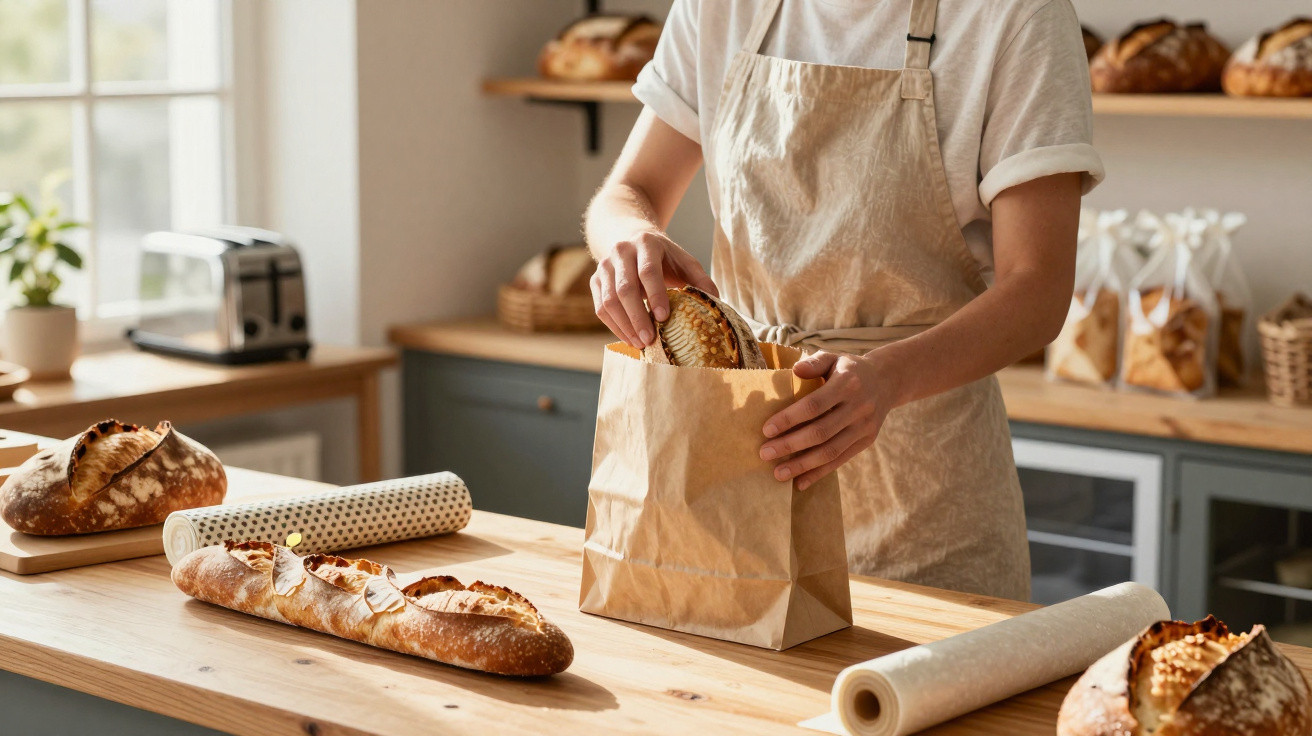
For anyone who works, commutes, looks after children or simply does not want to visit the bakery every day, the problem will be familiar: you buy a crisp loaf, only for it to become dry, rubbery or mouldy the following day. An experienced baker has revealed a remarkably straightforward way to keep bread close to oven-fresh for several days – without plastic or expensive specialist containers.
Why bread seems to go stale so quickly
Bread does not become ‘bad’ in the sense that it has spoiled; rather, its chemical composition and structure change. Specialists call this starch retrogradation. It sounds technical, but its effects are simple: the crust softens while the crumb dries out.
- Moisture moves from the centre of the loaf towards its exterior.
- The starch in the bread gradually recrystallises.
- The crust loses its crunch and the inside loses its moistness.
- Heat, air and packaging all have a major effect on these processes.
Many people instinctively reach for plastic bags or tightly sealed bread bins. According to bakers, that is one of the biggest traps.
The simple trick: let your bread breathe
The baker’s key piece of advice is that bread needs air. Not too much and not too little, but sufficient air to release excess moisture.
“Bread stays fresh for longer when it is wrapped in paper rather than sweating in plastic.”
Plastic bags may retain moisture, but they also cause it to build up. The bread starts to ‘sweat’:
- The crust becomes soft and rubbery.
- Condensation creates ideal conditions for mould.
- Flavours have little chance to escape, so the bread soon develops an ‘old’, musty smell.
Paper, by contrast, acts like a light coat: it offers protection without suffocating the loaf. Air can circulate, excess moisture can escape, and the crust retains its texture for longer.
How to use paper bags properly
Many bakeries already place loaves in paper bags. What matters is what you do once you get home:
- Keep the bread in its paper bag instead of transferring it to plastic.
- Place it cut-side down on a wooden board.
- Store it at room temperature, away from radiators and direct sunlight.
- If the paper bag is particularly thin, use two bags.
This helps the crust remain crisp for longer, prevents the crumb from drying out as quickly and delays mould growth considerably.
Alternatives when paper is not enough
There are times when you may need greater control over moisture: in very dry homes, during hot summer weather or with breads containing plenty of seeds and grains. In those cases, other materials are worth considering.
Waxed paper: the overlooked classic
One option used in many bakeries is waxed paper, or paper with a thin paraffin coating. This layer sits around the bread like a light film.
“Waxed paper slows drying without drowning the bread in moisture.”
Its advantages include:
- The crumb stays moist, especially in sandwich loaves.
- The crust becomes slightly softer but does not dry out.
- Mould will generally appear later than it would with plastic alone.
If you regularly buy larger loaves, it can be useful to keep a roll of waxed paper and wrap the bread yourself at home.
Beeswax wraps: sustainable and practical
Beeswax wraps have become common in many kitchens. They are usually made from cotton coated with beeswax, resin and oil. This combination makes them slightly sticky and easy to mould around food.
They are particularly useful for bread for several reasons:
- They fit closely around the loaf while still allowing air to circulate.
- They retain moisture within the bread without creating real dampness.
- They can be reused, making them considerably more sustainable than cling film.
A loaf wrapped in beeswax wrap will usually stay pleasantly fresh for two to three days when kept in a cool, dry part of the kitchen.
When bread already seems stale: how to revive it
Even with the best methods, freshness eventually fades. That does not have to mean the bread is finished. Baguettes and bread rolls in particular can be refreshed surprisingly well.
Make a baguette crisp again
A simple routine can rescue many loaves that appear to be ‘old’:
- Preheat the oven to around 150°C.
- Lightly brush the baguette with water, or briefly hold it under running water.
- Put it on an oven rack or baking tray.
- Bake for 5 to 10 minutes, depending on its size, until the crust is crisp again.
“A little water and moderate heat reactivate the starch in bread and restore fresh tension to the crust.”
The result will not taste exactly as if it has just come from the bakery, but it will be far closer than many people expect.
Toaster, frying pan and oven: a second life for slices
Slices left from the previous day often end up in the bin even though they are still perfectly useful. There are three easy options:
- Toaster: Best for slices that are only slightly dried out. The crumb warms through and the edges turn crisp.
- Frying pan: Brush lightly with oil or butter, then toast briefly in a hot frying pan to make flavourful crostini.
- Oven: Bake several slices side by side at 160°C until golden and crisp for the perfect base for croutons.
The freezer as a freshness booster
If you know you will not finish a loaf within two days, the freezer is the answer. Starch staling almost completely stops when bread is frozen.
| Storage method | Recommended period | Special feature |
|---|---|---|
| Room temperature, paper | 2–3 days | Good crust, slow moisture loss |
| Beeswax wrap | 2–4 days | Slightly softer crust, moist crumb |
| Freezer | 1–3 months | Almost unchanged quality after reheating |
How to freeze bread properly
- Slice the bread before freezing it.
- Put baking paper or film between the slices so that they do not stick together.
- Pack everything in a freezer bag or container and press out excess air.
- To defrost, put it straight from frozen into the toaster or oven rather than leaving it at room temperature for a long time.
This is especially useful for single people and smaller households. You do not need to eat a whole loaf at once, yet can still have almost ‘fresh’ bread every day.
What different types of bread need
Not all bread behaves in the same way. Its ingredients affect how quickly it stales and which storage method is suitable.
- Wheat baguette: Dries out quickly and is best enjoyed soon after purchase. Use paper or a beeswax wrap; after two days, it is better reheated in the oven.
- Sourdough mixed-grain bread: Keeps for longer because its acidity and higher moisture content make it more stable. Paper or a bread bin works well.
- Wholemeal bread: Contains more fibre and water, so it often remains moist for several days. Take care with overly tight packaging, as it can become mouldy more quickly.
A useful rule of thumb is this: the moister and denser a bread is, the more balance it needs between breathing and protection from drying out.
Common mistakes that make bread stale faster
Some everyday habits undermine how long bread keeps, often without you noticing.
- Storing bread on a radiator: it dries out and loses flavour.
- Sealing warm bread in an airtight container immediately: condensation forms and the risk of mould rises.
- Leaving it uncovered on top of the fridge: constant temperature fluctuations harm both texture and flavour.
“The best storage for bread is usually simple, unobtrusive and close to room temperature – not in the fridge.”
How good storage pays off in everyday life
Storing bread wisely does more than save money. It cuts food waste, encourages more mindful eating and makes meal planning less stressful. A morning sandwich made with yesterday’s bread suddenly tastes good again rather than feeling like a compromise.
Here is a practical example: you buy two loaves on Saturday. One stays in its paper bag for the weekend. Slice the second loaf, freeze the slices separately, and take out only what you genuinely need during the week. With two simple steps, you combine freshness, flexibility and less waste.
A small routine can also be worthwhile for families: bread for children and packed lunches can be made from defrosted slices that have been briefly toasted. The texture remains pleasant, and nobody will notice that the bread was bought a week earlier.
Over time, this creates a different relationship with what may seem like an ‘ordinary’ staple food. Once you understand why bread stales and how to manage the process, you can enjoy those rare but much-valued moments almost every day: biting into a crisp crust with a soft centre beneath – without making a daily trip to the bakery.

















Comments
No comments yet. Be the first to comment!
Leave a Comment