You reach for the final slice of a lovely bakery loaf, notice the heel still sitting there and make a quick calculation. You are not going to eat the rest tomorrow. “I’ll freeze it,” you decide, putting the bread directly into the freezer in its rustling paper bag or an unsealed plastic one.
Two weeks on, you retrieve it while imagining crisp, golden toast. What you find is pale, powdery and somehow both dry and damp. Its crust feels like cardboard, the crumb carries that familiar freezer “whiff”, and each bite feels disappointing.
The frustrating thing is that the bread was likely at its best when you froze it.
A single, seemingly harmless habit ruined it.
The small freezing mistake that spoils good bread
Many people treat freezing bread as though it were pausing a film: stop it now, restart it later, and expect everything to be unchanged. But bread is not like that. In its own way, it continues to change even in the cold, particularly when it is frozen without much care.
The real, unnoticed culprit is not freezing bread. It is allowing bread to freeze gradually without protection, then defrosting it carelessly on the worktop. That combination can turn a crisp loaf into a stale, sponge-like disappointment.
Imagine a Saturday morning at the market, where you spend a little extra on a beautiful sourdough boule. The baker describes its lengthy fermentation and heritage grains, and you listen as if you are in a food documentary. You have half with soup that evening, loosely leave the rest in its paper bag, put it in the freezer and forget about it.
When it eventually comes back to mind, you leave it on the worktop to thaw “naturally”. After two hours, the crust is sweating, the centre remains frozen and, by dinner, it has become a sad, leathery dome. You cut into it and question whether the bakery was overrated. It was not: the freezing method was.
The explanation is straightforward kitchen science. As bread cools and freezes slowly, the water in its crumb creates large ice crystals that damage its delicate structure. Meanwhile, the starches continue to “retrograde” - a technical term meaning that they firm up and force water out, which is what we recognise as staleness.
Defrost bread at room temperature while it is enclosed in damp packaging, and condensation follows. The crust takes in that moisture and becomes rubbery, while the interior dries further. This is how a loaf ends up simultaneously dry and strangely wet. Rather than pressing pause, you have sent it through an obstacle course.
How to freeze bread so it still tastes fresh
A reliable method begins before the bread reaches the freezer. If the loaf is still warm, allow it to cool fully first: putting warm bread into a cold freezer traps steam and creates ice. Next, choose whether you want to reheat the loaf whole or take slices as you need them.
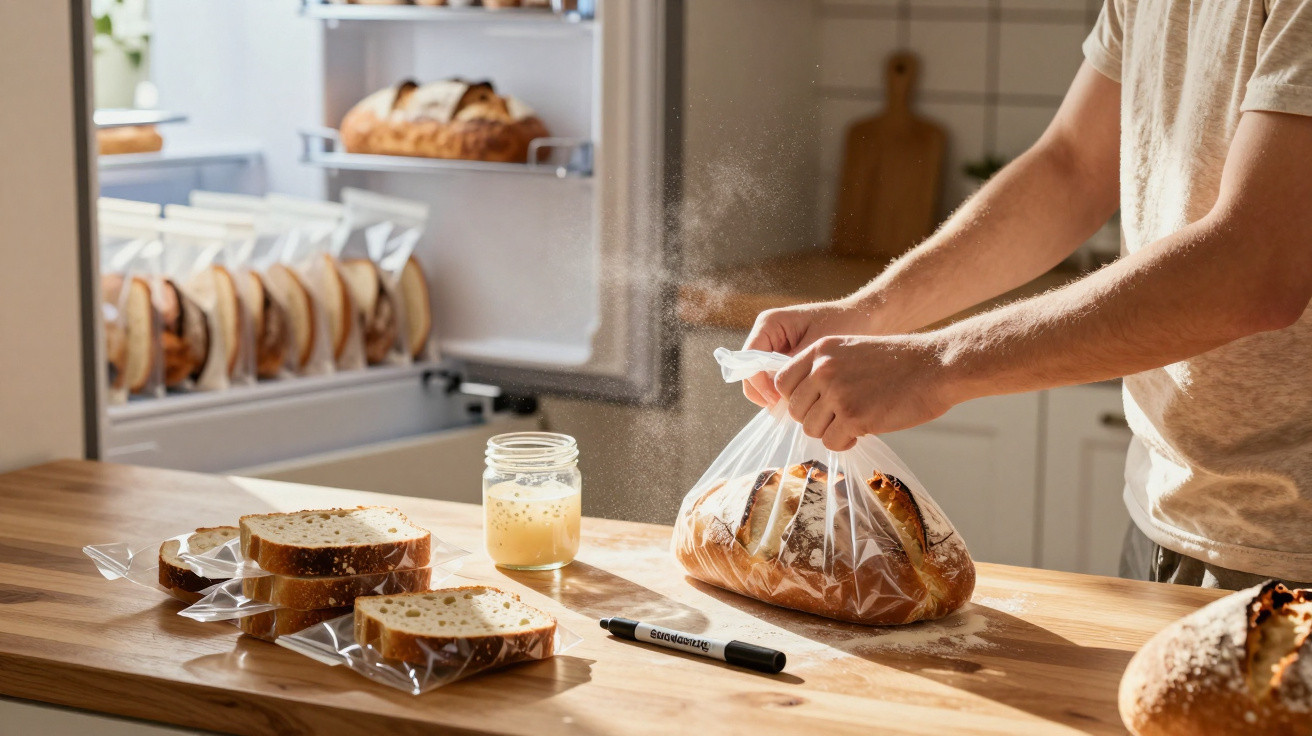
For whole loaves, wrap them closely in cling film or beeswax wrap, removing as much air as possible. Put the wrapped loaf in a freezer bag, squeeze out the air once more and seal it. The true problem is air rather than the cold itself.
For sliced bread, cut the loaf while it is fresh, arrange the slices on a tray to chill briefly, then stack them with a little baking parchment between them and pack them in an airtight container or bag before freezing.
This is the point at which most of us go wrong. We tell ourselves, “It’s just bread, I’ll wing it.” We put half a baguette in the freezer in its original paper, leave the bag open or place the loaf unwrapped on top of frozen peas. Then we wonder why it tastes of last month’s lasagne.
Freezer burn is more than unattractive frost: it is dehydration. Your loaf gradually loses its moisture to the dry air in the freezer. That is why double-wrapping makes such a difference - one close layer around the bread, followed by another barrier against the air. It may sound overly fussy, yet it takes 30 seconds with a roll of wrap and a bag. Honestly, hardly anyone does it every day. But when you do, the difference is clear.
“Good frozen bread is not about perfection,” says one Paris baker I spoke with. “It’s about respect. Respect the loaf once, and it will reward you twice.”
To make that kind of “respect” manageable in an ordinary kitchen, use small routines instead of elaborate rituals:
- For the best texture, slice and freeze bread on the day you buy or bake it.
- Choose airtight wrapping: cling film + a freezer bag, or a securely sealed reusable silicone bag.
- Write the date and bread type on the bag so it does not turn into an unidentified frozen block.
- Where possible, freeze slices flat so they do not join together in one solid mass.
- Plan how you will defrost it: taking bread directly from the freezer to a hot oven or toaster delivers the best result.
The proper way to thaw and revive frozen bread
Defrosting is the stage at which everything can still turn out well - or go badly wrong. The best method for restoring a whole frozen loaf is wonderfully simple: transfer it straight from the freezer to a hot oven. Do not leave it on the worktop or partially thaw it first. Heat your oven to around 180°C, unwrap the loaf, set it on the rack and warm it for 15–25 minutes, according to its size.
Inside the loaf, the ice melts gently into steam and restores moisture to the crumb. On the outside, the crust becomes crisp again. You avoid the damp, gummy layer just beneath the crust that develops when bread sweats inside a bag on the worktop.
For slices, use a toaster or hot frying pan. Put them in directly from the freezer, without thawing, and begin on a low setting to warm and soften them before increasing the heat slightly for colour. If a microwave is your only option, heat in short bursts, then finish the bread in a hot, dry frying pan to bring back some crispness.
What causes quiet damage is leaving frozen bread for hours in its plastic bag on the worktop. Moisture becomes trapped and condenses, the crust turns rubbery and the crumb then dries out. That is the precise “freezer bread” texture people so often dislike, and it is entirely preventable.
The simple reality is that frozen bread will never have the magic of bakery bread on day one, but it can come remarkably close.
When handled properly, it becomes another equally appealing thing: warm, aromatic and deeply toasted. The key is remembering that bread dislikes gradual changes. Freeze it quickly, then return it to heat quickly. Treat it like a shy guest who is happiest with clear arrivals and departures.
The next time you pause over a beautiful loaf and wonder whether you will finish it before it goes stale on the worktop, remember that freezing is not the problem. A lazy thaw is.
| Key point | Detail | Value for the reader |
|---|---|---|
| Freeze quickly and airtight | Wrap closely, remove air and use bags or containers | Maintains a texture close to fresh and prevents freezer burn |
| Slice before freezing | Portion the bread and freeze slices flat | Allows you to toast only what you need instead of wasting a loaf |
| Reheat from frozen | Use the oven for loaves and a toaster or pan for slices | Revives the crust and crumb rather than leaving bread soggy |

















Comments
No comments yet. Be the first to comment!
Leave a Comment