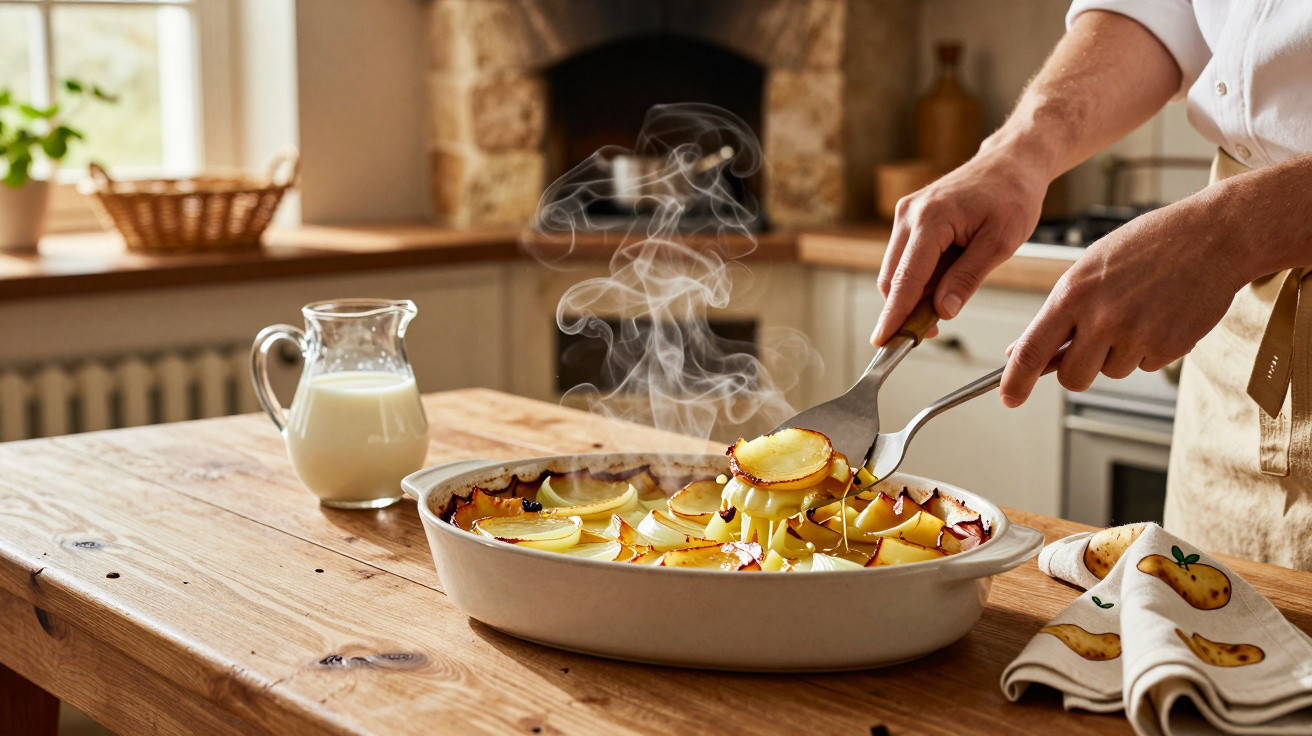
On winter nights, it is easy to instinctively turn to double cream, melted cheese and oven dishes that emerge bubbling from the heat.
But an old countryside recipe, now enjoying a discreet revival, is beginning to take centre stage. It delivers serious comfort and bold flavour with considerably fewer calories.
A rustic alternative to gratin dauphinois
In France, winter meals often bring piles of potatoes soaked in cream. Gratin dauphinois has traditionally dominated the table: smooth, indulgent and undeniably substantial. Television chef and food presenter Laurent Mariotte is known for straightforward seasonal food, and he too acknowledges that the classic gratin may feel rather excessive when you are aiming to eat more lightly.
This season, Mariotte is backing an old rural recipe: “pommes de terre boulangères”, or baker-style potatoes, a dish that keeps the comfort of gratin while slashing the fat.
Rather than using cream and cheese, the potatoes bake slowly in stock with onions, garlic and a small amount of butter. Once out of the oven, the result resembles a gratin, with a golden surface, tender layers beneath and spoonfuls that lift away easily. It is, however, less weighty on the plate, while its flavour is driven more by roasted vegetables and sweet caramelised onions than by dairy.
The origins of baker’s potatoes
The name is rooted in history rather than marketing. In the past, French villagers who did not have ovens at home arranged potatoes in earthenware dishes before taking them to the local baker. Once the day’s bread had been baked, the dish was placed in the remaining warmth of the bread oven, where it cooked gently while villagers returned to their work.
That slow, low cooking is what gives the recipe its distinctive qualities. The potatoes become tender without falling apart, the stock reduces into a more concentrated liquid, and the onions turn sweet and almost jam-like. Cream is unnecessary because the potato starch, combined with gradual evaporation, naturally thickens the cooking juices.
Why pommes boulangères are lower in calories than gratin dauphinois
A traditional gratin dauphinois normally uses double or heavy cream, often topped with a plentiful layer of cheese. For a dish that is technically a side, this combination can send both calories and saturated fat soaring. Baker-style potatoes replace the majority of that dairy with stock and use butter only sparingly.
- Gratin dauphinois: made with cream, frequently including cheese, and high in saturated fat.
- Pommes boulangères: prepared with stock, largely based on vegetables, with a small quantity of butter.
- Texture: both dishes are soft and comforting, although boulangères feel less heavy after a full serving.
For diners trying to cut back without feeling punished, baker’s potatoes offer that crucial sense of indulgence while trimming the excess.
Laurent Mariotte’s lighter recipe for four people
Mariotte’s approach remains faithful to the traditional foundation, while paying particular attention to technique. These are the essential ingredients he suggests for four people:
- 1 kg potatoes
- 2 onions
- 1 garlic clove
- 40 g butter
- 50 cl white stock (or chicken/vegetable stock)
- 1 bouquet garni (herb bundle, usually thyme, bay and parsley)
- Salt
- Black pepper
It is an exceptionally simple list at first glance. Its success depends on the way each ingredient is sliced, layered and seasoned.
How the chef creates flavour step by step
Begin by heating a conventional oven to 180°C. As it comes up to temperature, peel the potatoes, onions and garlic. Slice the potatoes thinly and as evenly as possible. Consistent slices are essential, as thicker pieces can remain firm while thinner ones collapse, producing an uneven bake.
Season the sliced potatoes immediately with salt and pepper. Salting at this stage starts to act on the potato surface, drawing out a little moisture and helping flavour reach further into the layers.
Then finely slice the onions and cook them gently in melted butter over a low heat. This should not be treated as a fast fry. They need time to soften and almost melt without colouring too quickly. Their sweetness and richness give the dish body, replacing some of the fullness normally supplied by cream.
Prepare the ovenproof dish as the onions cook. Cut or crush the garlic clove, then rub it firmly all over the inside. This traditional French method adds a delicate garlic perfume without leaving sharp pieces throughout the potatoes. Butter the dish generously afterwards, both to stop the layers sticking and to lend the upper potatoes a mild nutty flavour.
Now arrange alternating layers of potatoes and butter-softened onions until all the ingredients have been used. Tuck the bouquet garni into the centre of the dish. Warm the stock in a separate pan, then carefully pour it in until it reaches just to the level of the potatoes.
Bake for approximately 60 to 75 minutes. As it cooks, the stock gently bubbles, starch escapes from the potatoes into the liquid, and the surface starts to turn golden. If you prefer a crisper topping, place the dish briefly under the grill at the end to intensify the crust.
How healthy are baker’s potatoes in practice?
Describing any potato bake as “diet food” would be an exaggeration, yet the contrast is meaningful. Stock supplies only a fraction of the calories found in cream. The butter is used in a measured amount and distributed across the entire dish, rather than forming the basis of the sauce.
| Aspect | Gratin dauphinois | Pommes boulangères |
|---|---|---|
| Main liquid | Double/heavy cream | Stock (chicken, vegetable or white stock) |
| Fat content | High, mostly from dairy | Moderate, mostly from butter |
| Texture | Very rich, almost sauce-like | Juicy, light, with reduced stock |
| Best use | Occasional meal centrepiece | Weeknight side or main with veg |
Paired with a simple roast chicken or a pile of steamed greens, baker’s potatoes give a satisfying plate that still fits a lighter eating plan.
Variations that preserve the character while changing the flavour
Once the basic method is familiar, cooks can tailor the recipe to suit their own kitchens. Some layer in finely sliced carrots or leeks with the potatoes to add colour and fibre. Others replace butter with a drizzle of olive oil, reducing saturated fat further while bringing a Mediterranean character to the dish.
The choice of stock can transform the flavour entirely. Vegetable stock keeps it vegetarian and fresh-tasting, while chicken stock adds a savoury depth more reminiscent of a Sunday roast. A carefully skimmed homemade stock also makes it easier to manage the salt content, which can rise rapidly when using stock cubes or concentrated products.
Frequent mistakes when cooking potato dishes
Disappointing potato dishes can go wrong before they ever reach the oven. Choosing an unsuitable potato variety can undermine any layered bake. Waxy potatoes keep their shape well but can remain slightly firm, whereas floury varieties break down more easily, thickening the liquid but potentially creating a soft, mushy finish.
Uneven slicing is another common problem. Thick sections need longer to cook, and by the time they are tender, thinner slices may have broken down completely. A mandoline, or simply a sharp knife used patiently, creates a much better texture. Failing to preheat the oven may also cause difficulties: the dish steams rather than simmers at first, leaving it pale and lacking in flavour.
Practical advice for home cooks
For anyone making the recipe in a compact oven or on a busy weekday, a few adjustments can make the process easier:
- Part-cook the sliced potatoes in simmering stock for 5–7 minutes to shorten the baking time.
- Choose a broad, shallow dish so the liquid reduces more easily and the top browns sooner.
- Leave the dish to stand for 10 minutes after baking, allowing the juices to settle and the slices to hold their shape.
- Season with care: stock may already be salty, so taste it before adding more salt.
People monitoring their diet can also adjust the serving size. A substantial spoonful of baker’s potatoes alongside lean protein and vegetables provides comfort without taking over the plate. The equivalent portion of cream-rich gratin would feel far more substantial.
The dish also has a social benefit: it scales up very easily. Double the ingredients and use a larger ovenproof dish to produce a side for eight people with very little additional work. At winter gatherings where guests have different dietary priorities, this sort of “quietly lighter” dish can be a tactful option that still feels celebratory.
For those who automatically reach for cheese and cream once the temperature falls, baker’s potatoes suggest another approach. The method relies on gentle heat, precise slicing and patient seasoning rather than richness alone. It sits comfortably within a more balanced style of eating while honouring the familiar promise of a bubbling potato dish at the centre of the table during long winter evenings.

















Comments
No comments yet. Be the first to comment!
Leave a Comment