A saucepan, a chocolate bar and ten spare minutes: that is all this weeknight dessert needs to quietly become the star of the table.
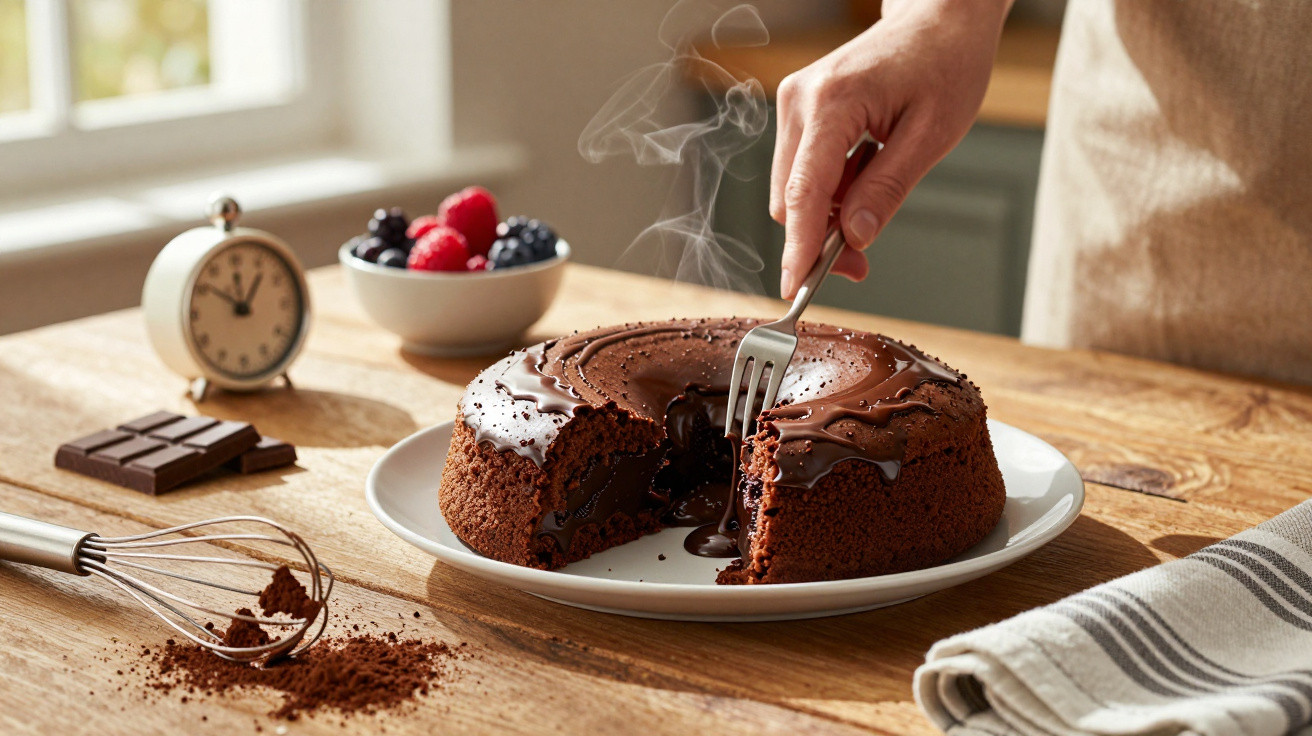
In kitchens across France, a particular chocolate cake regularly appears when time is limited but standards remain high. Quick and forgiving, it lands neatly between gooey and freshly baked. Its appeal is straightforward: a molten-centred chocolate cake that can be made while you clear away the main-course plates.
The understated appeal of a 10-minute chocolate fix
Most home cooks recognise the stress of unexpected visitors or a midweek chocolate craving that arrives shortly after 9 pm. This molten chocolate cake is designed for exactly those occasions. Its method is pared back, there is very little washing up, and it leaves an unusually wide margin for error.
At its finest, the cake develops a fine, glossy crust yet remains soft and lightly underbaked at its centre. Slice through it and the knife should carry faint chocolate streaks. The aroma of warm cocoa takes care of the rest of the hospitality.
Ten minutes of mixing and roughly twenty minutes in the oven give you a crowd-pleasing dessert with almost no planning.
In France, this kind of cake has discreetly become a go-to choice: no fussy decoration or complex layers, simply bold, honest chocolate flavour and a texture that feels much more luxurious than its method would suggest.
Five everyday ingredients that deserve their role
The recipe requires only a brief shopping list, which adds to its appeal for busy homes and compact kitchens.
- Dark chocolate (around 52–70% cocoa, according to taste)
- Butter (either salted or unsalted)
- Eggs
- Caster sugar or granulated sugar
- Plain flour
Every component has a specific purpose: chocolate brings intensity, butter supplies richness, eggs create structure, sugar adds sweetness and moisture, while flour keeps it all together. Alter too much of any one ingredient and the balance is lost.
Use a chocolate you enjoy eating straight from the bar – its flavour will define the entire cake.
Optional additions, including a pinch of salt, a teaspoon of vanilla or a spoonful of cocoa powder, can enhance the flavour, but they should remain supporting players rather than the focus.
Step by step: from cupboard to plate in around 35 minutes
Preheat, prepare the tin and stay ahead
A fast bake begins with preparation. Before the batter is ready, the oven should already be heated to around 200°C. Use a 20–22 cm round tin, greased with butter and lightly dusted with flour or lined with baking paper, to establish the cake’s thickness and shape. This diameter delivers the ideal balance of a properly baked crust and a soft middle.
Melt the butter and chocolate base
The flavour foundation consists simply of melted dark chocolate and butter. Plenty of home bakers choose a microwave, heating in short intervals and stirring frequently to prevent scorching. Others use a bowl over gently simmering water. Whichever approach you take, aim for a smooth, glossy mixture that is warm but not sufficiently hot to cook the eggs later.
Make the batter
In another bowl, whisk the eggs with the sugar only until they become a little frothy. This is not a sponge cake, so it needs no great amount of air: just a loose, uniform mixture. Next, fold in the flour to make a straightforward batter.
Finally, stir in the still-warm chocolate and butter. In a minute or two, a thick, glossy batter is ready to go into the tin.
Bake for the ideal molten centre
The cake generally spends around 20–25 minutes in the oven. The difficult judgement is knowing precisely when to remove it. For an especially soft centre with an almost lava-like consistency, many cooks begin checking it at about 18 minutes.
The sweet spot is a set, slightly cracked surface with a centre that still trembles gently when you nudge the tin.
A knife or skewer ought to come out with a few damp crumbs rather than a completely clean, dry blade. Keep baking and it shifts from molten to merely moist, which some households in fact favour because it slices more easily.
Why this “universal” chocolate cake is always welcome
This recipe stands out for its flexibility. It works equally well at a child’s birthday party, a Sunday lunch or a relaxed film night. Plain, it has a nostalgic quality; alongside vanilla ice cream or custard, it begins to feel restaurant-worthy.
Many hosts bring it to the table warm with coffee after dinner, allowing its soft centre to remove the need for elaborate presentation. Any leftovers hold up well at room temperature the following day, becoming a little denser while remaining unmistakably fudgy.
Simple variations that transform the cake’s character
Introduce crunch and contrast
For anyone who enjoys texture, stirring a handful of chopped nuts into the batter creates a clear difference.
- Coarsely chopped hazelnuts or almonds add crunch and a toasted note.
- Additional chocolate chips scattered over the top melt enough to form intense pockets of chocolate.
- A very small pinch of flaky sea salt added after baking brings a subtle sweet-and-salty finish.
Make it a “restaurant-style” dessert
A little coffee, particularly instant espresso dissolved in a spoonful of hot water, intensifies the chocolate without making the cake taste of coffee. Present it warm with ice cream, a dusting of cocoa and several berries, and the same simple recipe becomes a plated dessert rather than a speedy solution.
Storage, shortcuts and make-ahead options
Stored at room temperature in an airtight container, the cake generally remains in good condition for up to three days. Some bakers even prefer it on day two, once its texture has settled into an even, slightly truffle-like crumb.
For hosts with little time, the batter can be prepared in advance. When covered and refrigerated, it normally keeps well for around 12 hours. Letting it stand briefly at room temperature before baking encourages more even cooking. Leftover pieces can be refreshed with 10 seconds in the microwave, softening the centre once more.
- Prepare the batter on the evening before a lunch.
- Bake it as guests arrive, allowing the house to fill with the smell of chocolate.
- Cut into small squares and offer with whipped cream for a buffet-style dessert.
Nutrition, portions and modest adjustments
No molten chocolate cake could be called light, yet portion size and a few adjustments can alter how it fits into the week. A standard 20–22 cm cake can comfortably provide eight generous slices or twelve smaller portions, especially when served with fruit or yoghurt.
| Adjustment | Effect on the cake |
|---|---|
| Using chocolate closer to 70% cocoa | Less sweetness, stronger cocoa flavour |
| Reducing sugar slightly | Denser texture, less caramel note |
| Swapping part of the flour for ground almonds | More moisture, light nutty taste |
| Serving with yoghurt instead of cream | Added freshness and tang, lower richness per portion |
What “fondant” means and how to prevent common problems
The French term “fondant”, commonly rendered as “molten” or “melting”, describes texture more than a particular recipe. It denotes something soft and almost underbaked in the middle, while still being safe and enjoyable to eat. Achieving that texture depends on three factors: the fat-to-flour ratio, the tin size and oven timing.
Home cooks tend to encounter two common problems: a cake that sinks dramatically or one that becomes dry. A modest dip in the centre is normal for this style. A pronounced crater generally indicates that it came out too early, or that the oven door was opened repeatedly during baking. Dryness usually results from overbaking or from using a very wide tin that leaves the batter too shallow.
Situations in which this cake neatly solves a problem
Picture a midweek meal with a simple main course, such as roast chicken and salad. The cake can be mixed while the chicken rests, baked while everyone eats, then served warm with a scoop of ice cream. The schedule works naturally without requiring extra pans or complicated assembly.
For parents, it also works as a reliable birthday cake. A dusting of cocoa, candles arranged in a ring and a bowl of strawberries alongside will usually satisfy children, who care much more about the molten centre than decoration.
Even inexperienced bakers can gain useful techniques from it: heating the oven thoroughly, assessing doneness by movement and with a knife rather than relying only on the clock, and valuing ingredient quality. The skills acquired with this cake carry over to brownies, traybakes and other chocolate desserts built around a similar balance between gooey and set.

















Comments
No comments yet. Be the first to comment!
Leave a Comment