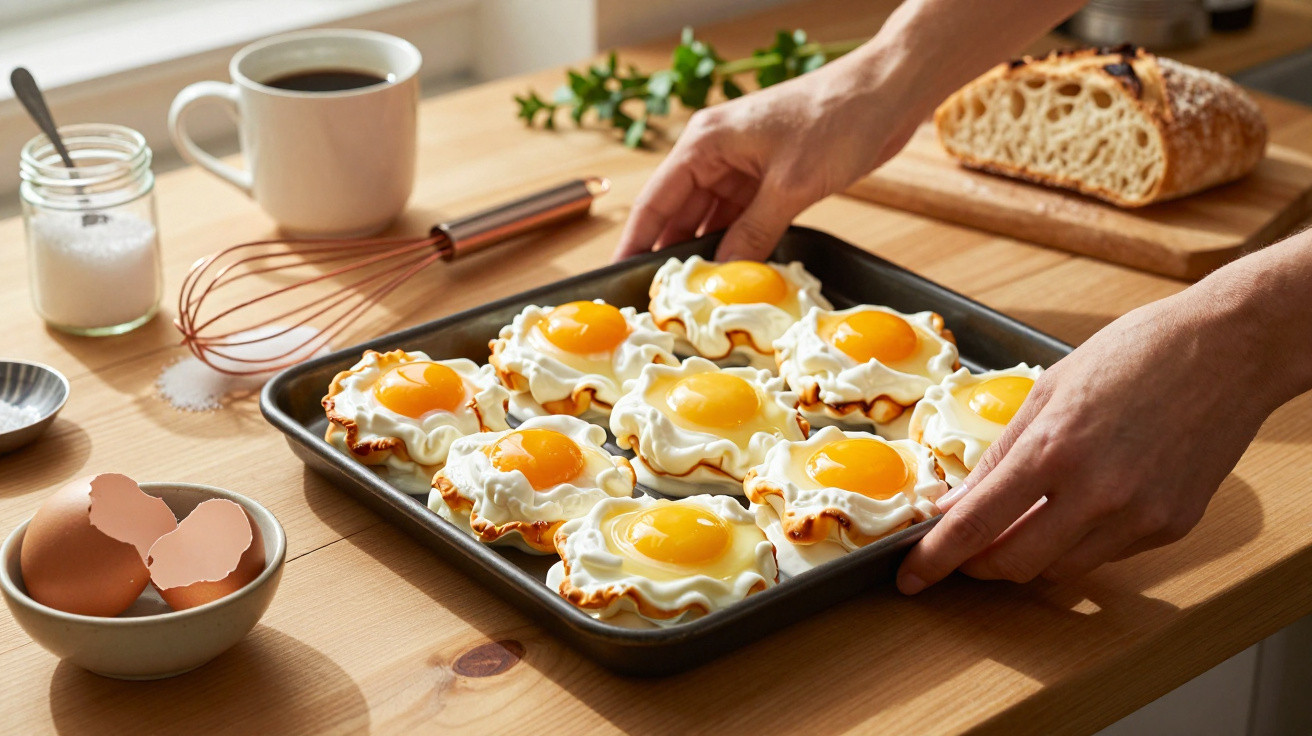
Across TikTok, Instagram and weekend breakfast tables, “cloud eggs” are drifting back into vogue. They promise flowing yolks, crisp edges and an unexpectedly airy way to serve an ingredient we all know well.
What exactly are cloud eggs?
Cloud eggs are oven-baked eggs made by whipping the whites until light and voluminous, then shaping them into nests for the yolks.
The finished egg resembles a small edible cumulus cloud: its white is tall and lightly crisp at the surface, while the yolk remains soft and shiny at the middle.
Think of cloud eggs as a cross between a poached egg and a soufflé, but ready in about ten minutes.
They fall somewhere between a food trend and a useful cooking technique. They are straightforward enough for a midweek breakfast, but look polished enough to serve in a restaurant. That mix is why they regularly return to social media feeds and brunch menus.
The basic recipe: you only need a handful of ingredients
The foundation of this recipe is as simple as it gets. Each cloud egg requires only:
- 1 large egg
- a small pinch of salt
- a twist of black pepper
- a light grating of nutmeg, if you like warm, aromatic notes
A muffin tray, preferably a silicone one, is among the simplest tools for containing the clouds and preventing them from spreading. You can also use a small baking tray lined with baking parchment, although you will have to form every “cloud” yourself.
Because the white is whipped, every extra flavour you add becomes more noticeable, so keep seasoning simple and precise.
Step-by-step: how to make cloud eggs at home
1. Separate the eggs carefully
First, crack the eggs and divide the whites from the yolks.
Put every white into one large mixing bowl. Place each yolk in a separate small ramekin or espresso cup. Keeping them separate protects the yolks and makes them less likely to split when you later transfer them to the whipped whites.
2. Whip the whites until they stand up
Add one or two pinches of salt to the egg whites. Add a little pepper too, along with a small amount of freshly grated nutmeg if that appeals to you.
Beat the whites until they hold firm peaks. An electric mixer will do the job more quickly and reliably, though whisking by hand is also possible if you are prepared to spend a little longer on it.
The whites are ready when you can briefly turn the bowl sideways and nothing slides.
3. Shape the “clouds”
Spoon the whipped egg whites into the wells of a silicone muffin tray, filling each one to around two-thirds full.
With the back of a spoon, make a shallow indentation in the middle of every portion. This “crater” is where the yolk will sit.
Carefully ease one yolk from its ramekin into each hollow. For a more dramatic look, spoon a thin layer of white over the yolk, partly “sealing” it within the cloud.
4. Bake briefly for a runny centre
Bake the eggs in an oven or air fryer preheated to 180°C (about 355°F) for around five minutes.
That brief cooking time firms the whites and gently browns their surface, while keeping the yolk soft and flowing. If you would rather have a firmer yolk, cook them for one or two minutes longer, checking them frequently.
Five minutes is usually enough for a set, airy white and a yolk that flows the moment you cut into it.
Why cloud eggs appeal to brunch lovers
For plenty of people, cloud eggs are appealing more for their texture and sense of occasion than for their nutritional qualities.
The textures provide a clear contrast: a gently crisp, meringue-like outer layer, a soft and foamy middle, and a rich runny yolk that spills over the toast or salad below.
They are also highly photogenic. Their height, vivid yellow centres and neat outlines translate well on camera, particularly when served on avocado toast, roasted vegetables or a plain slice of sourdough.
Light yet satisfying
As the whites are aerated instead of fried in oil, cloud eggs feel less heavy than a fried egg.
You still receive the protein found in a whole egg, but without as much added fat, particularly when the silicone moulds are left ungreased. For anyone looking to cut back on frying or weighty brunch dishes, they offer another option without losing the enjoyment of a molten yolk.
Ways to personalise your cloud eggs
Once you have mastered the fundamental method, a few small adjustments can produce distinctly different cloud eggs.
- Cheesy cloud: stir a tablespoon of finely grated hard cheese through the whipped whites before shaping them.
- Herb version: mix in chopped chives, parsley or dill for a fresh green touch.
- Spiced brunch: dust the clouds with smoked paprika or chilli flakes before they go into the oven.
- Vegetable base: place the baked cloud egg over wilted spinach, roasted tomatoes or sautéed mushrooms.
Small additions like herbs or cheese need to be finely chopped and added gently, or they can deflate the whites.
Common mistakes and how to avoid them
| Issue | Likely cause | Simple fix |
|---|---|---|
| Flat, sad clouds | The whites were not beaten enough, or the bowl contained traces of fat | Choose a clean, dry bowl and whisk the whites to firm peaks |
| Rubbery texture | Cooking for too long at high heat | Start checking after 5 minutes and take them out once the whites are lightly coloured |
| Broken yolks | Moving the yolks too hastily | Keep yolks in small cups and gently slide them into the hollows |
| Eggs sticking to the mould | Using unlined metal tins | Use silicone instead, or line tins with circles of baking parchment |
Health notes and safety around utensils
Silicone muffin trays are often recommended for cloud eggs because the recipe is baked without additional fat.
There is one consideration worth noting: repeatedly greasing silicone and exposing it to high temperatures may cause the material to deteriorate more quickly. Some specialists caution that scratched or damaged silicone can release tiny particles into food.
Choosing undamaged, high-quality moulds, avoiding sharp utensils and observing the recommended temperature limits may help reduce this risk. If you would prefer not to use silicone, line metal muffin trays or small ramekins with baking parchment and make the clouds in those instead.
How cloud eggs fit into everyday eating
From a nutritional perspective, cloud eggs remain eggs: they provide protein, vitamin D and several B vitamins, while the yolk also contains cholesterol.
Current advice in many countries indicates that most healthy adults can include eggs in their diet regularly. However, anyone with particular cholesterol concerns should consult a health professional about their own situation.
What makes this preparation distinctive is its flexibility. One cloud egg on toast can be a light weekday breakfast. Serve two or three with salad, roasted vegetables or whole grains, and they become a full meal that seems indulgent without depending on rich sauces or large quantities of butter.
From trend to habit: when cloud eggs actually make sense
Picture a small brunch at home. With standard poached eggs, you need to stand over a pan, monitor every egg and hope the whites stay where they should. With cloud eggs, you whisk the whites, mould them in the tray, add the yolks and put the whole batch in the oven while you lay the table.
Everything bakes together, easing some of the pressure of serving six or eight people at roughly the same moment. The visual appeal can also help with children. They may enjoy seeing the whipped whites rise in the oven, while the name “cloud” can make an unfamiliar dish seem less daunting.
Cloud eggs work less as a daily habit and more as a low-effort trick when you want breakfast to feel a bit special.
Like many viral recipes, the method is uncomplicated, but its usefulness depends on how you apply it: tailoring the cooking time to your ideal yolk, matching the clouds with seasonal vegetables or bread, and using this airy egg preparation whenever an everyday breakfast could use a small lift.

















Comments
No comments yet. Be the first to comment!
Leave a Comment