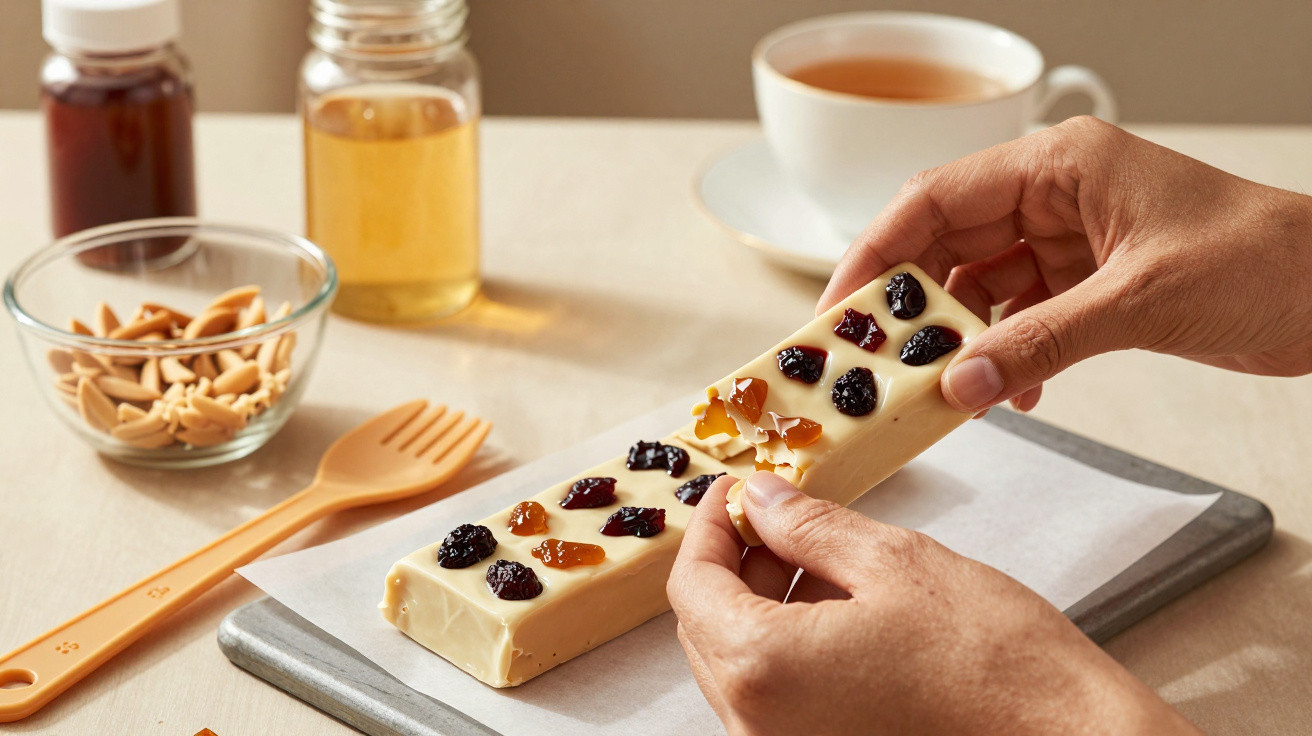
Across France, an unassuming raisin and almond traybake is gaining favour as a cold-weather bake because it is genuinely manageable on a normal weekday. There is no need for a stand mixer or fussy decoration: only a bowl, a whisk and half an hour from craving to first mouthful. That simplicity may be why these exceptionally soft squares are discreetly overtaking more elaborate desserts.
Why these raisin and almond squares are suddenly everywhere
Following years dominated by Instagram-perfect layer cakes and detailed pastries, home bakers are changing course. They are looking for easy, forgiving recipes that work around everyday life rather than projects that take up an entire weekend.
These soft, golden bars tick three boxes at once: quick, pantry-based and cosy enough to make January feel less bleak.
The recipe relies on staples already found in most kitchens: flour, eggs, sugar, butter, plus a couple of packets of dried fruit and nuts. There is no specialist-shop trip required, no hard-to-find flavouring and no food processor involved.
The basic ingredients hiding in your cupboard
The original French recipe is based on what could be described as “everyday luxury”: quality butter, proper eggs and richly flavoured sugar. The essential ingredients are:
- Flour: ordinary white wheat flour creates a base that is both soft and substantial.
- Eggs: three large eggs provide structure and a delicate crumb.
- Sugar: light brown or cane sugar contributes a subtle caramel flavour.
- Butter: melted, lightly salted butter enhances the overall taste.
- Raisins: about 100 g provides sweet, chewy bursts.
- Almonds: roughly chopped almonds add crunch and a nutty scent.
- Baking powder: this gives the bake lift and a lighter texture.
- Spice: a pinch of cinnamon is particularly well suited to winter.
The choice of sugar has a noticeable effect. Deeper-coloured sugars such as muscovado or dark brown sugar provide fuller flavours and a more intensely golden finish. They also encourage a slight caramelisation on top in the oven, creating a delicate crust against the tender middle.
Soaking the raisins for a few minutes in hot tea or warm water plumps them up and makes every bite feel softer and more generous.
Plenty of bakers leave out this stage and still produce an enjoyable bake, yet the additional three minutes of soaking makes a clear difference to the texture, particularly after the squares have cooled.
The 30-minute method: no mixer, no fuss
These squares succeed because the technique is easily reduced to a single instruction: combine everything in one bowl, bake it, then slice. That is precisely why the recipe is circulating so quickly on social media and in family group chats.
From bowl to oven in under ten minutes
The method could hardly be simpler:
- Melt the butter gently, until it is liquid but not browned.
- Heat the oven to 180°C (around 350°F).
- Whisk the eggs with the sugar until the mixture becomes lightly foamy.
- Sift in the flour and baking powder, then stir only until combined.
- Pour in the melted butter in a steady stream, whisking until the batter looks glossy.
- Fold through the raisins and chopped almonds, distributing them evenly.
- Spoon the mixture into a greased or lined square or rectangular tin.
- Bake for roughly 25 minutes, until golden and only just set.
A knife pushed into the middle should emerge mostly clean. While the edges will be deeply coloured, the centre should remain slightly softer. After cooling for a short time, cut the bake into tidy squares, revealing a close yet tender crumb dotted with fruit and nuts.
What wins people over is the contrast: a light crunch on top, then a soft, almost fudgy centre punctuated by almonds.
How people are serving and adapting the recipe
In France, these bars are rapidly becoming a staple for the after-school snack or an afternoon coffee treat. Because they are easy to transport, they are also appearing in packed lunches and office kitchens.
Small twists that change the whole mood
Home cooks have already started experimenting with the formula. Some sprinkle the cooled squares with icing sugar for a wintry appearance, resembling a light dusting of snow across the tin. Others increase the spices or replace the nuts with whatever is available.
| Ingredient | Simple substitution | Resulting flavour |
|---|---|---|
| Almonds | Walnuts or hazelnuts | More rustic, woody notes |
| Raisins | Dried apricots or figs | Fruity, slightly tangy, Mediterranean feel |
| Cinnamon | Mixed spice or cardamom | Stronger winter spice character |
| Brown sugar | Dark muscovado | Intense caramel and molasses notes |
This adaptability goes some way towards explaining the recipe’s appeal. Its foundation is dependable and speedy, while also acting as a blank canvas. A handful of chocolate chips, orange zest or a spoonful of rum can give every batch a different character.
Pairings that turn a traybake into a moment
The setting matters as much as the bake itself, as the accompaniment changes the whole experience. Thick hot chocolate that is not overly sweet is an obvious match, especially for children. Adults more often opt for robust tea or coffee.
A smoky black tea, such as Lapsang Souchong, creates a striking contrast with the sweetness of raisins and caramelised edges.
For a cooler accompaniment, some people choose plain yoghurt or a small scoop of vanilla ice cream, particularly while the squares are still a little warm. The warmth softens the fat in the batter and makes the texture silkier still.
How long they last and why flavour improves with time
These bars belong to the category of travel cakes: bakes intended to be carried easily and to keep well. Kept in an airtight tin away from damp, they remain enjoyable for three to four days.
Over those days, an interesting change takes place: the raisins slowly release their moisture into the crumb. This gradual transfer leaves the inside softer and more unified. By the second day, the spices also appear more pronounced as the flavours settle together.
Baking a batch on Sunday evening sets you up with homemade snacks all week, reducing reliance on packaged sweets.
That is significant for households aiming to monitor sugar and additives. You know precisely what is in the tin: no palm oil or flavour enhancers, only everyday ingredients and a few decisions about the sugar and nut content.
Technical notes for curious home bakers
A handful of small choices can take this recipe from “fine” to “I’ll make this again”. Slightly salted butter, for example, brings definition to the flavours and prevents the sweetness from becoming excessive. Salt is not solely for savoury dishes; when baking, it balances sugar and brings out the almonds’ nuttiness.
Mixing time is another consideration. Working the batter too much once the flour has been added may make the crumb tougher. Mixing only until no flour remains visible preserves the soft texture that sits somewhere between cake and brownie. For those accustomed to airy sponge cakes, these squares fall between a blondie and a gently risen traybake.
Ideas for adapting the recipe to different needs
Many readers wonder how much such a straightforward base can be altered. In reality, there are several options, each involving a compromise.
- Less sugar: Sugar can be cut by about 20% without harming the structure, although the crust will brown slightly less.
- Wholemeal flour: Substituting up to half of the white flour increases the fibre and adds a faint nutty flavour, but results in a marginally denser crumb.
- Gluten-free versions: A shop-bought gluten-free flour blend generally works, provided that the baking powder is also gluten-free; the texture will be a little more delicate.
- Alcoholic notes: Soaking the raisins in rum or sweet wine before baking adds a more adult character, although this is best kept for adult tables.
For families, making the traybake together on a chilly afternoon may be just as valuable as eating it. Children can whisk the eggs and sugar, scatter over the raisins or press the batter into the tin. As the method is forgiving and the mixture is thick, it offers a comparatively low-stress way for younger cooks to take part.
Nutritionally, these squares remain a treat, but the nuts and dried fruit provide a more balanced profile than many shop-bought biscuits. Almonds supply unsaturated fats and a small amount of protein, while raisins offer natural sugars and some fibre. Enjoyed thoughtfully with a hot drink, one or two squares can be satisfying enough to prevent continual afternoon snacking.

















Comments
No comments yet. Be the first to comment!
Leave a Comment