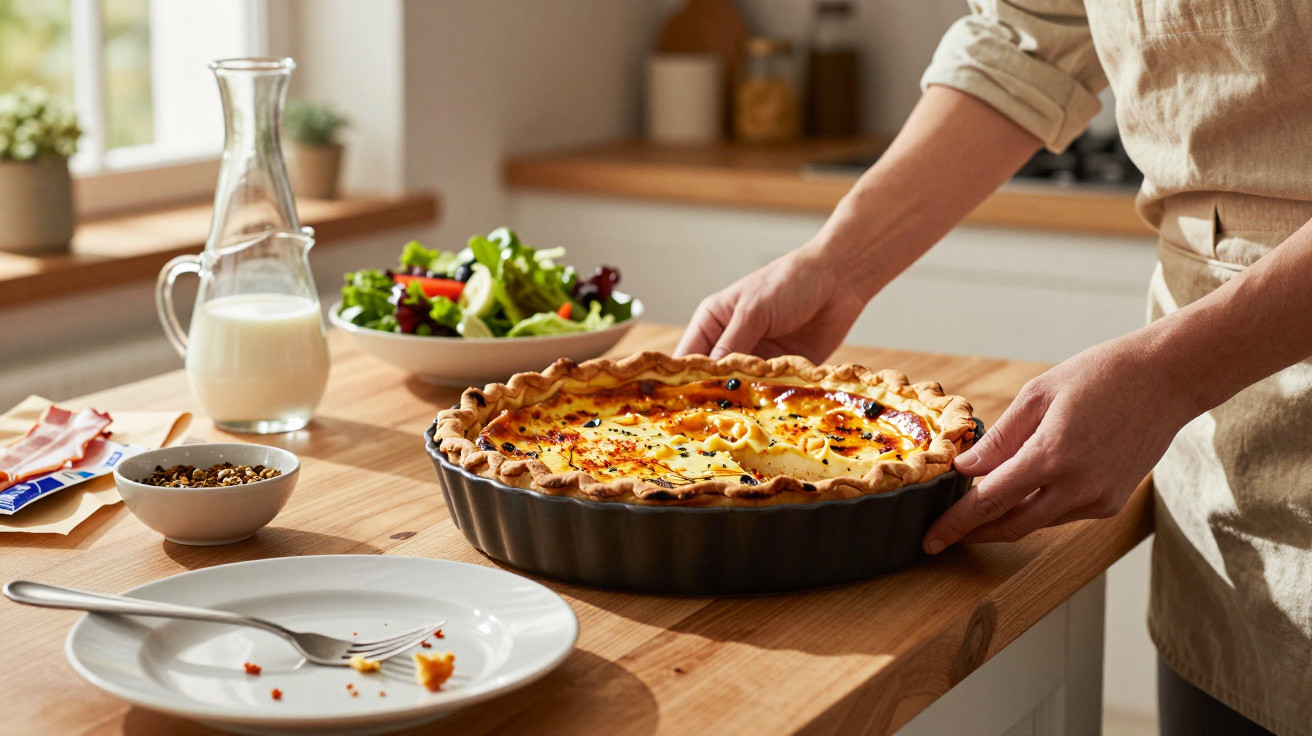
Comfort food does not often make headlines, but one French TV chef has transformed a weekday favourite into an understated, impressive dish for a crowd.
French chef and television personality Norbert Tarayre has refreshed quiche Lorraine, replacing restaurant showmanship with a cleverly enhanced, ultra-simple take made for time-pressed home cooks and hungry families.
A French classic with a clever little twist
Quiche Lorraine is often considered a dependable choice: enjoyable, familiar and seldom surprising. Tarayre retains its comforting, grandmotherly character while introducing one unexpected change to the pastry that transforms the result.
Rather than reaching for ready-made pastry, he makes a speedy homemade shortcrust, mixing spices directly through the flour. Everything else remains uncomplicated: a rich egg filling, carefully prepared bacon, a hot oven and a brief resting period before it is served.
Tarayre’s goal: turn a fridge-clearout standby into something you’d proudly serve at a dinner party, without extra effort.
Norbert Tarayre’s secret: spiced shortcrust pastry
The central idea in this recipe is something more commonly found in fashionable bakeries than weekday suppers: seasoning the pastry itself. Tarayre works turmeric and Madras curry powder straight into the dough, adding both colour and fragrance.
Ingredients for the spiced crust
- Plain flour, which is easy to work with
- Cold butter, cut into cubes for a tender, crumbly base
- A pinch of salt
- Cold water to bring the dough together
- Ground turmeric
- Madras curry powder
Turmeric gives the pastry a rich golden colour, while the curry powder contributes a rounded warmth rather than chilli heat. These spices remain restrained, enhancing the dough without making the quiche taste like a curry tart.
Spicing the pastry means flavour from the very first bite, not just on top of the filling.
Making the pastry step by step
Tarayre uses a traditional technique. He first combines the flour, spices and salt in a bowl. The butter is then added and rubbed in by hand until the mixture resembles golden sand. Finally, water is introduced a little at a time, just enough to form the dough without handling it too much.
Its time in the fridge is as important as the ingredient list. Chilling relaxes the gluten and re-solidifies the butter, producing a pastry case that keeps its shape during baking, remains tender and does not pull away from the sides of the tin.
A rich yet balanced quiche Lorraine filling
While many so-called express recipes reduce the richness, Tarayre embraces texture. His quiche contains whole eggs and extra yolks, together with both milk and cream. The finished filling sits between a custard and a savoury flan: soft, but firm enough to slice neatly.
A French bistro-style custard
- Whole eggs to provide structure
- Extra yolks for a creamier texture
- Whole milk for softness
- Pouring cream for richness and flavour
- Light seasoning, as the bacon already provides salt
The ingredients are whisked only until they are smooth. Beating too vigorously incorporates air and may create a soufflé-like rise that later collapses; gentler mixing instead keeps the custard smooth and silky.
Why he blanches bacon rather than frying it hard
Before the bacon reaches the pastry, Tarayre takes one particularly practical step: he briefly blanches it in simmering water before draining it thoroughly. This removes excess fat and salt, ensuring the filling tastes savoury and rounded rather than greasy or overly salty.
Blanching the bacon trims fat and salt before they seep into the custard, giving a lighter feel without losing the smoky note.
This approach also promotes more even baking in the base. With less fat released into the tin, there is less risk of a soggy bottom, one of the most frequent problems with homemade quiches.
From fridge to table: what makes it genuinely “express”
Although he comes from a fine-dining background, this quiche is aimed directly at people with limited time and energy. Much of its ease comes from the order and timing of each stage.
Straightforward chef-style assembly and baking
After the dough has rested, it is rolled fairly thickly to preserve its soft texture, pressed into a tart tin and chilled once more. As the pastry case firms up, the custard can be prepared and the bacon blanched and allowed to cool.
The bacon is then placed directly onto the unbaked pastry, followed by the custard. It bakes at about 180°C until the top is golden and lightly puffed, while the middle still gives a small wobble when the tin is gently moved.
| Step | What happens | Why it matters |
|---|---|---|
| First rest | Dough chills after mixing | Stops shrinkage, improves tenderness |
| Second rest | Pastry chills in the tin | Holds its shape in the oven |
| Bacon blanching | Salt and fat reduced | Lighter, more balanced flavour |
| Gentle bake | Custard sets slowly | Soft, creamy centre, not rubbery |
Once baked, the quiche should rest briefly on the worktop. This allows the custard to finish setting and makes for cleaner portions, keeping the filling in place rather than letting it spill across the plate.
Designed to leave no leftovers
The French chef also considers what happens after the first meal. In his view, small changes to portioning and reheating can reduce waste while preserving the quiche’s texture.
- Make mini versions: Using small tart tins, or cutting pastry into rounds for individual quiches, makes portions easier to manage and usually means fewer forgotten slices.
- Reheat with care: Leftover pieces should be warmed in a low oven under foil rather than in the microwave, which can make the custard spongy and dry out the pastry.
Instead of a giant wedge lingering in the fridge, Tarayre backs the idea of mini-quiches that double as packed lunches or freezer reserves.
How much can quiche Lorraine change and still retain its character?
Giving a classic recipe extra punch always invites the same question: when does it cease to be quiche Lorraine and become “just a tart”? Tarayre takes a careful approach. He retains the essential elements - eggs, cream, pastry and smoked pork - while adjusting the flavour and construction.
Lighter versions and sensible substitutions
Home cooks wanting a less substantial meal can apply the same thinking without making the dish feel like diet food. Rather than removing every rich ingredient, the chef’s approach is about finding better balance.
- Replace some of the bacon with roasted vegetables, such as courgette, leeks or caramelised onions.
- Retain the cream but reduce it slightly, making up the difference with milk.
- Keep the turmeric and curry in the crust, so it still makes a visual impression even with fewer fatty ingredients.
For anyone avoiding pork, diced ham or leftover roast chicken can be used instead. The seasoned pastry and enriched custard have enough character to carry another protein without leaving the quiche bland.
Serving options beyond a weekday dinner
Tarayre’s method also works well for more sociable occasions. A full-sized quiche alongside a sharp green salad is ideal for an informal lunch, while the same filling can be baked in smaller tins or even muffin trays for a standing buffet.
Cold portions are easy to take to work or on picnics. The spiced pastry can taste even better at room temperature, when its aromas become more pronounced and the custard retains a lightly velvety texture instead of becoming too firm in the fridge.
Health considerations, food safety and small kitchen risks
Dishes rich in eggs and cream come with several practical considerations. If quiche is left at room temperature for too long, it can become unsafe to eat. Food safety guidance generally recommends keeping cooked egg dishes out of the temperature “danger zone” for no more than two hours. After that point, slices should be refrigerated and reheated only once.
Nutritionally, blanching does more than improve the flavour. By removing some fat from the bacon, it also lowers the overall calorie content. Opting for a slightly smaller portion and serving more salad alongside it creates a more balanced meal without losing the sense of indulgence that makes this recipe so appealing.
For experienced home cooks, the method behind Tarayre’s quiche can serve as a useful template. The spiced pastry works particularly well with roasted vegetables, goat’s cheese or smoked fish, making one television-friendly chef’s recipe adaptable for different seasons, guests and leftovers in the fridge.

















Comments
No comments yet. Be the first to comment!
Leave a Comment