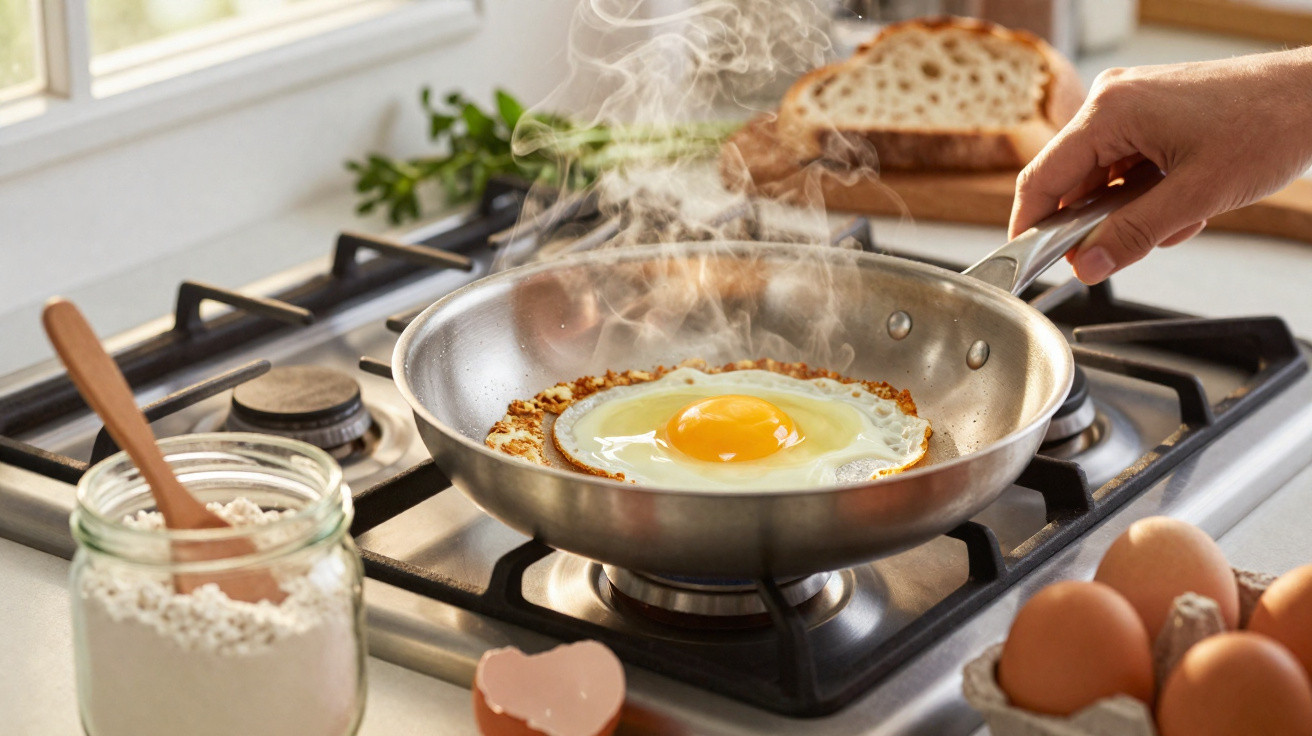
A perfectly fried egg seems straightforward-until the white fuses to the pan and breakfast becomes a minor catastrophe.
Home cooks often blame the cookware, hob or eggs themselves. Usually, though, the problem comes down to the way the pan and egg make contact during the opening moments of cooking.
Why fried eggs keep sticking to your pan
Fried eggs appear so simple that they are often approached without much thought: heat the pan, add oil, crack in an egg, and wait. But then the spatula goes underneath, the edge splits, the white remains stuck to the metal and the yolk collapses like a pierced balloon. The peaceful breakfast moment disappears.
The science at the pan's surface is more involved than it appears. Egg whites consist mainly of water and proteins, and those proteins readily attach themselves to rough or excessively hot metal. Tiny marks in stainless steel, or damaged non-stick coatings, provide plenty of places for them to cling. Once they have taken hold, releasing the egg requires force-and that force ruins its shape.
Temperature is equally important. In an overheated pan, proteins tighten as soon as they land, creating a firm crust that sticks fast. In a pan that is too cool, the egg rests in merely warm fat, spreads and steams; when you try to move it too early, it tears. Either way, the outcome is identical: ragged egg whites and irritation.
Sticking eggs are usually a surface problem, not a cooking-talent problem.
Each pan material responds differently. Stainless steel rewards precise technique but is unforgiving when you rush. Properly seasoned cast iron, warmed gently, can release eggs beautifully, although dry cast iron that is too hot can hold an egg as tightly as glue. Older non-stick pans also gradually lose their release properties, particularly when metal utensils have scratched their surface.
The real task, then, is managing the relationship between pan and protein during those first 30 seconds. That is where an unexpectedly simple solution comes in-one quietly used on restaurant lines and street-food stalls, well away from polished cookware advertising.
The tiny twist: a dusting of flour as a barrier
This technique needs neither a costly pan nor half a block of butter. It relies on an everyday cupboard ingredient: plain flour. It is not used as batter or as a coating, but as a nearly invisible layer separating the egg from the metal.
How the “flour film” method works
Many chefs now rely on this simple routine when dealing with stubborn pans:
- Warm the pan gradually over medium heat for two to three minutes.
- Pour in only enough oil to leave the base with a thin, even sheen.
- Scatter a small pinch of flour over the oil-roughly a teaspoon for a medium pan.
- Swirl the pan until the oil and flour create a very fine, unbroken film.
- Crack in the eggs, reducing the heat a little if the oil begins to shimmer too fiercely.
The flour should be almost imperceptible, resembling a faint mist over the pan. Visible little heaps mean you have added too much. If it turns into paste, either the pan was not hot enough or the layer of oil was too deep.
The goal is a whisper of flour, not a coat. Think dusting, not breading.
At a microscopic scale, the flour creates a delicate protective layer. It takes up some moisture released by the egg white during the initial seconds. As the flour lightly toasts in the oil, it becomes a smooth, fine surface. Rather than gripping the minute imperfections in the metal, the proteins meet this temporary “floor”.
The difference can be dramatic. After a brief pause, gently nudge the egg at its edge and it will slide. The white holds together neatly instead of ripping. The yolk remains rounded and wobbly, allowing you to transfer a complete fried egg to the plate in one assured movement rather than three nervous attempts.
Stainless, cast iron and ageing non-stick
The technique works a little differently depending on the pan, which is part of its appeal for restaurant cooks:
| Pan type | What usually happens | Effect of the flour film |
|---|---|---|
| Stainless steel | Eggs attach to tiny scratches when the timing is wrong. | Provides easier release, particularly over moderate heat. |
| Cast iron | Excellent when ideally seasoned, but unforgiving when dry or overheated. | Cuts down sticking and helps preserve seasoning by reducing burnt egg residue. |
| Older non-stick | The coating has deteriorated, so eggs begin to drag and catch. | Extends its useful life by making up for reduced slipperiness. |
Gluten-free households can use rice flour or fine corn flour in exactly the same way. Both brown quickly, have a mild flavour and form a similar protective layer.
Timing, temperature and those first 30 seconds
This method still depends on good timing. The pan needs to be hot, but not aggressively so. Aim for oil that flows across the surface like light syrup, rather than smoking or remaining thick and sluggish.
After cracking in the egg, do not try to shift it straight away. Let the outside of the white change from translucent to opaque and lose its gloss. That dull ring shows that the flour film is working and the proteins have set gently above it. A light nudge with a spatula should then encounter only slight resistance.
If the egg fights back when you nudge it, give it another 10 seconds instead of forcing it.
The usual problems become obvious quickly:
- Smoke rising from the pan: the flour is burning, so reduce the heat and begin again.
- Oily lumps of flour: the pan was insufficiently heated or you added excessive oil.
- An egg that spreads too widely: the pan or oil was too cool when the egg was added.
Professional cooks encounter these issues too, particularly during hectic mornings or when using unfamiliar hobs. Their advantage is treating the first egg as a trial, then changing the heat or flour amount for the next batch.
Why this trick changes more than breakfast aesthetics
The flour layer is not just about producing an attractive egg. It changes how much fat you use, how you look after your pans and how dependable breakfast feels on a busy morning.
Since the barrier assists release, you can use less oil than you might normally risk in a stainless steel or cast iron pan. The flour browns into tiny spots beneath the white, helping develop lightly savoury flavours even when using a modest amount of fat.
Cast iron gains another advantage over time. Whenever egg sticks and burns onto its surface, you need to scrub more firmly, gradually removing the delicate polymerised coating called seasoning. When the egg releases cleanly, gentler washing is enough, allowing the seasoning to build rather than wear away. With every month of use, the pan can behave more like non-stick cookware.
For worn non-stick pans, this approach offers something of a reprieve. It cannot fix the damage, but it can make weekend brunch less stressful while you decide when to replace the pan. The fine flour layer masks the worst scratches and delivers smoother movement for a little longer.
Beyond eggs: what else benefits from a flour buffer
Once cooks understand the idea, they often experiment with it on other delicate ingredients. Thin white-fish fillets, sliced tofu and halloumi can all benefit from a minimal dusting of flour directly on the food, together with a small amount of flour in the pan.
The principle remains the same: a very fine layer absorbs moisture and turns crisp before the delicate food surface can bond to the pan. With fish, this generally produces more golden areas and fewer broken fillets. With tofu, it creates a more appealing crust, with a mild crunch that holds sauces well.
There are restrictions, however. Sugary foods-including marinated meat, sticky sauces and vegetables coated in honey-respond differently because sugar caramelises and burns rapidly. The flour technique cannot entirely prevent that. It is most effective when protein is the chief cause of sticking and when the heat can remain sensible rather than fiercely high.
How this shapes cooking habits in the long run
A fried egg that releases consistently can transform one small part of a morning routine, but the effect can spread further. People who had stopped cooking eggs in stainless steel may start using it again. Those intimidated by cast iron may leave it on the hob instead of keeping it in the cupboard “for special occasions”.
It also encourages closer attention to sensory signals. Rather than relying solely on a recipe's fixed timings, cooks begin to observe how the oil, flour and egg white behave in the pan. That awareness transfers to other meals: you notice onions steaming rather than browning, steak drying instead of sizzling, and pancakes becoming rubbery because cold batter reached a cold surface.
There are financial and health considerations too. Using less fat while achieving the same result can alter the balance of a standard breakfast over months and years, especially in homes where eggs are fried most days. Keeping an ageing non-stick pan in service for an extra year or two can also make a difference when quality cookware is far from inexpensive.
On a mental level, there is also the quiet comfort of something working reliably every time before the rest of the day turns unpredictable. The egg glides out, the yolk stands proud and the pan cleans with almost no effort. For plenty of home cooks, that small sense of control at 7 a.m. matters more than any viral kitchen gadget.









Comments
No comments yet. Be the first to comment!
Leave a Comment