Yet there is more to it than you might expect.
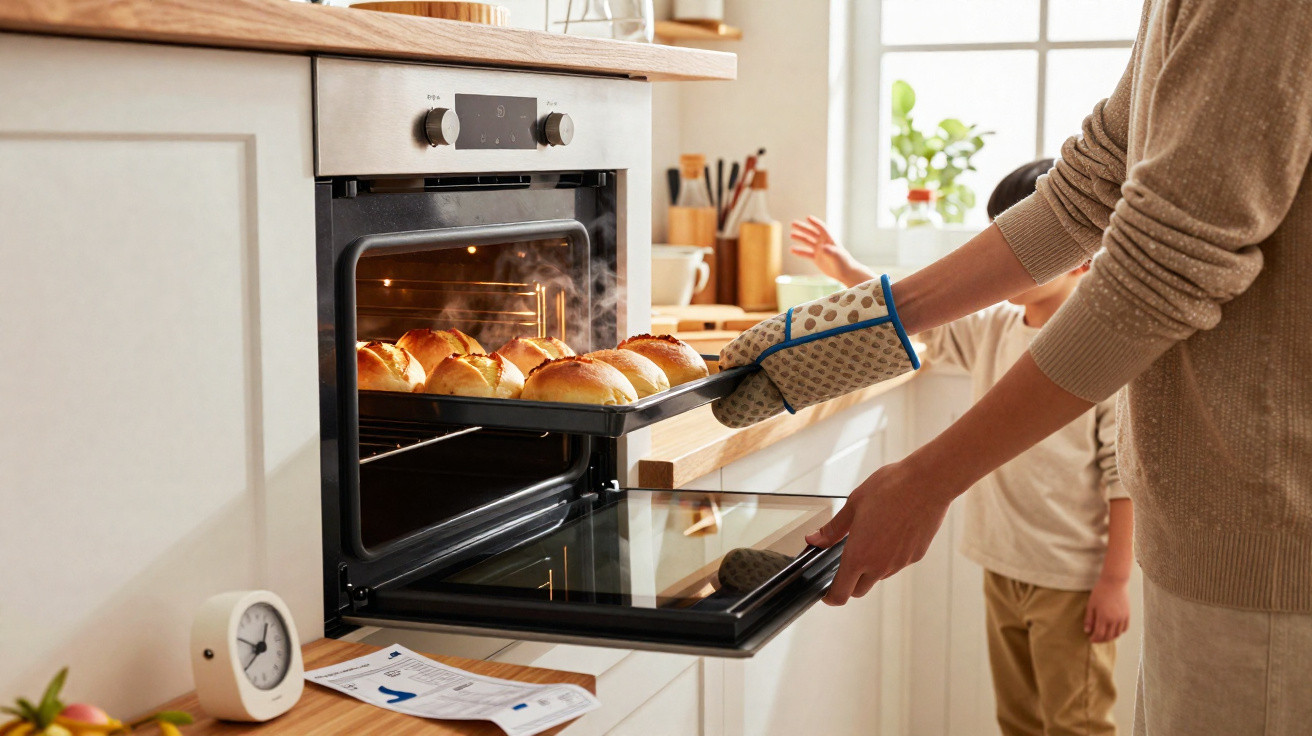
A casserole is perfectly browned, a cake smells wonderful and the tray comes out of the oven – then, almost automatically, a hand reaches for the oven door to let the heat escape. It may seem trivial, but it affects energy use, safety, odours and even the quality of dishes cooked afterwards. Household experts and appliance manufacturers take a clear view on this, although it is still little known in many kitchens.
Opening the oven door after baking: sensible or pointless?
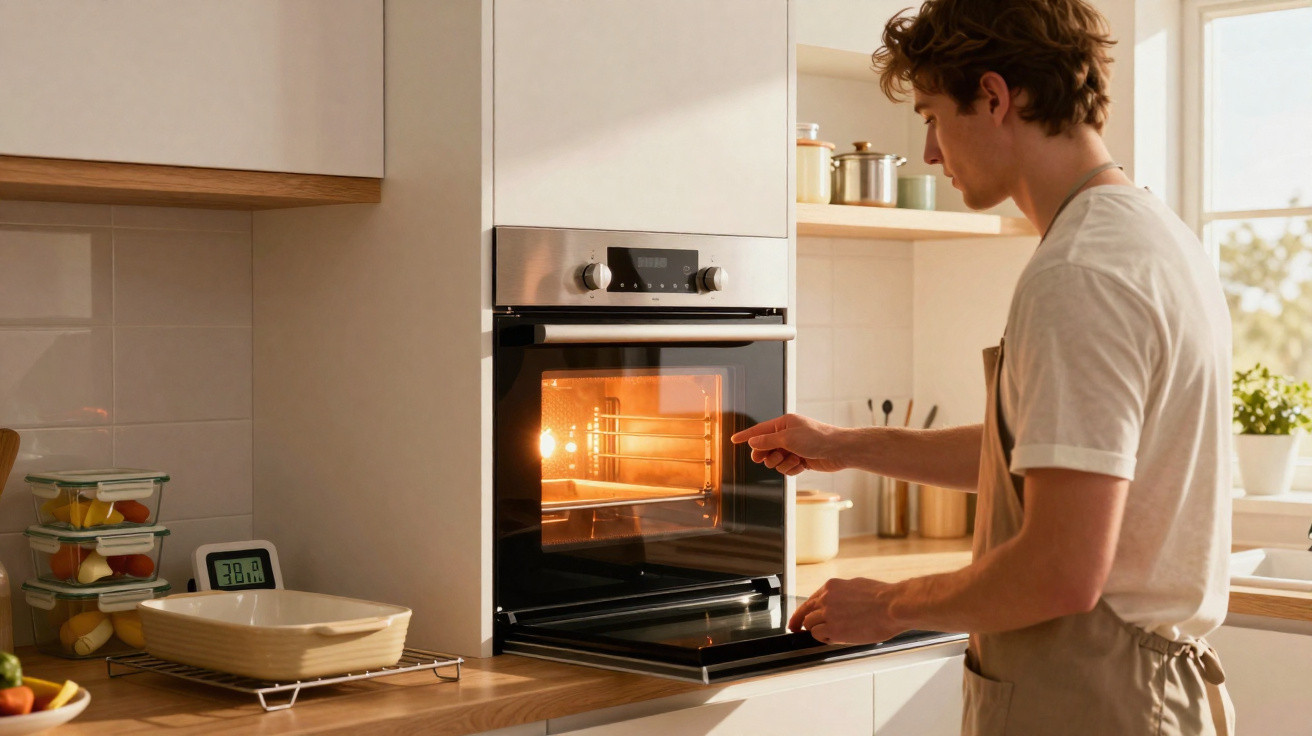
First, the reassuring news: anyone who opens the oven door or leaves it slightly ajar once the cooking time has finished is not doing anything fundamentally wrong. In fact, this can be quite useful in certain circumstances.
“Opening the oven door after baking allows the appliance to cool down faster and can remove unpleasant smells from the oven cavity.”
Strong roasting aromas, fatty vapours or the smell of cheese often linger inside a hot oven. These odours settle both in the air and on the oven walls. Leaving the door open briefly lets warm air out, taking some of those smells with it.
This is particularly welcome if you intend to cook something entirely different afterwards. Nobody wants a vanilla cake with a hint of chicken or an apple tart carrying the aroma of lasagne.
Benefits of leaving the oven door open after cooking
- Faster cooling: Trapped hot air can escape, helping the metal housing cool more quickly.
- Less mixing of odours: Roasting smells dissipate sooner, so the next dish is less likely to absorb unwanted aromas.
- A better kitchen climate: In some cases, this helps counter slightly humid air inside the oven, for example after cooking foods with a high water content.
Many manufacturers confirm that opening the door occasionally after use is not a problem, provided a few often-overlooked points are taken into account.
The downside: everyday risks that are often underestimated
Although an open oven can be useful for smells, it also has clear disadvantages. Families with children or pets in particular should take care.
Risk of burns and the room climate
Straight after cooking, the oven interior is often hotter than 200 degrees. When the door is opened, the hot air rushes upwards in a dense plume. Anyone standing close to the appliance feels it full in the face – uncomfortable and, in extreme cases, potentially harmful to the eyes or airways.
The situation is even more critical with young children, who often touch anything within reach. Pulling down a hot oven door can quickly result in burn injuries. The same applies to curious cats or dogs moving around the kitchen.
“A wide-open oven door after baking is always an exposed danger area – especially for young children and pets.”
There is another consideration: if the door is left wide open for longer, the residual heat can warm the kitchen considerably. That may be pleasant in winter, but in summer it can rapidly make the room uncomfortable.
How long should the oven door stay open?
As a rule of thumb, opening the door briefly is enough to release the first blast of heat and some of the odours. It can then be shut again or left just slightly ajar.
- 1–3 minutes: usually sufficient to let out steam and strong smells.
- 5–10 minutes: useful if the oven was especially hot or smelled strongly.
- More than 10 minutes: only if no children or animals are in the room and the room climate allows it.
If there is a kitchen window, air the room at the same time. This clears odours and humid air more quickly without leaving the oven door wide open for several minutes.
During baking: it is better to keep the oven door shut
The situation is entirely different during the cooking time. Many home bakers and cooks repeatedly open the door out of curiosity to check progress. This is precisely what regularly leads to disappointing results.
“Every time the oven door is opened during cooking, valuable degrees are lost – and cakes, soufflés or casseroles can end up looking ruined.”
As soon as the door opens, the temperature inside drops abruptly. Depending on the appliance, several degrees may be lost with each opening. The oven then needs time to return to the selected temperature. Meanwhile, the food cooks unevenly.
Typical consequences of opening the door too often
- Cakes collapse because the heat does not remain stable.
- Casseroles take noticeably longer, turn dry or remain runny in the middle.
- Roasts fail to develop an even crust.
- Energy consumption rises because the oven constantly has to reheat.
To check whether food is cooked, do so as rarely and as deliberately as possible: switch on the oven light, where available, and open the door only briefly when genuinely necessary. For delicate mixtures such as sponge, soufflé and choux pastry, it is best not to open it at all during the first part of the cooking time.
Saving energy with residual heat – an often overlooked trick
Many modern ovens retain a considerable amount of heat in their casing and walls. This can be used to save electricity or gas. Anyone familiar with their appliance can turn off the heating function a few minutes before the end of the cooking time and use the remaining heat to finish the dish.
“Turn off the oven a few minutes before the end of the baking time and keep the door closed – this lets the dish finish with residual heat and saves energy.”
Depending on the oven and the dish, 5 to 10 minutes is realistic. Thick roasts can benefit particularly well from this approach. The heat remains in the oven cavity, the food continues cooking gently and the meter gets a short break.
Briefly airing the kitchen after taking the food out combines both advantages: lower energy use and fewer lingering odours.
Open or closed? A quick guide
| Situation | Oven door recommendation |
|---|---|
| During the cooking time | Keep it closed whenever possible; open only briefly and rarely |
| Immediately after baking | Open briefly or leave slightly ajar to release steam and odours |
| With children/pets in the household | Open only under supervision; do not leave wide open for long |
| To save energy | Switch the oven off before cooking ends and keep the door closed |
Odours, grease and cleaning: how an open oven is connected
Most people think only about heat when considering the oven door, rather than cleaning. Yet whether it is open or closed indirectly affects how often you need to scrub.
If the door remains fully closed after baking, some of the greasy vapour condenses on the cooler walls and glass. Over time, this creates brown deposits that become difficult to remove. Opening the door briefly after baking allows some vapours to escape instead of settling everywhere.
Of course, only regular care keeps an oven genuinely clean. However, the less grease builds up inside, the less often aggressive cleaning products are needed.
Practical tips for everyday oven use
Anyone using their oven every day or several times a week can benefit from a few simple routines:
- After strongly scented foods such as fish, cheese or garlic, leave the door slightly open for a few minutes while airing the kitchen.
- Use baking parchment or a drip tray to prevent fat and sauce from dripping onto the base.
- Once the oven has cooled, wipe away light splashes with a damp cloth before they bake on.
- For delicate bakes, use the glass door to check progress instead of opening it repeatedly.
The choice of oven setting also matters. Fan cooking generally distributes heat more evenly than conventional top-and-bottom heat, so it is slightly more forgiving of brief openings. Nevertheless, every unnecessary opening costs energy and reduces stability.
When you should definitely keep the oven door closed
A few situations call for the door to remain firmly shut:
- When using the pyrolytic cleaning function, as extremely high temperatures are produced.
- During very long cooking times, such as for braised dishes, so that the temperature does not fluctuate too much.
- If flammable materials, such as tea towels or paper, are directly in front of the appliance.
If in doubt, it is best to consult the instruction manual for your own model. Some manufacturers provide specific guidance on the best way for the appliance to cool down after use.
Practical conclusion: a small action with a big effect
Ultimately, the right choice depends on the situation: after baking, it is fine to open the door briefly to allow heat and odours to escape – ideally under supervision and not for hours. During cooking, keep it closed as far as possible so that cakes, casseroles and similar dishes turn out well and energy consumption remains under control.
By also using residual heat, understanding the appliance and keeping an eye on children and pets, you can get much more from your oven than this unassuming kitchen helper might initially suggest.









Comments
No comments yet. Be the first to comment!
Leave a Comment