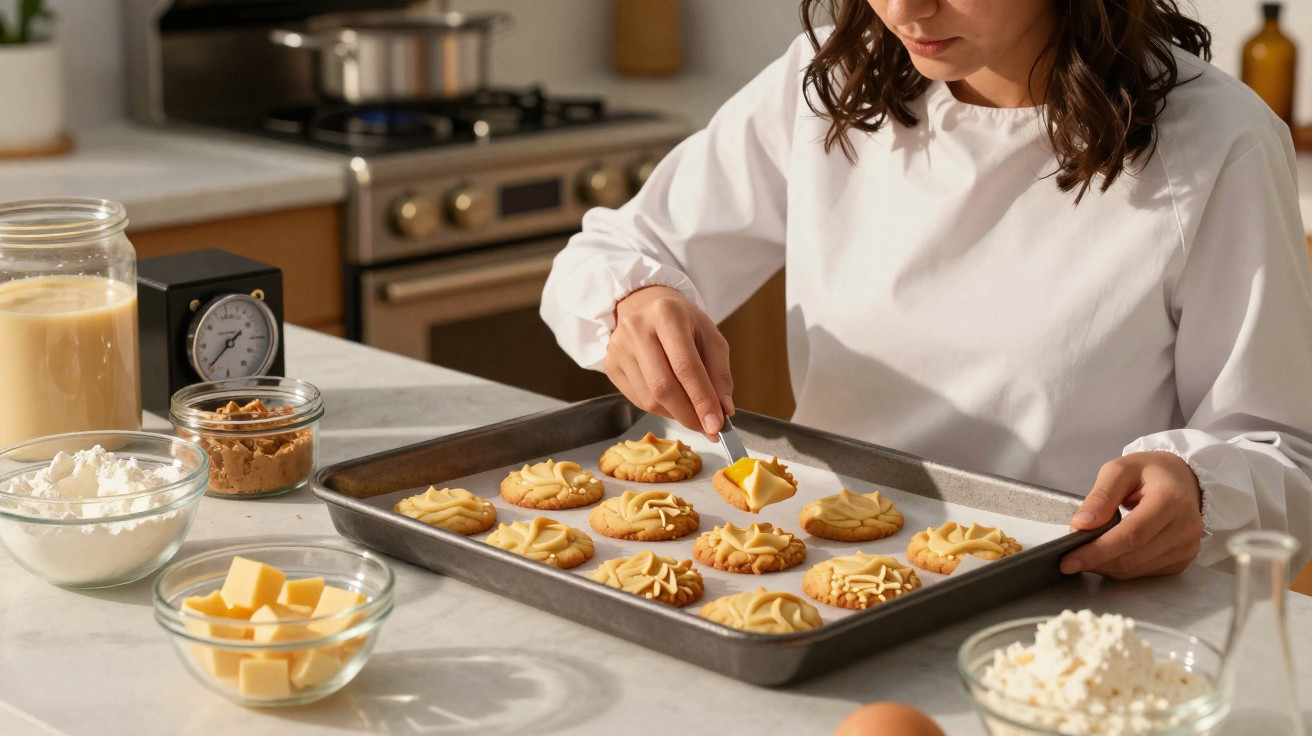
If your cookies go wrong despite following your grandmother’s wonderful recipe or one you found online, do not blame yourself: understanding the chemistry is the only real guarantee of success.
Americans may not be especially celebrated for their cuisine, but a few recipes command respect, and cookies undoubtedly belong on that short list. This iconic little bake, popularised during the 1930s, has a personal recipe for virtually everyone: some people want it thick, with a gooey centre; others prefer the opposite, crisp with just the right amount of chew. There are at least as many recipes as there are cookie eaters, and although taste is subjective, claiming that the subject should not be discussed amounts to saying that gastronomy has nothing to gain from being understood. Bill Nye, the well-known American television presenter and science communicator, has an unequivocal view: “cooking is an art, but baking is a science”.
In the United States, chemist Dr Lesa Tran has made this her speciality. Coming from a family that owns a Chinese biscuit factory producing fortune cookies, she now teaches the chemistry of cooking at Rice University. Rather than offering a recipe to follow blindly, she provides a scientific perspective that will help you tell a successful cookie from a plaster disc or a hockey puck. Time to get baking.
The anatomy of a successful cookie
Flour, salt and raising agents in cookies
The first cookie ingredient is flour, which can be regarded as its skeleton. Its proteins form gluten when combined with water, present in small amounts in butter and egg whites. This sticky, elastic network “gives a cookie its height, structure and chew”, Lesa Tran explains.
The more protein-rich the flour you use, the firmer and more yielding the cookie will be when bitten. This is why leading pastry chefs often blend several types of flour: adjusting the ratios allows them to achieve the texture they are after.
For instance, if you are looking for the ideal balance, combine a high-protein strong flour for an appealing chew with standard plain flour for tenderness. Spelt flour is another excellent option: its more fragile gluten creates a particularly soft texture and a rounder, nutty flavour. The possible blends are almost endless, so it is up to you to experiment.
Salt is another essential ingredient. As well as offsetting the sweetness of the bake, it heightens the chocolate’s existing flavours and stabilises the protein networks that develop during baking. A cookie without salt will taste far blander, as it loses one of its most effective flavour enhancers.
Though it does not feature in every recipe, baking soda in small quantities-less than 1% of the total dough weight-will help you make better cookies. During baking, heat and certain acidic ingredients, such as brown sugar, release carbon dioxide, resulting in a cookie that is “lighter, airier and more tender”.
Butter, eggs and chocolate chips
Do not overlook the butter, whether salted or unsalted: as it melts, it determines the cookie’s shape and how far it spreads in the oven. Made up of more than 80% fat, butter restricts gluten development, giving cookies a more crumbly, less tough texture. Under heat, its sugars and proteins interact in the celebrated Maillard reaction, responsible for the “caramelised colours and toasted aromas we love”, Tran notes.
Above 180°C, the Maillard reaction stops and the bake begins to burn. That is why a cookie must never be baked at too high a temperature. The ideal range is between 170°C and 175°C; go beyond it and you will end up with bricks. Handy for filling a hole in a wall, perhaps, but not much fun to chew or swallow.
Finally, eggs are the last indispensable ingredient. Egg whites, largely made of water and proteins, give the dough structure: as they bake, their proteins denature and coagulate, helping the cookie set so that it does not collapse once removed from the oven. Richer in fat, yolks provide a fudgy quality and soften the texture by making the dough structure more supple. Here too, varying the proportions lets you move from a firmer cookie with more whites to a softer result with more yolks.
For the finishing touch, add chocolate chips. If they do not turn into a pool of brown sludge at the bottom of the oven, that is thanks to cocoa butter’s distinctive crystalline structure. This plant fat can keep a chip’s shape intact even as it melts. The result is luscious chocolate “pockets”, without the chocolate dissolving completely into the dough.
Subscribe to Presse-citron
Scientific hacks for the perfect cookie
For Lesa Tran, a cookie succeeds before it ever enters the oven: baking merely follows logically from the choices you make during preparation. Butter temperature is a perfect example. When softened but not melted, butter traps tiny air bubbles as it is mixed with sugar. In the oven, this air expands to create light cookies with an airy texture. Melted butter, by contrast, can no longer hold that air, so the cookie will be far denser and more compact.
Sugar works in a similar way. White sugar encourages the dough to spread and caramelises around the edges, making them crisper. Use the moister brown sugar and your cookies will be softer, with slightly more toasted notes. That is why mixing the two can be worthwhile, producing “the best of both worlds”, according to Lesa Tran: a tender middle and crisp edges.
Even if you are in a hurry, do not dismiss the dough’s resting time: it will reward you for it. Around half an hour in the fridge is more than enough for the dough to hydrate more evenly and for its ingredients to distribute properly. Rested, chilled dough also spreads more slowly in the oven, so your cookies will hold their shape beautifully while retaining a soft texture. If time allows, 24 hours’ rest is ideal: the dough will be fully hydrated and its flavours will have had time to become more complex.
Finally comes the most critical, and most eagerly anticipated, moment: taking them out of the oven. According to Lesa Tran, there is no need to wait until the cookie’s centre looks completely cooked, because it “continues cooking outside the oven through residual heat”. In every case, they need to spend at least 8 to 10 minutes in a properly hot oven, but never leave them in for more than 15 minutes, or you will once again be faced with inedible concrete blocks.
You now have everything you need to experiment according to your tastes, or to gently tease your friend when they are disappointed by their blackened, bitter cookies, thrown together without respecting the fundamental laws of chemistry. There is no “perfect recipe”, but there is still a set of rules that can get you very close to one. You can, of course, choose to ignore them out of defiance, but your palate will remember it, we guarantee it. Christmas is approaching: what better opportunity could there be to put them to the test in real conditions?










Comments
No comments yet. Be the first to comment!
Leave a Comment