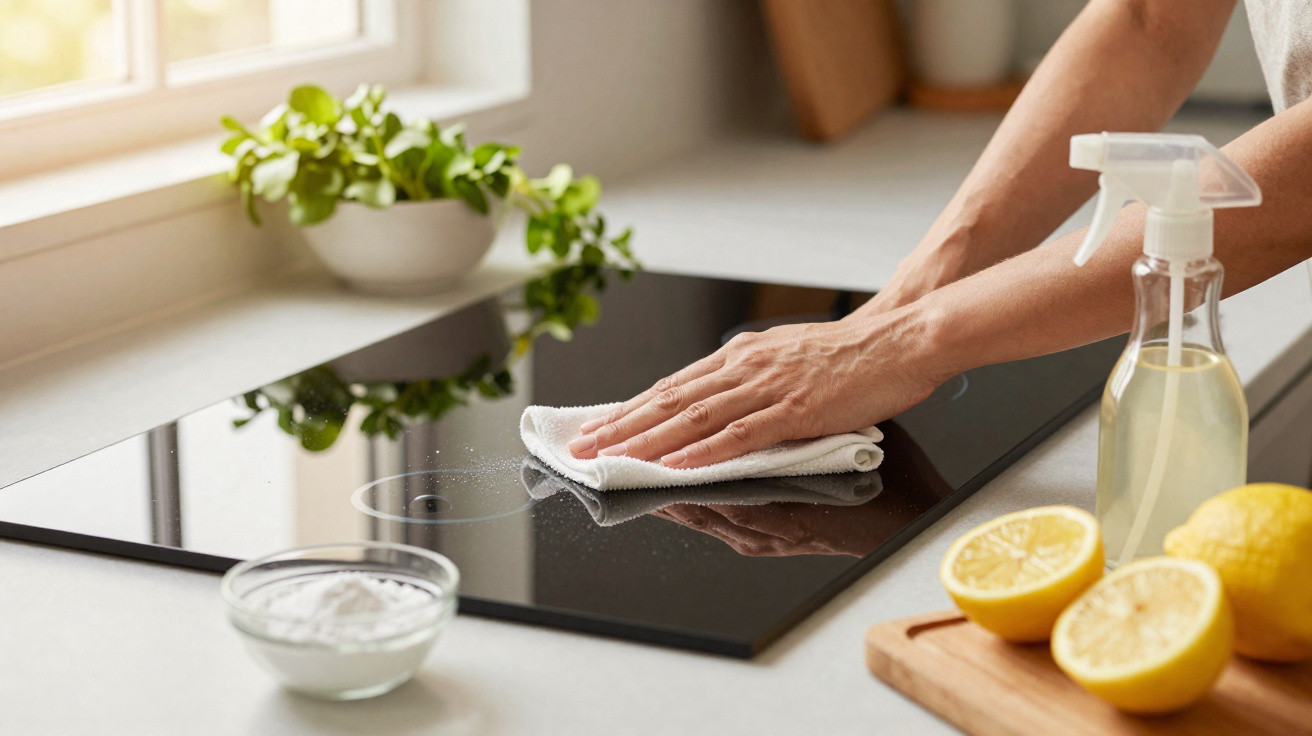
A simple kitchen remedy can put an end to exactly that.
Anyone who cooks regularly will recognise the problem: after just a few meals, everything starts to stick, the shine disappears, and even specialist cleaners can smell harsh while often achieving very little. Yet the answer is usually already within reach in the fruit bowl or cupboard – with no aggressive chemicals and no hours of scrubbing.
Why hobs quickly start looking unsightly
Frying causes fat to splash, water boils over during cooking, sugar burns on, and sauces spill over. All of this ends up on the hob. Ceramic glass and induction hobs, in particular, mercilessly reveal every mark.
- Fat and oil create a greasy film.
- Starch and sugar caramelise and become baked on.
- Water marks leave limescale rings.
- Metal residue from pans produces grey streaks.
Many people then reach for powerful sprays or cream cleaners. Although these may clean, they can damage seals, coatings and sometimes even the surface itself. There are also pungent smells and plastic packaging that ultimately ends up as waste.
The overlooked kitchen cleaning wonder
A classic citrus ingredient – lemon juice – works as a natural household cleaner. Its citric acid breaks down grease, tackles limescale and restores shine to dull surfaces. Unlike many commercial products, you know exactly what it contains.
“A half lemon can often remove light dirt from a hob in under five minutes.”
The slightly textured flesh acts like a gentle exfoliant, while the acid loosens the greasy layer. As an added benefit, it leaves a fresh scent rather than chemical fumes in the kitchen.
How to clean your hob using only lemon
Step-by-step instructions for light soiling
- Allow the hob to cool: Never clean a hot surface, as there is a risk of burns and staining.
- Remove loose debris: Wipe away food crumbs and any loose burnt-on pieces with kitchen paper, or carefully lift them off with a scraper.
- Prepare half a lemon: Cut a lemon in half lengthways and roughly remove the seeds so that they do not roll across the surface.
- Rub the surface: Move the cut side of the lemon over the hob in circular motions. Pay particular attention to greasy patches and dull areas.
- Leave it to work: Let the juice sit on the surface for two to three minutes so that the acid can take effect.
- Wipe clean: Remove everything with a damp, soft cloth or sponge, then polish with a dry microfibre cloth.
For everyday cleaning, this method is usually entirely sufficient. Those who quickly wipe the hob with lemon regularly – for example, every evening after cooking – can prevent thick grime from building up in the first place.
When the hob looks really bad: lemon juice plus bicarbonate of soda
Lemon juice alone may not always be enough for burnt-on residue or surfaces that have been neglected for some time. In that case, combining it with bicarbonate of soda or baking powder can help. Both contain fine particles that provide light abrasion without leaving scratches.
“Citric acid loosens, bicarbonate of soda loosens and polishes – together, they remove even stubborn deposits remarkably gently.”
How the combination method works
- Preparation: Once again, work only on a fully cooled hob and remove all loose residue.
- Moisten the lemon: Squeeze half a lemon lightly so that the cut surface is properly juicy.
- Add bicarbonate of soda: Sprinkle a small amount directly onto the cut side of the lemon, or apply it to particularly dirty areas.
- Rub it in: Use gentle pressure and circular movements over the burnt-on areas. It may fizz briefly – this shows that the two ingredients are reacting.
- Leave it to work: Allow three to five minutes. During this time, the mixture does the work for you.
- Clean afterwards: Lift away the mixture with a damp sponge, wipe thoroughly so that no residue remains, and finish by polishing dry.
If you are unsure, try the method first in an inconspicuous corner. It generally works without issue on standard ceramic glass and induction hobs.
Why this hob-cleaning method makes sense in many homes
Lemon and bicarbonate of soda are regarded as classic all-round household products. Both are inexpensive, found in almost every kitchen and can be used in many different ways.
| Benefit | Lemon juice | Bicarbonate of soda |
|---|---|---|
| Grease removal | very good | good |
| Odour neutralisation | fresh scent | strong neutralisation |
| Gentle on surfaces | mild acid | fine abrasion |
| Environmental credentials | plant-based, biodegradable | mineral-based, versatile use |
Anyone switching from aggressive sprays to these household remedies not only reduces plastic waste, but also lowers the risk of skin irritation or respiratory problems caused by fumes.
Common mistakes when cleaning hobs
Many types of damage are caused not by everyday cooking, but by incorrect cleaning methods. A few typical pitfalls are easy to avoid:
- Metal scouring pads: These permanently scratch the surface, and rough areas will attract even more dirt in future.
- Oven cleaner on ceramic glass: Highly caustic products can bleach the surface or leave it dull.
- Cleaning a hot hob: Liquids can bake on, while fumes are released more intensely.
- Using too much water: Liquid may run into the hob at the edges and damage the electronics inside.
The lemon and bicarbonate of soda method uses little moisture and no coarse abrasives, significantly reducing the risk of lasting marks.
How often should you clean the hob this way?
If you cook every day, a brief evening check is a good routine. Light splashes can be removed effortlessly straight away, before they have a chance to bake on. With normal use, the more intensive bicarbonate of soda treatment is usually needed only once a week or every other week.
Handily, any remaining lemon can also be used on other surfaces – such as the sink, a stainless-steel worktop (test a small area first), or the tap to loosen limescale marks.
When this method is not ideal
Care is needed with very delicate specialist coatings or old electric hotplates that already have rusty areas. In these cases, check the manufacturer’s guidance or use a gentler approach. Anyone uncertain can initially use the lemon method in a heavily diluted form or limit it to the outer edges.
More uses for lemon and bicarbonate of soda around the home
Once you start using them, it quickly becomes clear how versatile these two ingredients are. For example, they can deodorise chopping boards, remove tea or coffee stains from mugs, or wipe down the inside of the fridge. Many of these uses work in much the same way as on the hob: apply, leave briefly, then wipe away.
Another point many people appreciate is that children and pets come into contact with far fewer irritating substances when there are fewer aggressive cleaners around the home. Household remedies still need to be used with care, but handling them generally feels far less worrying.
So, anyone wanting to see their hob shine again without buying specialist products will find a simple, affordable and surprisingly effective helper in lemon and bicarbonate of soda – straight from their own kitchen.















Comments
No comments yet. Be the first to comment!
Leave a Comment