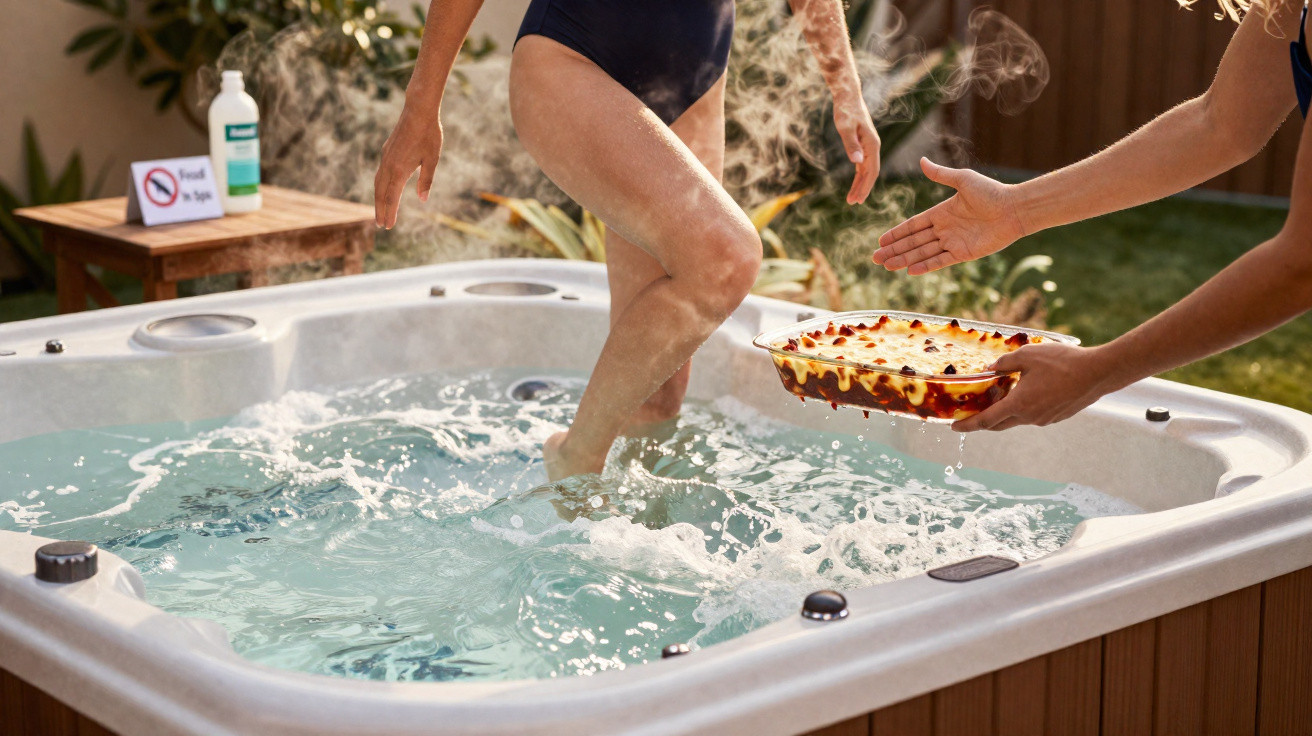
A friend recently forfeited her security deposit after the holiday cottage she and her fellow hens had hired for a weekend suffered an unusual hot-tub incident. The reason? She dropped a microwaveable lasagne into it.
It could happen to anybody.
They did their best to scoop out the minced beef and curdled white sauce that rose to the top, but their efforts were futile. The harm had already been caused.
Yet an errant lasagne may be the smallest of the concerns associated with a holiday hot tub.
A range of less visible nasties could be present in the water. Although heat and hydrotherapy can offer potential wellbeing benefits, a supposedly soothing soak in a hotel hot tub may ultimately cause more harm than benefit.
Hot tub lung
One possibility is developing a respiratory illness commonly known as hot-tub lung.
It is caused by microbes called mycobacteria, which belong to the same family as the organisms responsible for tuberculosis (TB).
As with TB, the bacteria linked to hot-tub lung produce areas of inflammation within lung tissue. This can cause breathlessness, coughing and fever. Changes in the lungs may be visible on a chest X-ray or CT scan, and can look quite severe.
A hot tub provides ideal conditions for these bacteria to grow, as the heat in its system creates the optimum temperature for them to multiply. Its bubbling water also produces an aerosol, releasing the bacteria into the air where they may be breathed in.
In contrast with TB, which needs prolonged antibiotic treatment and is becoming harder to manage, hot-tub lung can be regarded more as an inflammatory condition.
Compared with other lung diseases, hot-tub lung was identified relatively recently, with the first description published in 1997. It is more commonly linked to people who use hot tubs frequently or who have weakened immunity.
Waterborne bugs in hot tubs
Numerous other organisms are also able to thrive in hot-tub equipment.
Among them is legionella, the bacterium responsible for the potentially serious infectious illness Legionnaire's disease.
Hot tubs are not legionella's only breeding places. The organism occurs naturally in fresh water and grows especially well when water is heated to warm temperatures. Showers, swimming pools and air-conditioning systems can therefore present risks too.
Legionnaire's disease has symptoms similar to those of other respiratory infections, such as breathlessness and either a dry or mucus-producing cough. Muscle pain and headaches are also common. Treatment in hospital can be necessary, and antibiotics should be given.
Water-borne bacteria do not only affect the lungs. Hot-tub bacteria can cause skin infections, including hot tub folliculitis, which can appear in clusters of cases.
Hot tubs may also lead to eye infections, particularly for people wearing contact lenses. It is therefore sensible to take them out before entering the water.
Reaping the benefits
Provided you avoid the bacteria, hot tubs could offer some benefits for health and wellbeing.
Heat therapy, for instance, may stimulate production of so-called "heat-shock" proteins, which can affect metabolism. Trials in people have shown that these proteins may alter the body's insulin sensitivity and the deposition of fatty tissue, potentially making them natural treatments for diabetes and obesity.
The possible restorative effects of simply being immersed in water, whether warm or cold, are well established. Water can be used as a way of applying heat or cold, at times at extreme temperatures.
Cold-water immersion (CWI) has attracted considerable interest, and specially designed cold tubs are increasingly appearing. Its possible advantages include quicker healing and recovery, improved mood and enhanced immunity, but it also carries serious dangers. Extreme cold can trigger drowning and fatal cardiac arrhythmias. There is, however, no medical agreement on whether the benefits of CWI outweigh its risks.
Exercising in water, an alternative-medicine approach called hydrotherapy, has been suggested as a holistic treatment for a wide range of conditions. These include everything from high blood pressure to cancer. Although the overall effectiveness of this method remains uncertain, some patients have reported greater energy and improved mood, alongside less anxiety and pain.
So, if you are considering ending the day in a hot tub with a glass of champagne, think about exactly what you may be getting into.
At a minimum, check that the tub has been properly cleaned and maintained. Remember, though, that chlorine does not eliminate every harmful organism, including legionella.
Whatever else you do, remove your contact lenses - and never, ever bring a lasagne into a hot tub.
Dan Baumgardt, Senior Lecturer, School of Physiology, Pharmacology and Neuroscience, University of Bristol
This article is republished from The Conversation under a Creative Commons licence. Read the original article.
















Comments
No comments yet. Be the first to comment!
Leave a Comment