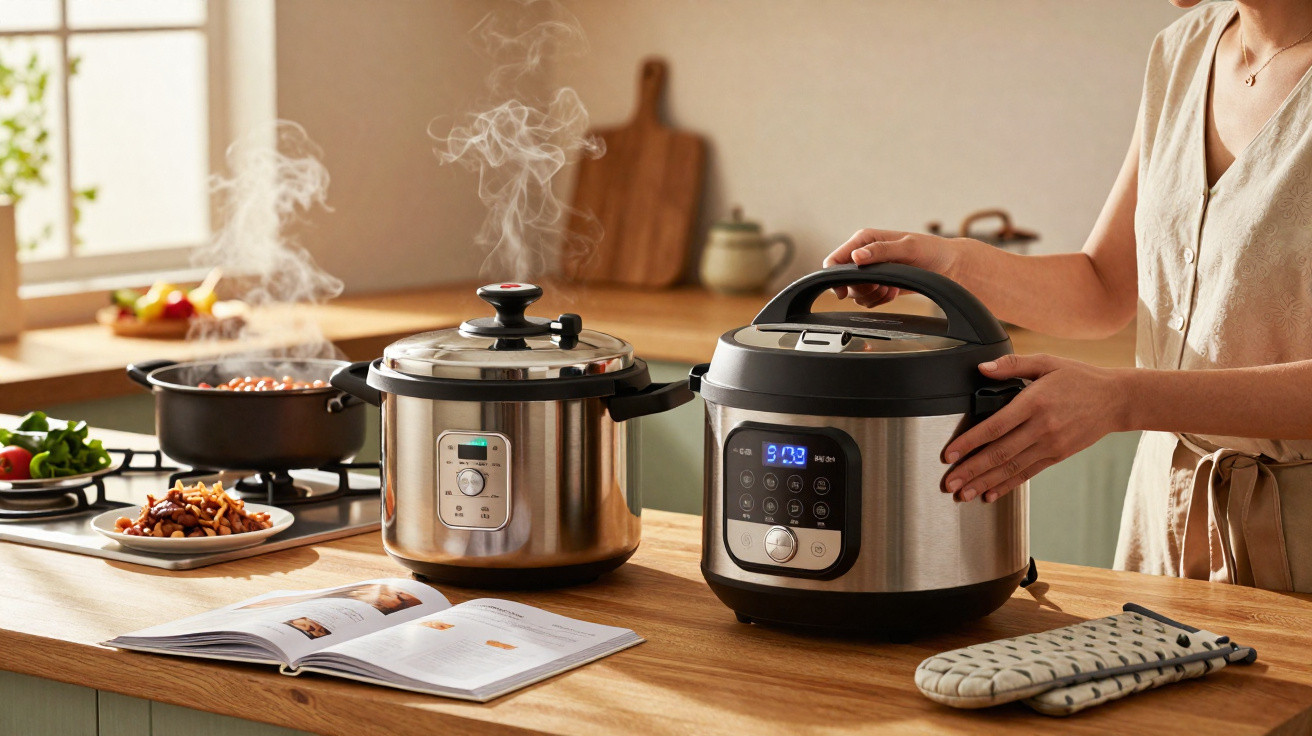
When making the many choices involved in cooking, one question that often sparks debate is whether to use a traditional pressure cooker or choose an electric pressure cooker. Each option has its own operating style, benefits and precautions, directly affecting the time spent cooking, the flavour of your food and everyday safety. Knowing how the two types work makes it easier to select the one that best suits your routine, the dishes you make most often and how closely you can supervise cooking.
Does a traditional or electric pressure cooker deliver better performance?
A stovetop traditional pressure cooker is usually quicker when used over a high, properly controlled heat. Heat reaches the base directly, allowing pressure to build rapidly. This makes it particularly effective for beans, chickpeas, tougher cuts of meat and rich stocks, provided you regulate the heat and keep an eye on it to prevent burning or wasting gas.
An electric pressure cooker, by comparison, uses internal heating alongside automatic temperature and pressure controls. It may take slightly longer to reach full pressure, but offers pre-set programmes, consistent cooking and the convenience of not having to remain by the hob throughout the process. That is especially appealing for busy routines.
How should you compare pressure cooker durability and safety?
The lifespan of a traditional pressure cooker is influenced by the thickness of its material and by how well the sealing ring, pressure weight and valves are maintained. An electric pressure cooker also contains electronics, sensors and a heating element, all of which require care around drops, moisture and power fluctuations. However, these appliances work very well when handled carefully and used within their capacity limits.
Certain habits reduce the service life and compromise the safety of both types, so they should be avoided in everyday use:
- Scraping the inside with sharp utensils and scratching the surface.
- Allowing the cooker to overheat or become almost dry while cooking.
- Overlooking wear, cracks or looseness in the sealing ring.
- Forcing the cooker open or blocking the steam outlet to cook “more quickly”.
Which dishes suit each type of pressure cooker best?
For anyone who regularly prepares beans, quick stews and pot-roasted meat, the traditional model is generally the more practical and faster choice. On powerful hobs, cuts such as beef ribs and shin become tender in less time, while you can still adjust the heat, give the dish a final stir and thicken the sauce to your preference.
The electric pressure cooker is particularly well suited to dishes that need controlled timing and texture, including brown rice, soups, tender vegetables and shredded meat. Its programmes help prevent food from overcooking, while the keep-warm function is useful for meals served over a longer period. In smaller kitchens, it can also reduce the need to use the hob constantly.
What care ensures correct use and a longer service life?
Caring for a traditional pressure cooker starts immediately after use: wash it with a soft sponge and washing-up liquid, rather than steel wool. It is important to clean the valves, remove and thoroughly dry the sealing ring, and store the lid without fully closing it. This allows air to circulate and helps prevent mould and unpleasant odours.
With an electric pressure cooker, the main priority is keeping the electrical base away from water, using utensils that will not scratch the inner pot, and preventing knocks to the lid and outer structure. Cleaning the seals and valves as directed in the manual, checking the cable and plug, and never forcing the lid open while pressure remains high are simple measures that extend its lifespan and keep daily use safe.










Comments
No comments yet. Be the first to comment!
Leave a Comment