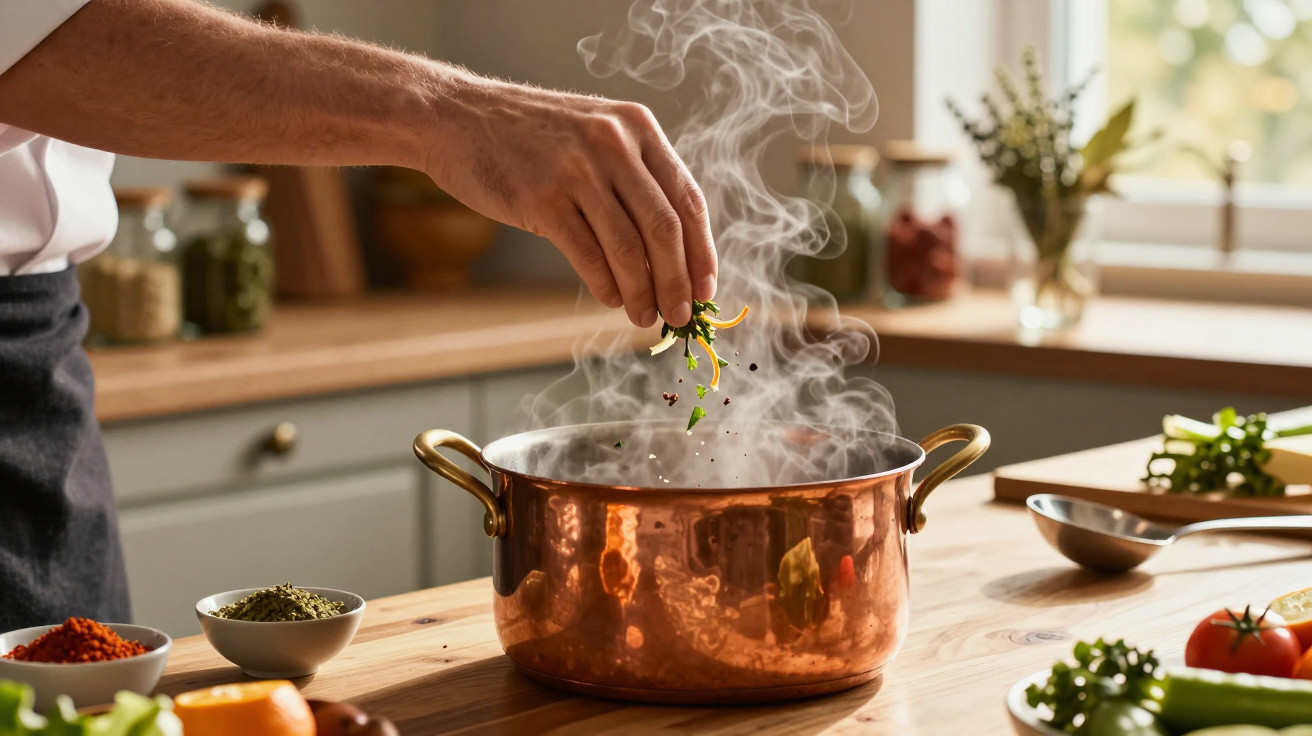
On a weekday evening, the kitchen still carries the scent of softened onions and carrot peelings. You put a saucepan on the hob intending to keep things simple, but the water turns cloudy, the herbs sink out of sight and the result lacks a little character. We have all had that moment: hoping for a comforting, deep, almost magical stock, only to end up with vaguely salted hot water. Three-Michelin-starred chef Anne-Sophie Pic reminds us, in her own way, that great flavour does not necessarily depend on an endless ingredient list: it often comes from attention to detail, timing and the right temperature. Her approach to stock feels reassuring, almost homely. Above all, the aroma needs to be developed.
Fragrant stock begins long before the water
For Anne-Sophie Pic, flavour is built in layers, without overpowering the ingredients. Before adding water, take time to gently cook the vegetables, fish bones, poultry or mushrooms, depending on the recipe, to bring out their natural juices. A roughly chopped carrot, a piece of celery, a leek and an onion tell a very different story when they are lightly coloured in the pan rather than added raw. This initial heat creates a subtle roundness. It gives the stock that lived-in kitchen aroma which draws people in before dinner is even ready.
Sometimes, the difference comes down to only a few minutes. For a vegetable stock to accompany risotto, soup or ravioli, let the aromatics sweat over a low heat for ten to fifteen minutes with a drizzle of neutral oil or a knob of butter, without aiming for too much colour. The onion softens, the leek loses its firmness and the mushrooms start releasing their fragrance. Let us be honest: hardly anyone does this every day. Yet, when you do make the effort, even with three slightly tired vegetables from the fridge drawer, you understand why this step makes all the difference.
The secret also lies in one straightforward rule: stock should not taste like a spilled spice drawer. Anne-Sophie Pic is known for her work with aromatic pairings, sometimes surprising but always clear on the palate. It is better to choose one defined direction - thyme and lemon, ginger and coriander, star anise and poultry, pepper and mushrooms - than to throw in everything within reach. A balanced fragrance leaves room for the main ingredient. When every element tries to speak louder than the next, the stock loses its precision and soon becomes muddled.
The Anne-Sophie Pic technique: infuse without boiling
The simplest method to adopt is to pour cold or barely warm water over the already awakened ingredients, then raise the temperature gradually. As soon as the first gentle bubbles appear, turn down the heat: the liquid should move softly, with a few calm bubbles on the surface, never boil furiously. This gentle cooking keeps flavours clean and prevents the stock from becoming cloudy. For vegetables, allow around thirty to forty-five minutes; with poultry or bones, the process may require considerably more patience. High heat creates the impression of speed, but it mostly damages delicacy.
The most common mistake is salting from the outset as though you were making soup ready to serve. Stock may later be reduced in a sauce, gravy or grain dish, however, and the salt can then become overpowering. It is wiser to season sparingly, taste halfway through cooking and adjust at the end according to its intended use. You can also keep some of the stock completely unseasoned: it is particularly useful for cooking the following day. No one wants to throw away two litres of beautifully fragrant liquid simply because it has become too salty. Everyday cooking deserves its small safeguards too.
Delicate aromatics should be added late, almost at the very end: a handful of basil, citrus zest or a few coriander leaves, for instance. Their fragrance quickly disappears during prolonged boiling; infusing them off the heat with the lid on is often enough to make them sing.
“Stock should simmer, not boil: that is how it retains its elegance.”
To remember Anne-Sophie Pic’s technique without making your evening more complicated, keep this short list beside the saucepan:
- sweat the ingredients before adding the water;
- maintain the gentlest possible simmer;
- add fresh herbs and zest at the end of the infusion.
The subtle flavour that transforms an everyday plate
A fragrant stock is not only for filling a bowl on cold evenings. It can cook rice, enliven mashed potato, loosen a meat gravy, bring depth to lentils or form the base of a very simple soup. This is where Anne-Sophie Pic’s philosophy becomes clear: pursuing intensity without heaviness, with an almost instinctive attentiveness to the memories a flavour can trigger. A mushroom and thyme stock may bring to mind a damp woodland walk; lemon chicken stock can sometimes recall peaceful Sunday meals. Every saucepan carries something of the person who prepared it.
You do not need a brigade, rare ingredients or three hours to try this technique. An onion, a carrot, a little leek, a few peppercorns and one herb chosen with care can already make a surprisingly generous base. The real luxury often lies there: taking time to taste, smell and adjust rather than following a rule to the exact millimetre. The right infusion is also learned by ear, through the gentle, steady sound of simmering liquid. And if your first attempt seems restrained, it will at least create one very practical desire: to try again tomorrow with another herb or vegetable.
| Key point | Detail | Added value for the reader |
|---|---|---|
| Sweat the ingredients | Gently cook vegetables or other ingredients before adding water | A rounder, deeper flavour from the beginning |
| Avoid boiling | Keep the liquid at a gentle simmer while flavours are extracted | A clearer, more delicate and less harsh stock |
| Infuse aromatics late | Add fresh herbs, zest or delicate spices off the heat | A clean fragrance that remains present through to the plate |

















Comments
No comments yet. Be the first to comment!
Leave a Comment