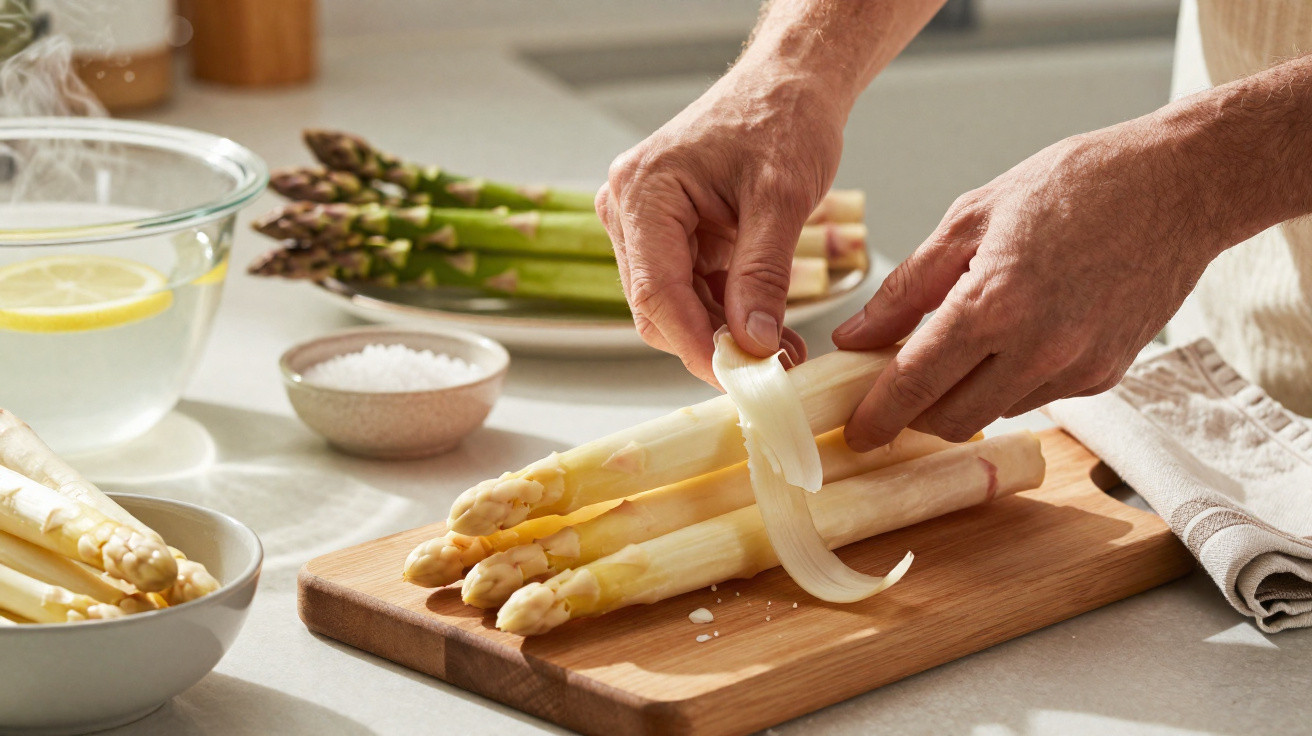
White asparagus is a springtime classic: tender to bite into, with a lightly nutty flavour. Yet almost everyone eventually faces the same disappointment: you buy an expensive bunch, cook it carefully, and the vegetables turn out stringy and distinctly bitter. Surprisingly often, the problem is not the quality of the spears, but one careless movement while peeling them.
Why peeling white asparagus the wrong way makes it bitter
White asparagus spears have a tough, fibrous outer skin that contains many bitter compounds. Although this layer protects the delicate interior of the spear, it certainly does not belong on the plate. Failing to remove it thoroughly can leave the asparagus with an unpleasantly sharp, bitter taste.
Many people instinctively start at the base and pull the vegetable peeler towards the tip. It may seem sensible, but it is precisely the wrong direction. This is what happens:
- The skin is only scored in places instead of being cleanly removed.
- Fine fibres remain attached to the spear and cling tightly to the flesh.
- During cooking, bitter compounds escape from these remnants and spread into the asparagus tip.
This peeling motion also often damages the delicate tip. The result is an overcooked, soft top and a base that is still tough and fibrous. Many people take this as evidence of poor-quality asparagus, when the real cause is simply incorrect peeling.
“Anyone who peels white asparagus from the base towards the tip often presses the bitter fibres further into the delicate flesh.”
The right direction: how professionals peel white asparagus
The answer is straightforward: always run the vegetable peeler from the tip down to the base, never the other way around. Above all, the skin needs to be removed in one smooth stroke rather than catching and clinging to the spear.
Step-by-step guide to perfect asparagus spears
- Wash the asparagus thoroughly and pat it dry.
- Lay each spear flat on a board so that it does not snap.
- Hold the lower end firmly with one hand.
- Position the peeler just beneath the tip.
- Peel in long, steady strokes from the tip towards the base.
- Work all the way around until no shiny patches of skin remain.
- Finally, trim 2–3 centimetres from the woody end.
Peeling in this direction removes the skin in even strips. The fibrous parts end up in the waste rather than sticking to the asparagus flesh. The reward is evenly tender spears with a noticeably milder flavour.
“A useful rule: always peel white asparagus away from the tip. That way, the bitter compounds go into the waste rather than the pan.”
The difference between white and green asparagus
White and green asparagus usually come from the same plant, but they are harvested and prepared differently. This has a direct effect on how they should be peeled.
| Feature | White asparagus | Green asparagus |
|---|---|---|
| Skin | Thick, fibrous and often bitter | Thinner, more tender and usually only slightly fibrous |
| Peeling required | Must be peeled almost completely | Peeling only the lower third is often enough |
| Flavour | Mild, lightly nutty | Stronger, more vegetal |
While white spears are barely enjoyable without thorough peeling, thin green asparagus usually only needs the lower section lightly peeled. For both types, however, the correct direction is worthwhile: from top to bottom.
How to make asparagus even milder during cooking
Once the peeling mistake has been avoided, the flavour can be refined further in the kitchen. A few simple additions reduce the vegetable’s sharpness and bitterness even more.
Tips for the cooking water
- Season generously with salt: Salt brings out the asparagus’s natural flavour and helps balance bitter notes.
- Add a pinch of sugar: This is not to make it sweet, but to soften the bitter compounds.
- Use a little butter: Fat carries flavour and gives the taste a rounder character.
- Add a few lemon slices: Acidity adds freshness and counterbalances bitterness.
If you prefer to steam rather than boil asparagus, use the same flavours in the steam: add a little butter, a squeeze of lemon juice and a trace of sugar to the water beneath the steamer insert. The spears absorb these subtle notes as they cook.
What to do with asparagus peelings and trimmings
The thick peelings and cut-off ends often go straight into the bin. That is a shame, as they contain plenty of flavour – along with their bitterness, unfortunately. With the right approach, you can still make good use of them.
If you like, turn the peelings into a richly flavoured stock. Briefly bring the trimmings to the boil with water, salt, a little sugar and, if available, a knob of butter or a small piece of leek. Then leave it to infuse gently for 20 to 30 minutes. Strain everything very finely at the end.
“With very little effort, peelings and ends can become an aromatic asparagus stock for soups, risottos or sauces.”
One point is important: only make the stock using cleanly peeled trimmings. If lots of tough fibres or dark patches remain on the peelings, the liquid can quickly become unpleasantly bitter.
Common mistakes when preparing asparagus
Peeling in the wrong direction is not the only pitfall that can turn this tender vegetable into a bitter disappointment.
- Asparagus that is too old: Spears that are drying out often have a harsher taste. Fresh asparagus squeaks when two spears are rubbed together.
- Cooking it for too long: The tip becomes mushy, while the lower part can remain tough.
- Peeling too little: Trying not to remove too much can leave the skin in place – and the bitterness with it.
- Storing it dry in the fridge: Without moisture, the spears shrivel and their flavour deteriorates.
Ideally, wrap asparagus in a damp tea towel, keep it in the salad drawer, and use it within one to two days where possible.
Why asparagus tastes bitter in the first place
The bitterness comes from natural plant compounds, including certain saponins. The plant uses them to protect itself from predators and environmental influences. In white asparagus, these compounds are concentrated mainly in the skin and the lower part of the stem.
By peeling carefully from top to bottom and generously trimming away the woody section, you simply remove most of these substances. For many people, the light bitterness that remains is even a characteristic feature, pairing well with butter, hollandaise sauce or ham.
Practical serving ideas for mild asparagus
Once asparagus has been prepared properly, there are many ways to highlight its mild flavour instead of masking it. Popular options include:
- Traditionally served with melted butter, new potatoes and ham
- As a warm salad with egg, nut oil and herbs
- Roasted in the oven with olive oil, a little garlic and lemon
- As a delicate soup made with asparagus stock, finished with cream or crème fraîche
In every one of these dishes, careful treatment of the skin and cut ends pays off: peeled correctly, cooked gently and well balanced, white asparagus delivers exactly the flavour that makes it a springtime star – without any unwanted bitterness.

















Comments
No comments yet. Be the first to comment!
Leave a Comment