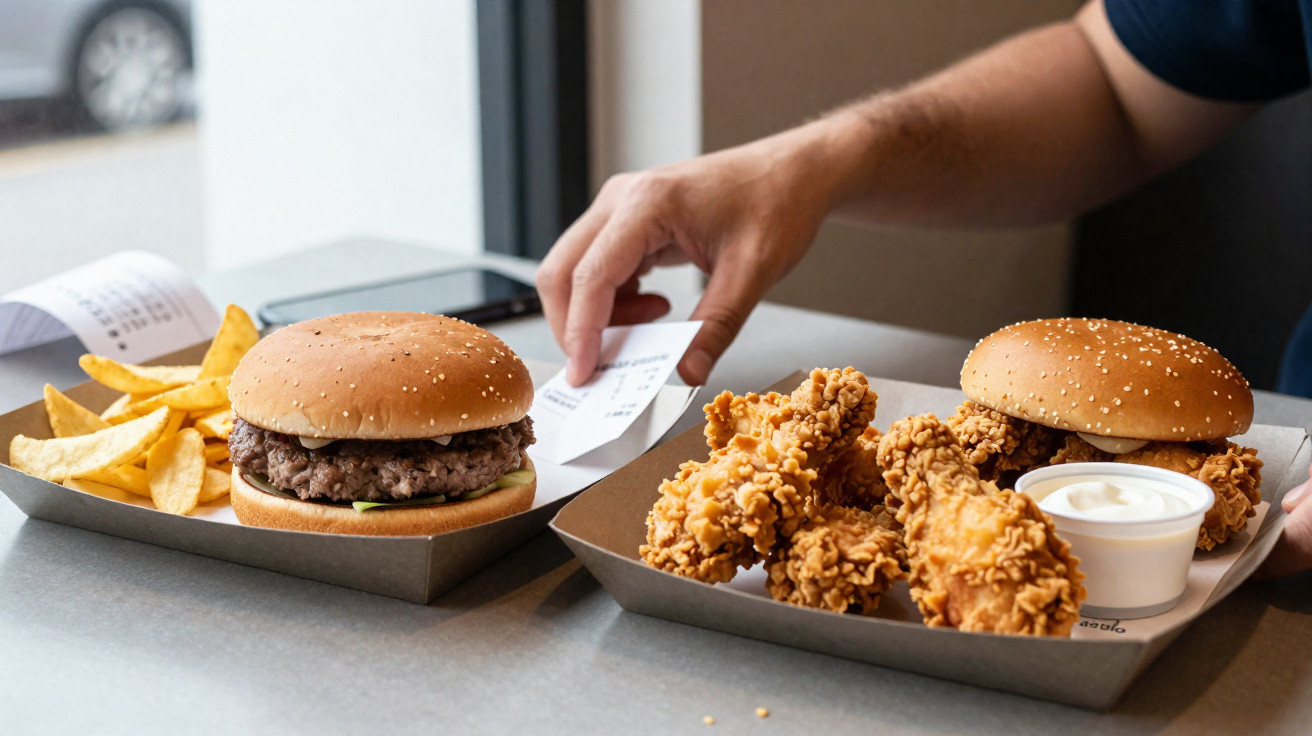
Choosing a quick meal used to be a fairly straightforward burger-or-pizza decision. Now, fried chicken is a major part of Britain’s high streets, retail parks and delivery apps, with everything from wings and wraps to chicken burgers and sharing buckets competing for the same order.
McDonald’s has signalled that it wants to grow its chicken and drinks business alongside its core burger offer. For customers, the useful point is simple: more competition can mean more choice and more offers, but the cheapest-looking deal is not always the best value once sides, upgrades and delivery fees are added.
Why fried chicken is such a competitive market
Fried chicken works in plenty of quick-service formats. It can be sold as pieces, tenders, wings, wraps, burgers, rice boxes or sharing meals, making it easy for restaurants to adapt the same core ingredient for lunch, dinner and late-night orders.
It is also a familiar choice for groups. One person might want a spicy chicken burger, another may prefer boneless pieces, while a family may choose a bucket with sides. That flexibility gives chicken chains a wide appeal without requiring customers to agree on a single meal.
Younger customers are an important part of this market, particularly where restaurants are easy to reach on foot, open late or heavily promoted through delivery apps and social media. But fried chicken’s popularity is not limited to one age group: convenience, portion size and perceived value matter to customers of all ages.
Chicken is no longer just an alternative to a burger. For many quick-meal customers, it is the first thing they consider.
McDonald’s wants to expand beyond its burger base
McDonald’s remains closely associated with beef burgers, but it has publicly identified chicken as an area for growth in its wider business strategy. That does not mean burgers are being pushed aside. Instead, chicken gives the chain another way to keep customers who might otherwise choose a specialist chicken restaurant.
For UK diners, this is more likely to mean continued attention on chicken burgers, wraps, nuggets, sides and limited-time products than a sudden overhaul of every branch. Menus, ingredients and promotions differ between countries, and individual restaurants may not all carry the same items.
The broader direction is nevertheless clear. Major fast-food companies are competing not only for the traditional burger customer, but for anyone deciding between chicken, pizza, noodles, a supermarket meal deal or something delivered at home.
Why KFC, newer chains and independents matter
KFC is one of the best-known fried chicken brands in the UK, but it is far from the only option. Popeyes and Wingstop have expanded their UK presence, while independent chicken shops remain fixtures in town centres, suburban parades and near transport hubs.
The competition is not identical from one business to the next. Some focus on spicy flavours and wings, others on chicken sandwiches or large sharing meals. Independent shops may compete strongly on familiar value boxes, while larger chains can use app offers, loyalty schemes and national advertising.
Chicken restaurants also compete with businesses that would not necessarily describe themselves as rivals. A customer looking for an easy dinner may see a burger meal, sushi box, supermarket ready meal or noodle bowl as interchangeable.
What this can mean for customers
More competition may bring:
- new flavours and limited-time menu items;
- app-only offers and loyalty rewards;
- more chicken options at burger-led restaurants;
- greater focus on bundles and sharing meals;
- pressure to improve speed, consistency and dining areas.
It does not automatically mean lower prices. Food costs, wages, energy bills, rent and delivery-platform charges all influence the price shown at checkout.
The price of beef is part of the conversation
Beef is a significant cost for burger restaurants, and prices can be affected by farming conditions, feed costs, processing, transport and supply. When costs rise, restaurants may respond by increasing prices, changing promotions or putting more emphasis on products with different ingredients.
Chicken has its own cost pressures, including feed, labour, energy and transport. Still, it can be used in many different menu formats, from a small wrap to a larger sharing box, which makes it useful for promotions aimed at different budgets.
There is also a common assumption that chicken is automatically a lighter option than beef. That is not always the case. A fried chicken meal with chips, creamy dips and a sugary drink can still be high in salt, saturated fat and calories.
The word “chicken” tells you the protein, not the nutritional profile of the whole order.
Drinks can make a cheap order expensive
McDonald’s has also identified drinks as a growth opportunity. That is understandable: a drink can turn a single item into a meal, and premium or larger drinks can add noticeably to the final bill.
The same applies across the fast-food sector. A meal upgrade may appear good value, but it is only good value if you genuinely want every item included.
Check the real total before ordering
- Price the main item by itself. Decide whether you actually want the fries, side and drink that come with a meal.
- Look carefully at size upgrades. A larger portion is only a saving if you would otherwise have bought it anyway.
- Check delivery charges separately. Delivery, service and small-order fees can substantially change the final total.
- Compare collection offers. Some discounts apply only to orders collected from the restaurant.
- Watch the extras. Dips, added cheese, bacon and premium drinks can quickly make a low-cost order more expensive.
How to order chicken more sensibly
Fast food need not be an all-or-nothing choice. A few simple decisions can help you order a meal that better fits your appetite, budget and plans for the evening.
- Choose a smaller portion when eating alone instead of automatically selecting a sharing box.
- Order a drink only if you want one; water or a no-added-sugar option may suit some people better.
- Pick one side you will enjoy rather than adding several because they appear in a bundle.
- If ordering for a group, agree a budget and rough number of items before opening the app.
- Treat countdown timers and “limited” labels with caution. They are designed to encourage a quick decision.
If you have an allergy or intolerance, check the restaurant’s current UK allergen information and speak to staff where possible. Recipes and preparation methods can change, and cross-contact may be relevant for some allergens.
Common mistakes when chasing a fast-food deal
Assuming a meal deal is always the cheapest option
A bundle may cost less than buying its individual parts separately. It may still cost more than buying only the main item you wanted.
Comparing only the menu price
For delivery orders, compare the final basket total rather than the headline price. A nearby restaurant with a slightly higher menu price can sometimes work out cheaper once fees are included.
Ordering too much because it is labelled ‘sharing’
Sharing meals vary widely. Check exactly how many pieces, sides and drinks are included, then consider how many people are actually eating.
Treating fried chicken as automatically healthier
Grilled, roasted and fried chicken can differ greatly. Coatings, sauces, portion sizes and drinks all affect the overall meal. Use the restaurant’s published nutrition information if that matters to you.
Food safety for takeaway chicken
Eat hot takeaway food promptly. If you are saving leftovers, cool them quickly and refrigerate them within two hours of receiving the food. Do not leave chicken, rice or creamy sides sitting out on the kitchen counter for the evening.
When reheating leftovers, heat them until steaming hot throughout and reheat only once. Follow any storage guidance supplied by the restaurant. If food arrives cold when it should be hot, appears undercooked, smells unusual or has damaged packaging, do not take a chance: contact the restaurant or delivery platform.
Make the competition work for you
McDonald’s interest in chicken reflects a wider shift in Britain’s fast-food market. KFC, newer chains, independent chicken shops and burger restaurants are all competing for the same lunch break, family meal or late-night delivery order.
The best response is not to chase every new launch. Compare the full cost, choose portions you will actually eat, and check current allergen and nutrition information where needed. The best-value order is usually the one that suits your appetite and budget, rather than the one with the loudest promotion.

















Comments
No comments yet. Be the first to comment!
Leave a Comment