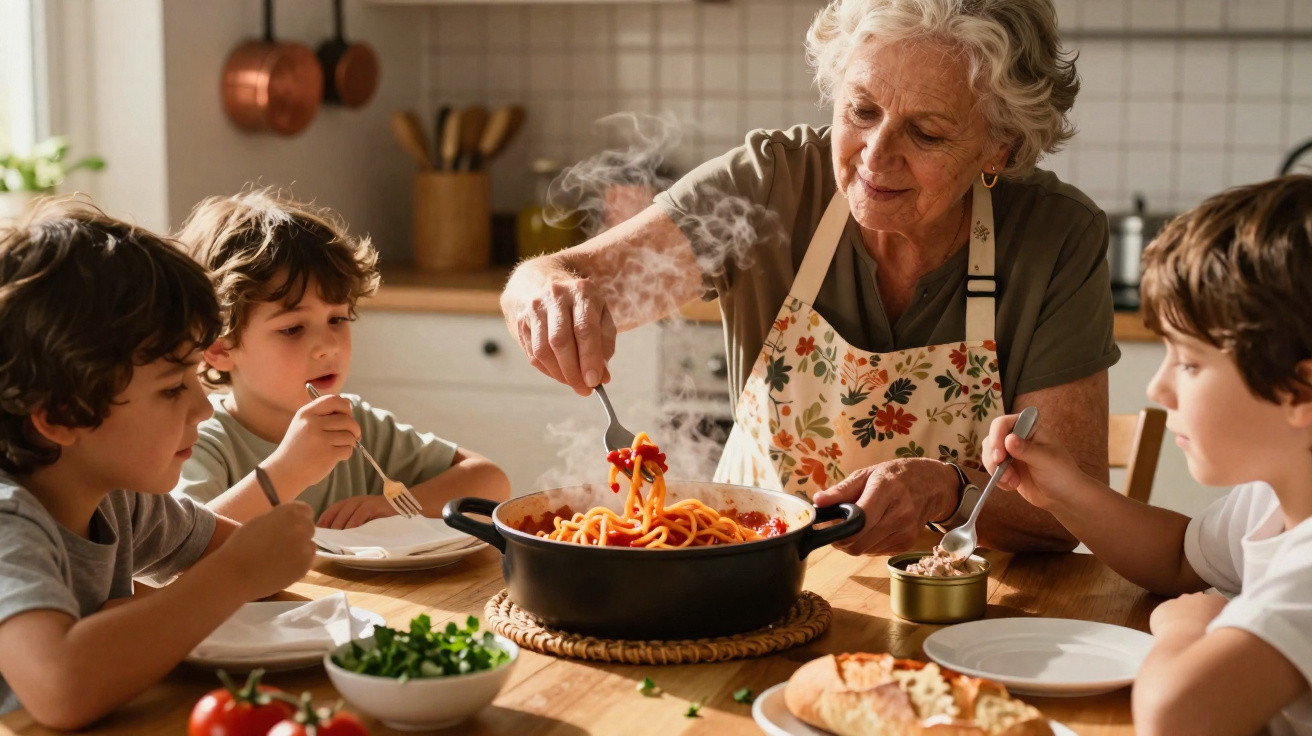
Pepita López, an 81-year-old grandmother from a Spanish family, swears by a pasta dish that has been a cherished ritual in her family for around 100 years. Its foundation could hardly be simpler: pasta and tomato sauce. Yet its flavour and texture are transformed by an ingredient that most people would be more likely to spread on bread.
How a simple pasta dish became a family legend
There are no elaborate puff-pastry creations or Michelin-style flourishes in Pepita’s kitchen. Instead, macaroni with tomato sauce appears on the table every week, made according to the same method and finished with the same final touch.
Pepita cooks without smartphones, recipe apps or food blogs. She says she has never attended a cookery course or searched online for recipes. Everything she knows was taught to her by her mother, who had learnt it from her own mother. For her, cooking is less an art than a form of memory, and her pasta with tomato sauce is its living record.
A Tuesday tradition the grandchildren insist on
The López family has a fixed appointment: Tuesday is pasta day. The grandchildren put in their request well beforehand. To them, these macaroni are as inseparable from their grandmother as the hug she gives them at the front door.
“For around a hundred years, pasta has come off the hob in this family following the same pattern – and nobody wants that to change.”
By now, Pepita’s adult children make the dish in their own kitchens too. The recipe is simple enough to remember easily, yet distinctive enough to turn everyday pasta into a proper family meal.
The “secret” addition: pâté instead of mince
When people think of pasta with tomato sauce, mince, tuna or sausage often comes to mind. None of these goes into Pepita’s pan. Her trick is a small jar of liver pâté, which melts into the sauce and turns it into something quite different.
She uses a spreadable duck liver pâté, the kind that has been sold affordably in Spanish supermarkets for decades. Historically, manufacturers there often used a sophisticated-sounding French culinary term to make basic sandwich spreads seem more refined. In post-war kitchens, when meat was expensive, this pâté began appearing not only on bread but increasingly in sauces as well.
That is precisely the principle Pepita still follows today. The pâté brings seasoning, richness and a subtly meaty flavour without requiring a large joint of meat. Combined with a spoonful of butter, it makes the tomato sauce thicker, smoother and almost creamy, entirely without cream.
Ingredients for Pepita’s cult pasta
The recipe requires only a handful of readily available ingredients. Anyone who can cook can recreate it, and anyone who cannot can learn it in one evening.
- Macaroni or another short pasta shape
- Salt for the cooking water, to taste
- Olive oil
- One teaspoon of butter
- Half an onion
- One small jar of liver pâté, such as duck liver pâté
- Fried tomato sauce or ready-made tomato sauce from a jar
- Grated cheese for sprinkling, optional
All that is needed in addition is a large pan for the pasta, a smaller one for the sauce and a little patience while stirring.
How Grandma makes her tomato pasta with liver pâté
The method may look unremarkable, but the difference becomes clear in the finished flavour. Here is how she does it, step by step:
- Cook the pasta in plenty of boiling salted water for around ten minutes, until al dente, then drain it.
- While the pasta cooks, warm a little olive oil in a second pan and melt the teaspoon of butter in it.
- Finely chop the half onion and sweat it gently in the oil and butter until lightly golden.
- Add the jar of liver pâté and stir until it has melted.
- Pour in the tomato sauce, mix thoroughly and simmer gently for a few minutes, until the sauce is thick and creamy.
- Tip the drained pasta straight into the sauce and toss carefully so that every piece is coated.
- Sprinkle with grated cheese if desired, then serve immediately.
“The combination of tomato acidity, butter and pâté creates a creamy depth that many people mistake for cream – until they discover the recipe.”
Pepita will often serve only a small bowl of simple tomato salad alongside it. In her view, the dish does not need a heavy accompaniment. The sauce carries the plate by itself.
Why this simple trick works so well
From a culinary perspective, the idea makes perfect sense. Liver pâté contains fat, protein and plenty of flavour compounds. Paired with tomatoes, it creates an intense, savoury taste reminiscent of ragùs simmered for hours, even though the sauce is ready within minutes.
The butter also adds a mild, rounded note and helps bind the sauce to the pasta, so that nothing feels dry. The quantity of pâté can be adjusted to taste: half a jar gives a subtle flavour, while a whole jar delivers considerably more punch.
How to adapt Pepita’s idea to your own taste
Anyone keen to try Pepita’s family recipe can adjust a few elements:
- Pasta shape: Macaroni, penne or fusilli all work, as long as the sauce clings well.
- Tomato sauce: Choose either a ready-made, lightly sweetened version or season passata with a little sugar and salt.
- Type of pâté: Those who do not enjoy duck liver can try mild poultry or mixed pâtés.
- Degree of onion cooking: From translucent to deeply browned – the darker it is, the more rustic the flavour.
- Cheese: Use a mild cheese for children or a more mature one for anyone who prefers a savoury finish.
The central idea therefore remains unchanged, while the character of the dish can easily be tailored to your own family.
What to know about using liver pâté in cooking
Many people think of liver pâté as a childhood sandwich spread. It has considerable potential in hot dishes too, provided a few points are kept in mind:
| Aspect | Guidance |
|---|---|
| Storage | Always keep opened jars or tins in the fridge and use them up promptly. |
| Quantity | Start with a small amount, then add more gradually and taste as you go. |
| Pairings | It works well with tomatoes, mushrooms, onions and robust herbs such as thyme. |
| Tolerance | People with sensitive livers or certain health conditions should seek medical advice before eating it frequently. |
Anyone concerned that the liver flavour may be too dominant can choose a very mild pâté and strengthen the tomato base with a little extra sauce and fresh parsley.
Why grandmotherly “tricks” are popular again today
While cookbooks and social-media recipes often seem complicated, Pepita’s story shows another approach: few ingredients, straightforward steps and plenty of routine. At a time of rising prices, the idea of turning inexpensive pâté and tomatoes into a filling, almost celebratory pasta dish feels remarkably relevant.
Many grandparents developed similar strategies: a special roux, a dash of vinegar in soup or a spoonful of jam in goulash. These tricks often emerged during times of shortage, when every tin and jar had to count twice. Today, they ensure that children and grandchildren associate a particular flavour with very particular people.
For anyone who wants to try something different on their next pasta night, no high-end ingredients are required. A jar of liver pâté, a spoonful of butter and a simple tomato sauce are enough to turn an everyday one-pot meal into a story that may still be talked about in the family decades from now.

















Comments
No comments yet. Be the first to comment!
Leave a Comment