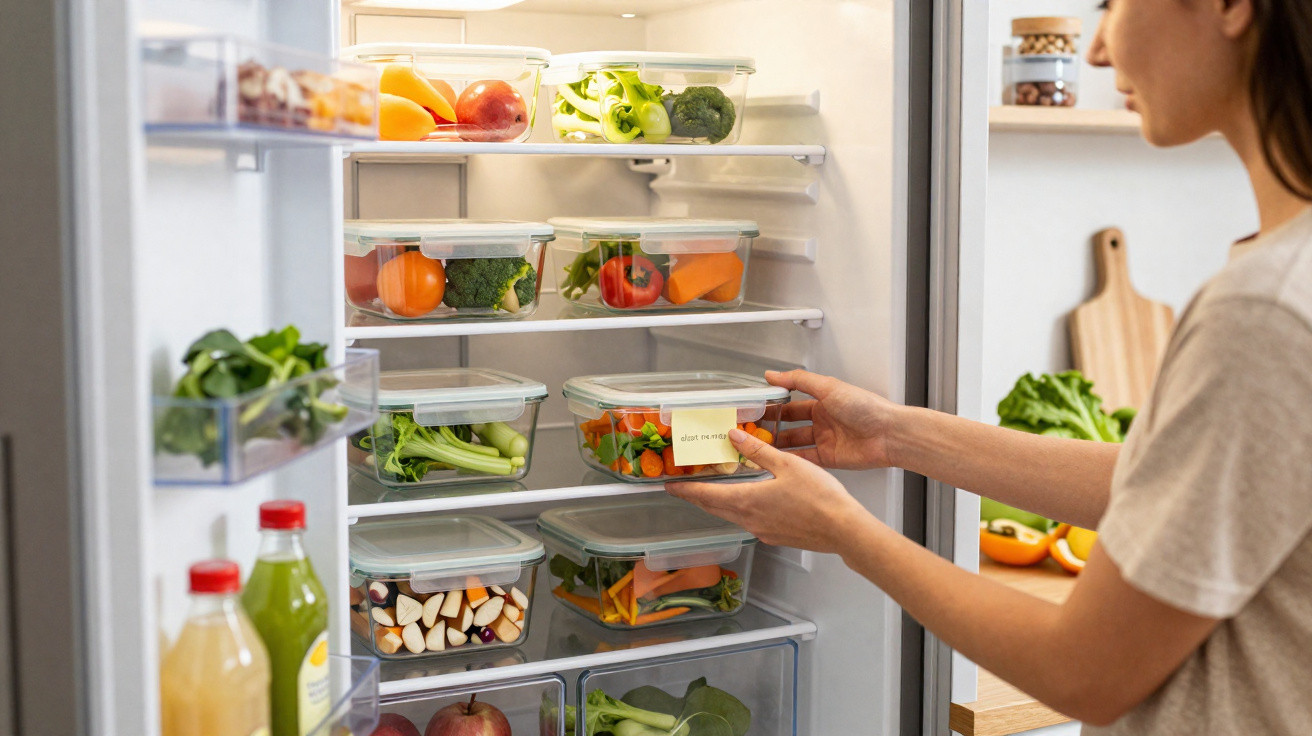
Sarah peers into her fridge at 6 pm on a Tuesday, clutching a tub of leftover pasta that could be three days old - or perhaps five. The yoghurt tucked behind the milk went out of date yesterday, while the peppers languishing at the bottom of the salad drawer have begun their unavoidable transformation into costly compost. She is far from alone in this everyday cycle of waste and guilt. Millions of households discard perfectly edible food because they lose track of when they bought it. Yet an unexpectedly straightforward answer is right in front of us.
The Real Cost of Fridge Chaos
Step into almost any American kitchen and the picture is familiar: a fridge full of good intentions, but not much organisation. We shop with meal plans in mind, only to watch fresh ingredients turn into science experiments. The typical family throws away $1,500 of food each year.
Consider Maria, a working mum in Denver, who realised she had bought the same jar of pickles on three separate occasions because the original one was concealed behind a jumble of condiments. Her weekly food shop came to an average of $180, but every Sunday she was binning bags of spoiled food. The contradiction was obvious: she was quite literally putting money in the rubbish.
Food is wasted during the unnoticed gap between buying it and eating it. Products are shoved to the rear, overlooked behind newer purchases or covered by takeaway boxes. It is not that we are indifferent to waste - our storage habits simply work against us rather than helping us.
The FIFO Revolution for Your Fridge
First In, First Out is more than restaurant terminology: it is a transformative method that turns each fridge shelf into a conveyor belt. Put new groceries at the back and move older food towards the front. This modest adjustment establishes a natural rotation system, so nothing is left forgotten.
Realistically, no one wants to play Tetris with their shopping every time they return from the supermarket. FIFO is effective because it is simple: rather than reorganising the entire fridge, you only need to place new items deliberately. Within a week, the routine starts to feel automatic.
“I started treating my fridge like the restaurants I used to work in, and suddenly my family wasn’t finding mystery leftovers anymore. It’s not rocket science, but it works like magic.”
The basics needed for FIFO success are:
- Clear containers, so you can see what is inside and when it was stored
- A straightforward labelling approach showing purchase or preparation dates
- Set zones for separate food categories
- A weekly stock check before doing the food shop
Beyond FIFO: Creating Sustainable Habits
The people who get the best results from FIFO do more than rearrange their fridges - they rethink how they store food altogether. Begin with a single shelf or drawer, then extend the system once it feels natural. Rome was not built in a day, and nor is a flawlessly organised fridge.
| Key point | Detail | Value for the reader |
|---|---|---|
| FIFO rotation system | New items to back, old items forward | 40% reduction in food waste |
| Clear storage containers | See-through bins and proper labelling | Instant inventory visibility |
| Zone organisation | Designated areas for specific food types | Faster meal prep and planning |

















Comments
No comments yet. Be the first to comment!
Leave a Comment