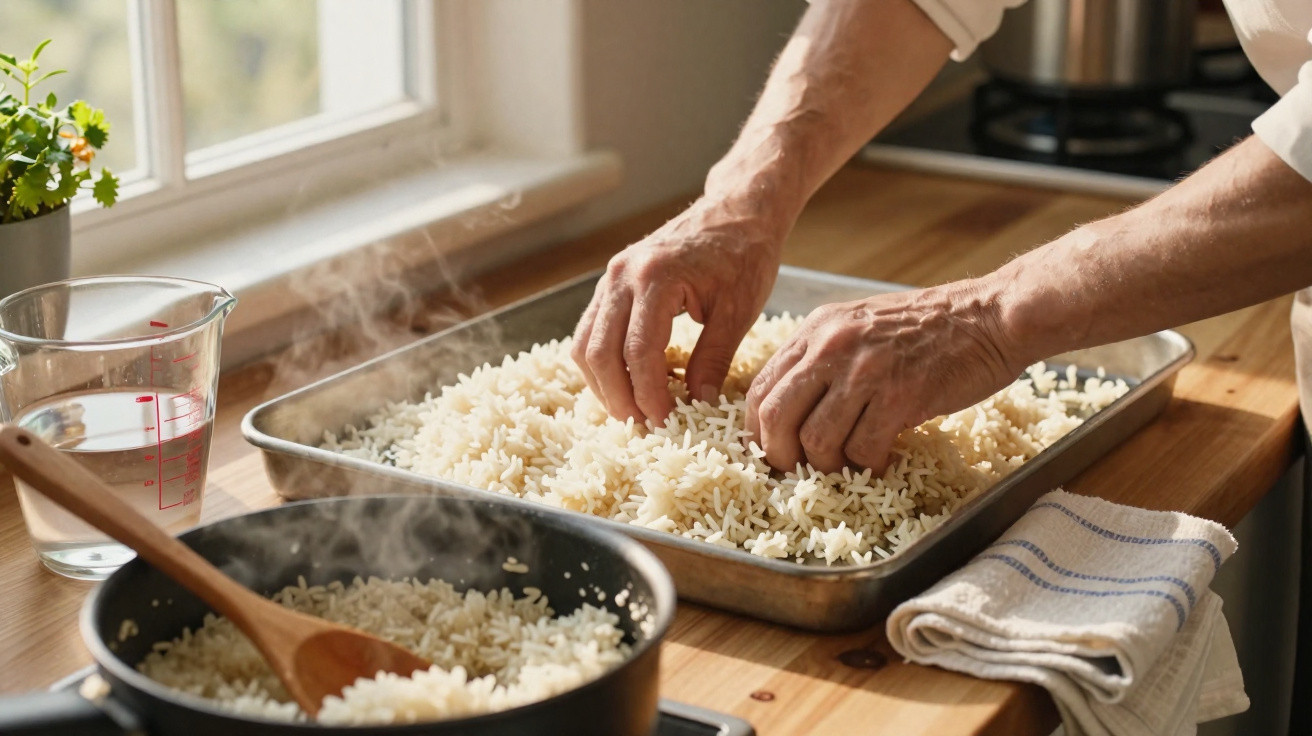
A moment’s distraction is all it takes: the pan bubbles over, you lift the lid and find a sticky mass where light, separate grains should be.
This is a more familiar sight in Brazilian kitchens than most people would admit. Rice, the dependable everyday staple, can sometimes turn into a claggy mixture that puts anyone off. Yet this ‘disaster’ is far from irreversible: one straightforward, often overlooked step can restore its texture while also creating opportunities for new dishes.
The problem with sticky rice and the mistake nearly everyone makes
Once rice has overcooked, the usual instinct is to try to fix it in the pan. Many people stir it continuously, pour in more water or attempt to drain it hastily.
That only makes matters worse. The grains are already delicate, and excessive stirring breaks them up, releasing further starch and creating an even stickier, almost porridge-like result.
“The main issue with waterlogged rice is not a lack of skill, but too much water and uncontrolled starch.”
The good news is that you can still take action after the mistake. The key step does not require miracle seasonings or complicated techniques, only something found in most homes: a baking tray and kitchen paper or a clean cloth.
The baking-tray trick: drying rice in minutes
Excess water trapped between the grains is what ruins rice. Removing that moisture quickly improves its texture, and the answer is to maximise its exposure to air.
The step-by-step rescue method
- Take a large baking tray, such as one used for pizza or biscuits.
- Cover the entire surface with thick kitchen paper or a very dry clean cloth.
- Spread the rice over the tray while it is still hot, creating a thin layer.
- Do not pile it up; the more widely it is spread, the better the result.
- Leave it to rest for around 10 minutes, without stirring it excessively.
Two things happen simultaneously during this process: the rice’s heat helps the excess water evaporate from above, while the paper or cloth draws moisture out from underneath.
“When it is spread properly, rice stops being a compact block and returns to grains that separate far more easily.”
After those few minutes, gently loosen the rice with a fork. It will not return precisely to the perfect texture of ideally cooked rice, but it will be entirely presentable as an accompaniment to lunch.
Thermal shock: when the situation is already out of control
Sometimes the baking-tray trick alone is not enough. This tends to happen when the rice has remained in the hot pan for too long, even after it has finished cooking.
In that situation, the starch within the grains continues changing, thickening and sticking them together. The priority then is to stop the cooking process from continuing.
How to make cold water work for you
The approach is straightforward:
- Transfer the rice immediately into a colander with small holes.
- Rinse it under cold running water, ideally very cold water.
- Gently separate the grains with your hands as the water washes away the excess starch.
- Leave it to drain until it is thoroughly dry.
“Thermal shock stops the cooking inside the grains and also removes some of rice’s natural ‘glue’.”
At this stage, the rice loses its heat but gains a better texture. You can then warm it again by steaming it, microwaving it with a drizzle of oil, or using it cold in salads, rice tabbouleh or summer bowls.
When rice cannot be saved: turn the mistake into a new dish
There are occasions when the damage is too extensive to keep pursuing basic white rice. If the texture is so creamy that separated grains are no longer worth the effort, the best option is to accept the mistake and make it work in your favour.
Crispy fried rice: the ideal use for leftovers
Damper rice is well suited to fried rice made in a frying pan or wok. High heat develops a crust on the outside while the middle stays soft, disguising the original texture.
- Heat a large frying pan with a little oil or butter.
- Spread out the rice without overcrowding the pan.
- Leave it untouched for a few minutes so a crust can develop.
- Add chopped vegetables, scrambled egg, soy sauce and spring onions.
The result is reminiscent of classic Asian-style stir-fried rice dishes, full of flavour and texture and a world away from the dull lump that came out of the pan.
Quick rice fritters: making the most of its stickiness
When the rice is genuinely mushy, that can become an advantage. Its binding quality makes it easier to shape into fritters and golden discs.
| Ingredient | Quantity |
|---|---|
| Cooked, waterlogged rice | 80 g |
| Whole egg | 1 |
| Grated Parmesan | 30 g |
Combine everything in a bowl until it forms a moist mixture. Then:
- Heat a frying pan with a drizzle of oil.
- Add small portions of the mixture and flatten them with a spoon.
- Cook until golden for around three minutes on each side.
“These mini pancakes have a firm crust on the outside and a soft centre; nobody would guess they came from an ‘accident’.”
From pan to pudding: when rice becomes a creamy dessert
If none of the savoury options appeals, there is another often-forgotten route: turn the overcooked rice into dessert. Very soft rice is already the ideal starting point for puddings and rice pudding.
The method is simple:
- Return the rice to the pan.
- Add milk, either dairy or plant-based, sugar to taste and flavourings such as cinnamon, lemon zest or vanilla.
- Cook over a very low heat, stirring continuously so it does not stick.
Over time, the milk is absorbed and the mixture develops the velvety texture expected from spoonable rice pudding. It can be served warm on cold days or chilled with fruit on top.
Why rice sticks: understanding the role of starch
Starch is directly responsible for rice’s sticky appearance. When heated in water, it swells, releases a gel-like substance and starts forming this natural ‘glue’.
Several common situations encourage this outcome:
- Using too much water.
- Cooking in a very thin pan that heats unevenly.
- Keeping the heat too high for too long.
- Stirring the rice constantly as it cooks.
Rinsing rice before cooking removes some of the starch from its surface. Getting the water-to-rice ratio right, covering the pan properly and allowing the rice to rest after turning off the heat also greatly reduce the risk of it becoming waterlogged.
Practical situations and combinations that work
Picture guests about to arrive for dinner and the rice has turned sticky. Rather than starting again from scratch, the baking-tray trick can rescue it within minutes. A quick sauté of garlic, fresh herbs and a little butter can then restore flavour and shine.
Here is another situation: there is some sticky rice left from lunch. The following day, it can become cheese-and-herb fritters for a snack, or a fried-rice base with shredded chicken, carrot and peas, creating a complete one-pan meal.
These fixes bring an additional benefit: they cut food waste and encourage variety in the menu. A mistake in the pan can lead to vegetable-packed fried rice, a snack of crisp fritters or a creamy dessert served with cinnamon and orange zest.
Anyone who cooks regularly knows that mishaps happen. Having a quick solution up your sleeve, such as using a lined baking tray to dry rice, changes how these setbacks are handled and expands your repertoire of everyday recipes.

















Comments
No comments yet. Be the first to comment!
Leave a Comment