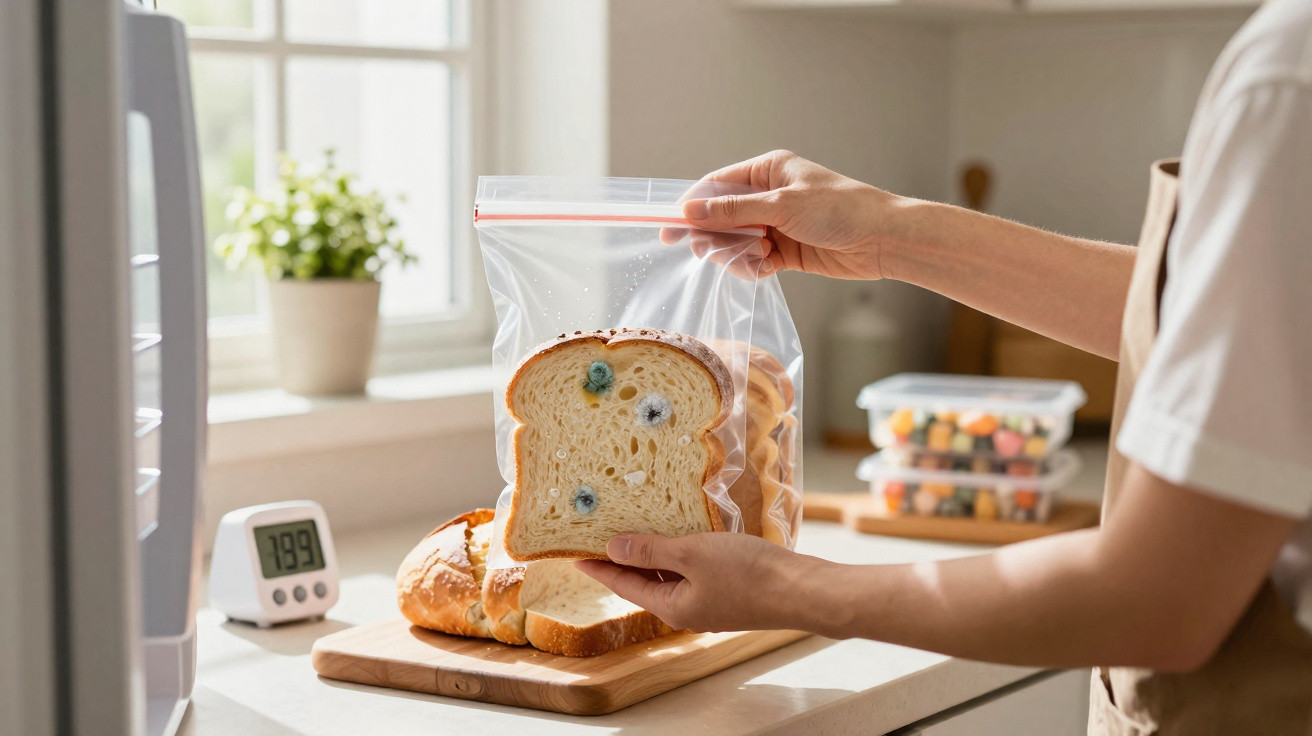
What may seem like a clever way to prevent waste can become a problem in certain circumstances: if bread is frozen and defrosted incorrectly, not only its flavour and texture change, but also its internal structure – with implications for nutrients, digestion and hygiene.
Why people freeze bread in the first place
Almost everyone does it: bread left over from the weekend goes into the freezer so that it does not become stale or mouldy. It is especially common among people living alone, small households and anyone who does not eat bread every day.
- Saving leftovers and cutting food waste
- Keeping bread fresh for longer than in a bread bin
- Having sandwiches or toast ready whenever needed
- Stocking up when a favourite loaf is on offer
Although low temperatures slow mould growth and staling, they do not completely halt the processes taking place in bread. Chemical and physical changes continue inside it, albeit at a much slower rate.
“Frozen bread is not ‘on pause’. Starch, water and nutrients change over time – often without anyone noticing.”
What happens to bread when it is frozen
Loss of vitamins and sensitive nutrients
Bread may look like a sturdy food, but prolonged storage in freezing conditions can still affect it. In particular, B vitamins naturally present in cereal grains gradually break down over time.
The longer bread remains in the freezer, the smaller this nutrient content becomes. A loaf stored frozen for three months no longer offers the same range as fresh bread from a baker. For people whose diet is already rather limited, the cumulative effect of losses like these may matter.
Altered starch: harder to digest
Bread contains a great deal of starch, a complex carbohydrate. Freezing followed by defrosting changes its structure. Specialists refer to this as “retrogradation”: water leaves the starch and the molecules rearrange themselves.
“Retrograded starch may be more difficult for some people to digest and can encourage bloating or a feeling of fullness.”
For healthy people, this is usually harmless. However, those prone to irritable bowel syndrome, a sensitive stomach or digestive complaints are more likely to notice the difference. After eating large quantities of defrosted bread, some people experience greater abdominal pressure or unusual sluggishness.
Flavour, aroma and crumb suffer
The best-known consequence is that freezer bread rarely tastes freshly baked. During frozen storage, water evaporates, ice crystals form and the crumb dries out.
- The crust becomes dull rather than crisp
- The crumb can seem dry, crumbly, or both dry and rubbery
- Aromas fade, leaving the bread tasting “flat” or “old”
Many people try to disguise this by using a toaster or oven. While this can improve the bite, it cannot restore the delicate flavour compounds and aroma molecules that have already been lost.
The overlooked risk: microbes after defrosting
A freezer largely stops bacteria from multiplying, but does not reliably kill them. The critical stage comes later, once the bread starts to warm up again.
When bread is defrosted in the open air or on a radiator, condensation forms on its surface. Together with room temperature, this creates an ideal environment for microbes and mould spores already present in the bread or introduced from the surroundings.
“If bread is defrosted slowly at room temperature and then left standing for a long time, the microbial count can rise sharply – that is the real health concern.”
When defrosted bread becomes problematic
It is rarely risky immediately. The danger rises when several factors occur together:
- Defrosting for several hours at room temperature
- Leaving it out afterwards, for example on a chopping board
- A warm, humid kitchen, such as when cooking in summer
- Contact with hands or surfaces that are not completely clean
Toddlers, older people and those with weakened immune systems are particularly vulnerable. For them, food-borne microbes can become a problem more quickly, causing anything from diarrhoea to gastrointestinal infections.
How to freeze and defrost bread safely
Freeze portions rather than storing whole loaves
Anyone wanting to limit the risk should avoid freezing bread as a whole loaf. It makes more sense to slice it on the first day:
- Cut the bread into slices or small pieces
- Keep slices reasonably thin so they defrost more evenly
- Pack portions for one day or one meal
This means that only the amount that will genuinely be eaten comes out of the freezer. It also reduces the temptation to refreeze partly defrosted bread later, something that should be avoided.
Packaging bread correctly: preventing drying and freezer burn
The packaging is crucial. Putting bread into the freezer uncovered can quickly lead to flavour loss and freezer burn.
| Packaging | Advantage | Disadvantage |
|---|---|---|
| Zip freezer bag | Seals well and protects against drying out | Plastic; should be reused |
| Cling film plus a bag | Double barrier against air and ice | More effort and more waste |
| Tightly sealed container | Reusable and sturdy | Takes up more freezer space |
Important: press out as much air as possible before placing bread in the freezer. This reduces ice formation on the surface.
Defrosting safely: do not simply leave it on the worktop
Ideally, bread should not spend hours defrosting at room temperature. Two methods are considerably safer:
- In the fridge: The bread stays cool, so microbes multiply only slowly. Slices take longer to defrost, but retain more moisture.
- In an oven or toaster: Put frozen slices straight into the oven or toaster. The heat warms the bread quickly and creates a crust, keeping the time spent in the “microbial temperature range” short.
From a hygiene perspective, defrosted bread should be eaten on the same day. Any leftovers should not go back into the freezer.
How long can bread stay in the freezer?
Many people assume that frozen food lasts indefinitely. In reality, however, bread’s quality declines noticeably.
- White wheat bread: sensible storage period of around 1–2 months
- Wholemeal bread: usually 2–3 months, after which flavour deteriorates
- Bread rolls and baguettes: closer to 1 month, as they dry out faster
A forgotten piece of bread found in the freezer six months later can usually still be eaten, but its structure will have changed considerably and its nutritional value will be lower.
When fresh bread is the better option
People with digestive difficulties, sensitive gut flora or certain existing health conditions may benefit from looking more closely at their own bread routine. Anyone who regularly experiences bloating or abdominal pressure after defrosted bread should try a simple comparison: how does their body feel when fresh bread is served instead of frozen bread?
One option is to buy smaller loaves or half loaves from the baker. This leaves less surplus, reducing the urge to store everything in the freezer. With suitable storage in a breathable bread bin, sourdough loaves can also keep for 3–4 days without freezing.
Everyday situations in which the risk increases
It is easy to imagine typical scenarios in which the risk from microbes rises in practical terms:
- It is summer, the kitchen is 28°C, and frozen bread sits on the worktop for two to three hours.
- Defrosted bread is put out for brunch, left uncovered in warmth for several hours, then cleared away again in the evening.
- For convenience, some partly defrosted slices are returned to the freezer.
In all of these cases, the microbial count can increase substantially. This is not immediately obvious: the bread may look normal and perhaps smell slightly more musty, yet remain visually unremarkable.
Practical tips for healthier everyday bread habits
Those who still want to freeze bread can make the issue far less worrying through a few straightforward habits:
- Buy only as much bread as will be eaten within three or four days.
- Portion and package bread on the first day.
- Toast frozen slices straight from the freezer rather than defrosting them at room temperature.
- Turn leftover bread into croutons, breadcrumbs or bakes instead of keeping it frozen indefinitely.
Keeping the kitchen, chopping boards and knives clean while monitoring defrosting times significantly reduces the health risk – and also brings back some of the enjoyment associated with fresh bread.

















Comments
No comments yet. Be the first to comment!
Leave a Comment