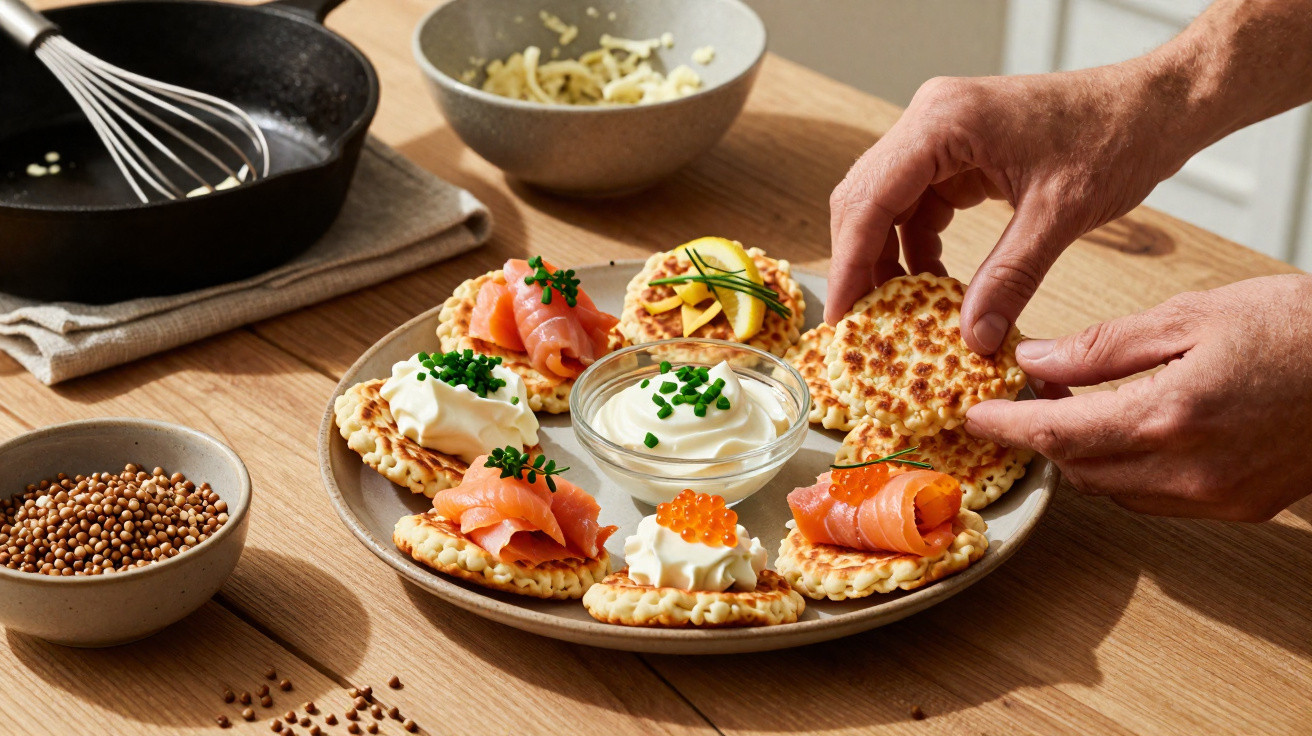
When guests are coming over, the pressure is familiar: you want to put something quick, special and reasonably light on the table, without spending hours in the kitchen. This is exactly where small buckwheat blinis come in – golden little pancakes that are ready within minutes and taste like a restaurant-style snack.
Why everyone loves these mini blinis
Buckwheat may sound worthy and old-fashioned, but in this version it tastes surprisingly contemporary and savoury. The mini blinis are lightly browned on the outside, while remaining soft and springy within. They hold toppings like tiny edible plates, from fresh cheese to premium fish.
The combination of rustic buckwheat flavour and a fluffy texture means that “just one more” is never really the last.
What makes these bites particularly appealing is that they work all year round: serve them with fresh herbs and lemon in summer, or with smoked salmon and creamy toppings in winter. They require very little batter, yet make a big impression at the table: hands keep reaching for the platter, and there is barely time for photographs before it is empty.
The simple base: few ingredients, plenty of flavour
The principle is straightforward: a very simple batter with a distinct buckwheat taste that develops an attractive colour in the pan. For around 12 to 16 mini blinis, you will need:
- 100 g buckwheat flour
- 1 egg
- 100 ml lukewarm milk, dairy or plant-based
- 1 pinch of salt
- a little neutral oil for the frying pan
Add toppings that look impressive and offer clearly different flavours. These three options quickly create a varied buffet:
- cream cheese and chives for a light, fresh green note
- smoked salmon with lemon and herbs for an elegant touch
- cream or crème fraîche with trout or salmon roe for the “wow” effect
Ordinary kitchen equipment is all that is required: a non-stick frying pan, a small ladle or tablespoon, and a spatula that can slide neatly beneath the little rounds of batter.
Buckwheat blini batter: mixed in five minutes, perfect after 30
The batter comes together quickly, but the key is allowing it to rest briefly. This is what keeps the mini pancakes soft and flexible rather than dry.
Step by step to the ideal blini batter
- Sift the buckwheat flour into a bowl, then combine it with the salt.
- Add the egg and whisk together.
- Gradually pour in the lukewarm milk until you have a smooth, thick pouring batter.
- Leave the batter to rest at room temperature for 30 minutes.
The right texture is similar to a thick crêpe batter: it should fall slowly from the spoon, be pourable, but still hold its shape. If it seems too thick, add a splash of milk. If it runs like water, there is too much liquid; stir in a little buckwheat flour until it once again “pulls from the spoon”.
That half-hour resting time acts like a small guarantee: the batter relaxes, the buckwheat absorbs moisture, and the blinis become soft rather than rubbery.
Perfect mini rounds: golden, soft and never dry
A non-stick frying pan is particularly useful for making evenly sized rounds. Each portion of batter should be about 5 centimetres across – large enough for a mouthful, with sufficient room for topping.
How to cook the blinis in the pan
- Heat the pan over a medium to medium-low setting.
- Lightly brush it with oil, or use kitchen paper to apply a very thin coating.
- Spoon in small portions of batter, shaping them into round pancakes.
- Cook for around two minutes on each side; the blinis should brown only lightly.
The surface tells you when it is time to turn them: once it has become less glossy and the edge looks set, use the spatula. After turning, the second side needs only a short time to colour.
Fresh blinis should remain supple rather than crisp. They are best served warm. If you are cooking several batches, arrange the finished pieces side by side on a plate or cooling rack instead of stacking them, so they do not become damp.
Three toppings that keep guests at the table
The main advantage is simple: cook the batter first, then top the blinis quickly. The effort stays manageable, but the result still looks impressive. These three contrasts work almost every time.
Option 1: Cream cheese and chives
This is the lightest combination and is ideal when you also want a vegetarian option. Spoon or pipe a dollop of cream cheese onto each still slightly warm mini blini. Finish with finely chopped chives. If you like, add a touch of lemon zest, which lifts the nutty character of the buckwheat.
Option 2: Smoked salmon with lemon and herbs
For a more elegant finish, use narrow pieces of smoked salmon. Fold them loosely on top of the little batter cushions rather than pressing them flat. A few drops of lemon juice, a little black pepper, and some dill or chervil complete the topping. The subtly toasted note of the buckwheat base makes the fish taste more intense, so it needs very little additional seasoning.
Option 3: Cream and fish roe
For an immediately festive version, start with a small spoonful of whipped cream or crème fraîche on each blini. Top it with trout or salmon roe. The beads burst gently when bitten, adding saltiness and shine that pair well with the rustic base.
The colours do their part too: white cheese, green chives, orange fish roe and pink smoked salmon make every tray look instantly like professional catering.
Common mistakes – and how to avoid them easily
Three recurring pitfalls are easy to manage once you know what to look for:
| Problem | Cause | Solution |
|---|---|---|
| Blinis spread too widely | Batter is too thin | Stir in a little buckwheat flour and allow it to thicken briefly |
| Blinis burn outside but remain raw in the middle | The pan is too hot | Reduce the heat noticeably and allow more time per side |
| The little pancakes become too thick and dry | Portions are too large and cooking takes too long | Use only small dollops and keep the diameter to around 5 centimetres |
If you have leftovers, store them flat in a container, separated with baking parchment. A brief warm-through in a frying pan or oven will make them soft again. Add toppings only shortly before serving, so that nothing becomes soggy.
Creative variations for seasoned aperitif fans
Buckwheat is surprisingly forgiving. If you want more variety, try adding herbs and spices directly to the batter: a little chopped rosemary for a more rustic flavour, cumin for an Eastern-inspired note, or a touch of paprika for colour.
There is flexibility with the milk as well. Oat or almond milk work just as effectively, although they bring a subtly sweet background note. In that case, toppings with acidic elements are especially well suited, such as fresh goat’s cheese, pickled red onions or gherkins.
It also becomes interesting when you think of the mini pancakes in a completely different way: as the foundation for a quick supper. Arrange several blinis side by side on a plate, add a generous spoonful of salad, fried vegetables or a poached egg, and you have a warm-and-cold dish that takes very little work.
Anyone who entertains often can establish a simple routine: mix the batter in the afternoon and leave it to rest, cook the blinis shortly before guests arrive, then prepare the toppings and set them out in small bowls. That way, the host stays relaxed while everyone else wonders why these tiny buckwheat cushions are so addictive.

















Comments
No comments yet. Be the first to comment!
Leave a Comment