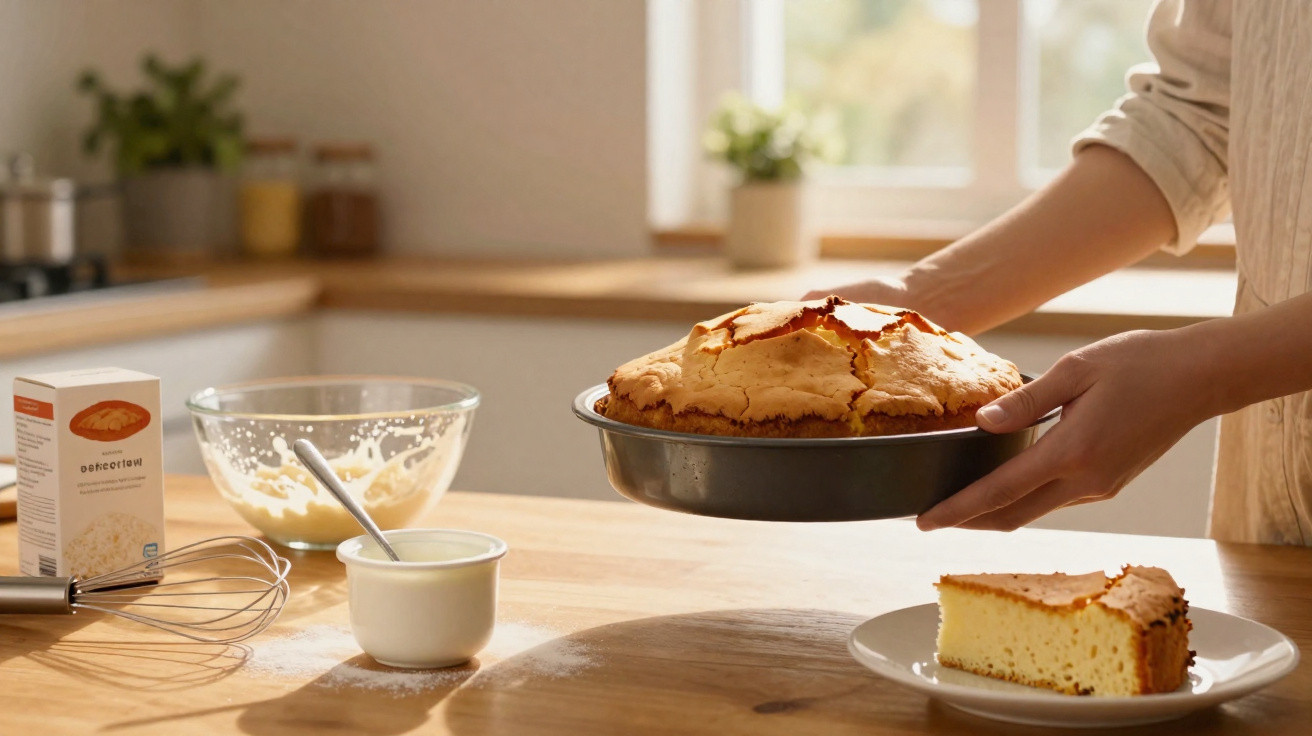
Many people consider the classic yoghurt cake to be one of the easiest bakes imaginable. All it takes is a bowl, a spoon and a pot of yoghurt. Yet, in countless kitchens, the result is rather dense and can even turn out dry. A French baking influencer now shares a remarkably straightforward trick: one extra ingredient, already found in many cupboards, turns the batter into an exceptionally light, moist cake.
Why the simple yoghurt cake is suddenly so popular
The so-called yoghurt pot cake has long been a French household staple, much like a marble cake in German families. Its appeal lies in the method: ingredients are measured using the empty yoghurt pot, so there is no need for scales and the cake can be ready for the oven within minutes.
This familiar basic recipe is exactly where the trick comes in. Roxane, a well-known baker and content creator, shows how she makes an especially tall, delicately fluffy version in around five minutes, reminiscent of a light cloud cake. The key is replacing some of the flour with a very fine maize-based powder: familiar cornflour.
“The difference in texture is clear: it is less compact, more springy and soft – without the cake falling apart.”
The “magic” addition: what cornflour really does in the batter
In the original recipe, the batter is made almost entirely with standard wheat flour. The influencer substitutes part of it with cornflour. Technically, this reduces the gluten content of the batter while increasing its starch content. As a result, a less robust gluten structure develops during baking, leaving the cake softer and almost cotton-like.
Cornflour absorbs a great deal of liquid without making the mixture heavy. The cake rises well, develops a fine crumb and stays moist in the middle. This approach is especially useful for anyone who has struggled with dense, slightly “rubbery” sponge cakes.
Core ingredients for a fluffy yoghurt cake
For a standard loaf tin or a medium-sized round tin, the following quantities will usually be sufficient:
- 3 eggs
- 1 pot natural yoghurt
- 1 pot neutral vegetable oil
- 2 pots sugar
- 2 pots wheat flour
- 1 sachet baking powder
- ½ pot cornflour, for example maize cornflour
- A little vanilla sugar, optional
- Freshly grated lemon zest, optional
- Butter or oil, for greasing the tin
The yoghurt pot is used as the measuring unit throughout. Anyone who prefers can, of course, convert the amounts into grams. For everyday convenience, however, the pot method is hard to beat, particularly when time is short.
Step by step: how to make the “5-minute batter”
The preparation is deliberately uncomplicated. There is no need to whisk the eggs and sugar separately or follow complex temperature stages.
- Crack the eggs into a large bowl and briefly whisk them with a balloon whisk or hand mixer.
- Stir in the yoghurt until the mixture is smooth.
- Add the oil and mix thoroughly.
- Sprinkle in the sugar, stirring until it has mostly dissolved.
- Combine the flour, baking powder and cornflour, then sift them gradually into the bowl.
- Add vanilla sugar and lemon zest, if using.
- Mix everything into a smooth, fairly runny batter.
Mix firmly, but do not continue for too long: the mixture should be even and free from lumps, but the batter must not be overworked. Otherwise, too much gluten will develop again and the desired effect will be reduced.
Baking time and temperature: keeping the yoghurt cake moist
Next, prepare the tin and oven:
- Preheat the oven to 180°C conventional heat.
- Grease the tin carefully and, if desired, dust it lightly with flour.
- Pour in the batter and briefly level the surface.
- Bake for about 30 minutes, although the timing may vary slightly depending on the oven.
A wooden skewer is useful for checking whether it is ready: insert it into the centre of the cake and pull it out again; it should come out dry. If batter still clings to it, the cake needs a few more minutes. Overbaking is one of the most common reasons sponge cakes seem dry.
“Anyone who takes the cake out of the oven at exactly the right moment will be rewarded with a pale golden edge and an extraordinarily tender crumb.”
How to use the cornflour trick in everyday baking
The cornflour trick is not limited to a classic yoghurt cake. It can easily be applied to other sponge batters too. Part of the flour can be replaced with starch; in most cases, as little as one third of the total flour is enough.
| Baking idea | Using cornflour |
|---|---|
| Lemon cake | Replace around ¼ of the flour for a fine, moist texture. |
| Marble cake | Add some cornflour particularly to the plain portion, so it does not feel heavy. |
| Muffins | A small amount of cornflour makes them lighter and prevents an overly dense crumb. |
| Children’s birthday cake | More volume and less dryness – ideal when the cake will be decorated. |
A light batter that is not overly dense is particularly worthwhile for children’s cakes or traybakes, which are often left standing for longer. The cake will still taste pleasantly soft on the second day.
Variations: from citrus flavour to chocolate chunks
The basic yoghurt cake can be tailored to personal taste with just a few simple adjustments. Because the batter is neutral, it works well with numerous additions without upsetting its balance.
Ideas for quick variations
- Lemon: Add extra zest and a splash of lemon juice to the batter, then finish with a thin icing.
- Chocolate: Fold in roughly chopped chocolate chunks, or mix cocoa powder into part of the batter.
- Berries: Add frozen berries straight to the batter, dusting them lightly with flour first so they do not sink.
- Spices: Cinnamon, tonka bean or cardamom create an autumnal version.
- Nuts: Ground almonds or hazelnuts can replace some of the flour, adding texture and flavour.
Those who enjoy experimenting can also swap the yoghurt for another variety, such as vanilla or lemon yoghurt. The batter takes on the flavour well without losing its structure.
What home bakers should keep in mind
Despite its simplicity, one point remains crucial: the balance of the batter. Using too much cornflour can make the structure crumbly. Half a pot for the stated quantity of batter is a sensible guide.
The quality of the yoghurt also matters. A very thin, heavily reduced-fat yoghurt can make the batter watery. Creamy natural yoghurt with a standard fat content provides better stability and more flavour. Anyone who likes using plant-based alternatives should choose thicker products instead, such as soy- or coconut-based options.
Why this yoghurt cake is so practical for everyday life
The recipe’s greatest strength is its combination of speed and result. The batter is ready within minutes. While the cake bakes, there is still time to tidy the kitchen or set out the coffee table. It fits particularly well into family life when children suddenly announce that they are craving cake.
At the same time, it requires neither costly specialist ingredients nor professional equipment. A mixing bowl, a basic whisk and an oven are enough. For that reason, many people use the yoghurt pot cake as a starter recipe for children who are mixing and measuring for themselves for the first time.
“Anyone who has experienced how much difference half a pot of cornflour can make will probably not want to do without this step again.”
Its effect on baking behaviour is also noteworthy: the cake generally cracks less and retains a more even appearance. This is welcome news for anyone planning to add icing, berries or chocolate decorations afterwards. With a single cupboard ingredient, a simple everyday cake becomes a versatile, light bake that looks far more professional to guests than the effort involved would suggest.

















Comments
No comments yet. Be the first to comment!
Leave a Comment