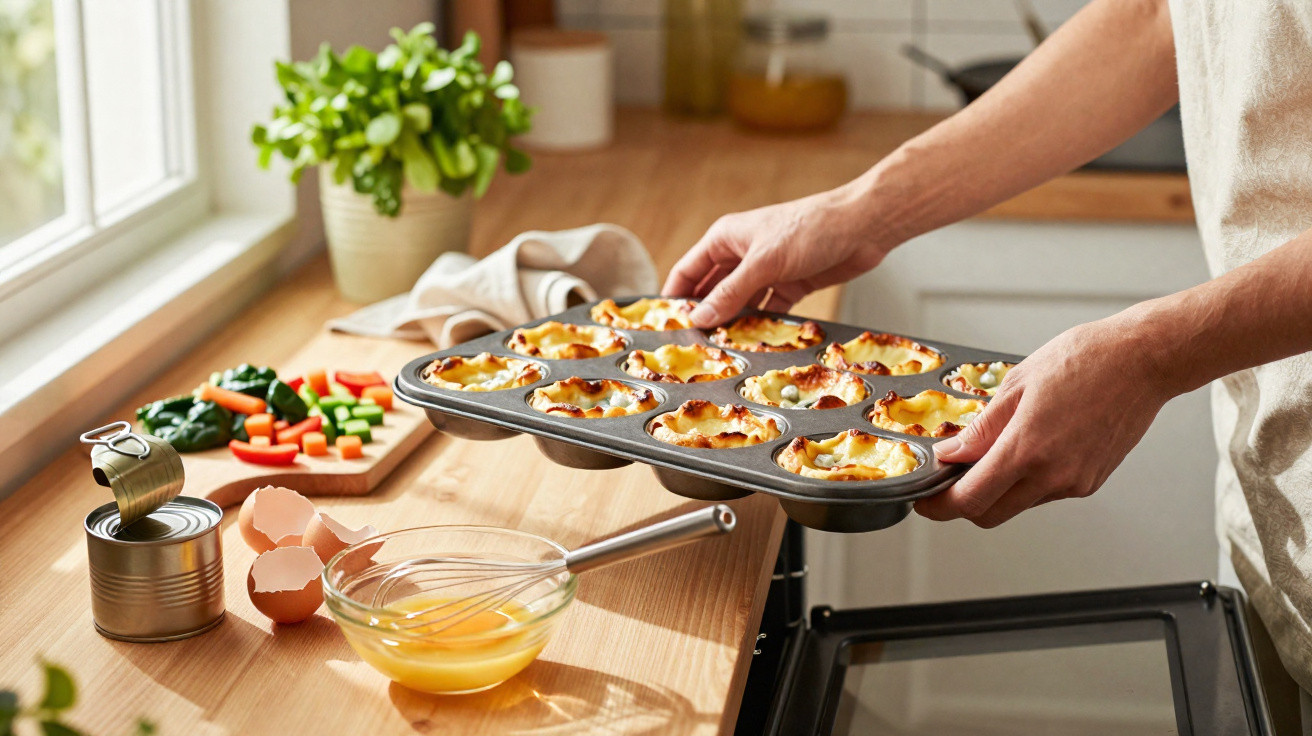
Savoury mini flans baked in a muffin tin are the answer: made almost entirely from cupboard staples, they are quick to prepare and work just as well with an after-work beer as they do in the office, on a picnic or as a light supper with salad.
Why these tuna flans are ideal for March
In spring, many people make small changes to their diet: less heaviness, more freshness, while still enjoying their food. These little tuna flans offer exactly that. Rich in protein and pleasantly filling, they can be worked into all sorts of meals, from a children’s tea to a shared buffet dish.
“A simple muffin tin turns a few cupboard ingredients into convenient mini flans that taste good hot or cold.”
Their main advantage is that preparation takes around 15 minutes, then the oven does the rest. While the flans bake, there is time to lay the table, chop a quick salad accompaniment or pack a picnic bag. Eggs, tuna and cheese create a compact yet moist mixture that holds together well and is easy to transport.
Core ingredients for four people
A standard 12-hole tin requires very little. Most of the ingredients will already be in the cupboard or fridge:
- 3 eggs (medium)
- 200 g tinned tuna, well drained
- 200 ml double cream or single cream
- 1 tablespoon chopped parsley (fresh or frozen)
- ½ teaspoon paprika (mild or sweet)
- 60 g grated cheese, such as Emmental, Comté or Gouda
- Salt and pepper, to taste
For a lighter version, use a combination of cream and skyr, yoghurt or cream cheese. Plant-based options, such as soya cream, work too, provided the overall quantity stays roughly the same. This lowers the fat content without losing the characteristic melt-in-the-mouth quality of a flan.
Adding more vegetables to the flans
The mixture also easily accommodates finely grated or very finely diced vegetables. Particularly suitable choices include:
- grated courgette, well squeezed to prevent excess moisture
- finely grated carrot
- small diced pepper
- a few peas, fresh or frozen
Around one handful of vegetables for the full mixture is enough to keep the texture stable. It is an easy way to put more vitamins and fibre on the plate.
Step by step: baking mini flans in a muffin tin
The method could hardly be simpler, and there is no need for an electric mixer. A whisk and a fork are all that is required.
- Preheat the oven to 180°C conventional heat.
- Whisk the eggs and cream thoroughly in a bowl until smooth.
- Stir in the parsley, paprika, salt and pepper.
- Flake the tuna with a fork, drain it well and add it to the egg mixture.
- Mix in the grated cheese until evenly combined.
- Lightly oil or grease the muffin tin; even silicone tins benefit from a thin coating.
- Divide the mixture between the holes, filling each about two-thirds full, as the flans rise a little during baking.
- Bake on the middle shelf for around 25 minutes, until lightly browned on top and set throughout.
- Leave the tin to cool briefly, then carefully lift out the flans.
“The flans are cooked to the right point when the surface is lightly browned and the centre no longer wobbles.”
If in doubt, use the traditional skewer test: a wooden skewer should come out without any liquid egg mixture on it.
Ways to serve mini tuna flans
These small bites are remarkably versatile, and the best way to serve them depends on the occasion:
- As finger food: Arrange them warm on a platter with a small dollop of herb quark or yoghurt dip.
- For a light supper: Serve two to four flans with a large bowl of leaf salad, some baguette or boiled potatoes.
- At the office: Pack them cold in a lunchbox alongside raw vegetable sticks and a dip.
- On a picnic: They can be eaten straight from the hand without cutlery, making them ideal for children.
When cold, the flans are slightly firmer but still pleasantly moist. Anyone who prefers them warm can briefly reheat them in the microwave or oven.
Which seasonings and variations work well?
The egg, tuna and cheese base works with a wide range of flavours. For variety, try whichever combinations appeal:
| Variation | Addition | Flavour profile |
|---|---|---|
| Mediterranean | Oregano, basil, a few diced olives | Reminiscent of holiday cooking |
| Fresh spring | Chives, spring onions, a little lemon zest | Light, aromatic and ideal for lunch |
| Spicy | A pinch of chilli flakes or hot paprika | Punchy and well suited to an after-work beer |
| Extra cheesy | Replace part of the cheese with a strong mountain cheese | Fuller flavour and especially savoury |
Meal prep: how long do the flans keep?
Mini flans are excellent for meal prep. They will stay fresh for around three days in a tightly sealed container in the fridge. To store them for longer, freeze some of the batch.
- In the fridge: Store once cooled, then reheat briefly before eating if desired.
- In the freezer: Ideally, freeze them individually first before transferring them to a bag. Defrost in the fridge or reheat directly in the oven.
When reheating in the oven, covering the flans with a little foil helps prevent them from becoming too dry.
Why using a muffin tin is so practical
A muffin tin is no longer only useful for sweet bakes. It offers several advantages for savoury recipes in particular:
- Portions are automatically the same size.
- Cooking time is noticeably shorter than with one large dish.
- Leftovers are easier to divide up and take away.
- Children often prefer manageable individual portions.
If there is no traditional metal tin available, a silicone mould can also be used. Place it on a baking tray first so that nothing spills while it is being moved into the oven.
Tips for an especially light texture
Texture determines whether mini flans seem dry or moist. A few straightforward steps will keep the mixture pleasingly light:
- Do not mash the tuna too finely; small pieces provide a little bite.
- Avoid over-seasoning, bearing in mind the salt content of both the cheese and tuna.
- Watch the baking time, as leaving the flans in the oven too long makes them firm.
- When using very low-fat dairy products, allow for a teaspoon of oil or a little extra cheese.
“Baking the flans only until the centre has just set gives them a pleasantly creamy texture.”
Adapting the recipe for allergies and preferences
Many households now cater for different dietary preferences at the same table. Small adjustments retain the basic idea while allowing as many people as possible to enjoy them:
- Gluten-free: The mixture contains no flour as standard. Simply check that the cheese and tuna contain no gluten-based additives.
- Lower lactose: Use lactose-free cream and cheese, adding a few more herbs for flavour.
- Fish-free: Replace the tuna with small diced vegetables or fried mushrooms, and increase the cheese slightly.
For anyone introducing children to fish, mini flans are a fairly straightforward starting point. The fish flavour is noticeable, but cheese and seasoning prevent it from becoming dominant. A light note of lemon can further soften the distinctive flavour of tinned fish.
It is also practical to make full use of the oven: while the flans bake, a tray of roasted vegetables or potato wedges can cook on a lower shelf. This simple muffin-tin trick creates a complete spring meal without stress: light, suitable for everyday cooking and still enjoyable.

















Comments
No comments yet. Be the first to comment!
Leave a Comment