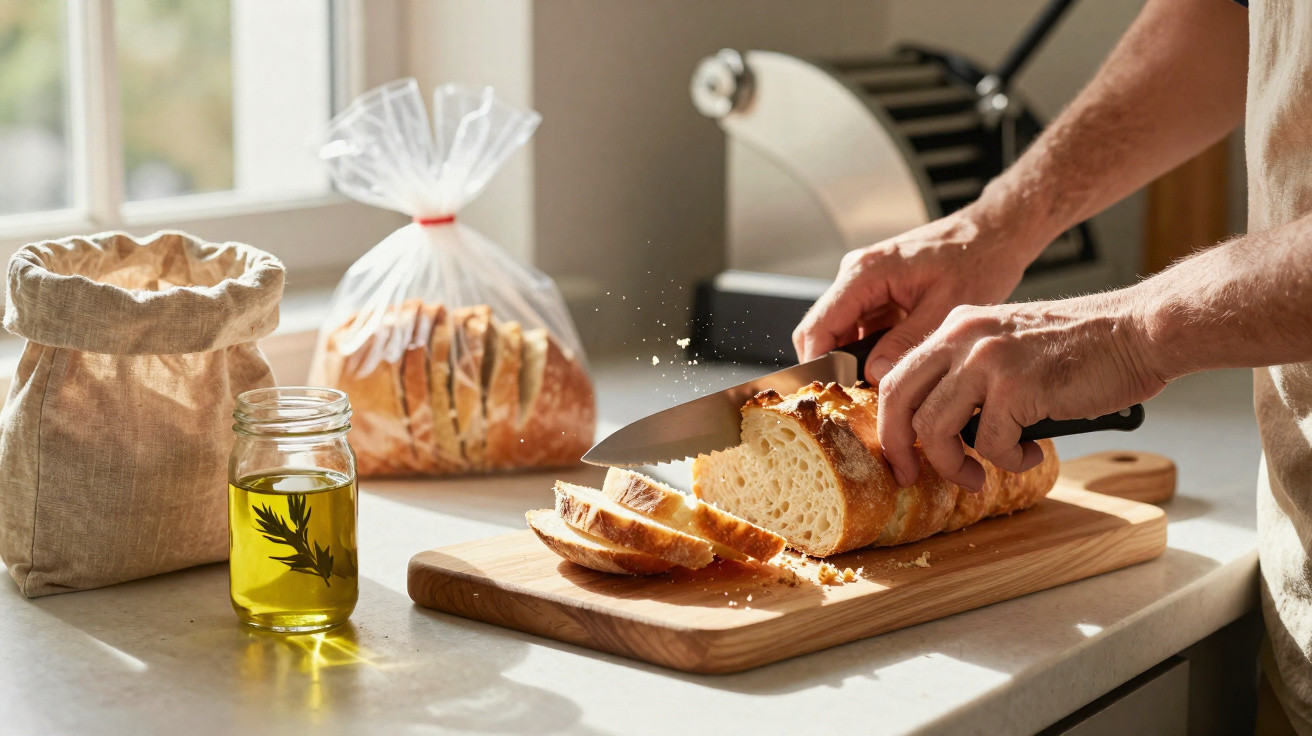
That convenient habit, however, can have unexpectedly costly consequences.
The smell of freshly baked bread, a quick request at the counter, a friendly nod – and a loaf is neatly sliced and slipped into a bag. Although it may seem like a helpful extra service, it often causes frustration at home: bread dries out sooner, quickly tastes stale and ends up in the bin. Experts in baking, food technology and workplace safety now clearly caution against having bread routinely sliced by machine.
Why the bread-slicing service causes more harm than good
The same thing happens in many bakeries every day: customers ask for their fresh loaf to be sliced on the machine. The reasoning is understandable: breakfast is quicker in the morning, children’s sandwiches can be made in a hurry and there is no need to cut the bread yourself. In daily life, it appears to save time.
Yet bakers tend to take a different view. Traditional bakeries in particular increasingly advise against it for so-called long-keeping breads, including sourdough loaves, rye bread and wholemeal bread. When stored correctly, an unsliced loaf retains its flavour for several days. Once cut into thin slices, it loses two to four days of enjoyable eating quality.
“Machine slicing often halves the lifespan of good bread – and therefore directly encourages food waste.”
Individually, this may not seem serious, but it adds up over a year: people who regularly buy sliced bread ultimately throw away numerous loaves or baguettes simply because they dry out too quickly.
The hidden risk in everyday bakery work
In many bakeries, the bread slicer is regarded as a well-known hazard. Workplace safety statistics show that cuts account for a large proportion of accidents in baking businesses, with bread-slicing machines playing a major part.
In the worst case, the machine does not only cut bread, but hands or fingers too. Prevention guidance classifies the bread slicer as high-risk equipment: it has sharp blades, is used frequently and can cause deep cuts, including partial amputations. Every additional loaf put through the slicer also creates an additional accident risk for staff.
All for a convenience that many customers could achieve at home with an ordinary bread knife.
The key point: sliced bread goes stale two to three times faster
Food technologists can explain quite clearly why sliced bread becomes stale so quickly. Once a loaf has passed fully through the machine, all of its crumb is immediately exposed to the air. Oxygen and dry room air affect the surface of every individual slice.
Inside the bread, the following happens: over time, its starch recrystallises, a process experts call “retrogradation”. The crumb becomes firmer and drier, and can sometimes turn slightly rubbery. A whole loaf protects the crumb more effectively because only a small cut surface is exposed.
“When stored properly, a whole farmhouse or rye loaf remains tasty for four to five days, and often even a week – once sliced, it has noticeably aged after two or three days.”
The widespread habit of putting sliced bread in the fridge “to keep it fresh” is especially counterproductive. Temperatures between two and six degrees greatly speed up starch retrogradation. As a result, bread feels dry and stale sooner than it would when kept at room temperature.
How to store bread correctly
- Keep the loaf whole wherever possible, exposing only one cut side.
- Stand it cut-side down on a wooden board.
- Cover it with a clean tea towel rather than using an airtight plastic bag.
- Use a wooden or ceramic bread bin, if you have one.
- Never store bread in the fridge; freezing is the better option.
This keeps the crumb moist for longer, preserves the crust’s texture and flavour, and makes the loaf enjoyable for several days.
Hygiene concerns: when the machine transfers more than crumbs
Another issue that many people underestimate is hygiene. In practice, bakery slicers process a wide range of products: wheat bread, mixed rye bread, speciality loaves containing seeds and, sometimes in succession, products containing gluten and varieties described as “reduced-gluten”.
Crumbs, flour dust, fat residues and microscopic particles inevitably collect in the narrow gaps between the blades and inside the machine. Unless cleaning and maintenance are carried out with absolute consistency, this creates an ideal environment for mould spores or bacteria.
“Sliced bread carries a greater risk of cross-contamination – this is a serious consideration, especially for people with allergies or gluten intolerance.”
Anyone who is highly sensitive to gluten or has severe food allergies should give particular thought to machine slicing when buying bread – or consistently choose whole loaves and slice them at home.
How to slice bread at home like a professional
The good news is that good bread does not require a specialist machine or elaborate kitchen equipment. A long, sharp serrated bread knife is entirely sufficient. Technique and a little patience matter more than force.
- Allow the bread to cool completely before cutting it.
- Use a sturdy wooden board that keeps the loaf from slipping.
- Score the crust with a gentle sawing motion before applying more pressure.
- Cut only the number of slices that will be eaten straight away.
- Place the remainder cut-side down and cover it.
For older people, children or anyone with limited ability to chew, slightly thicker slices can be a good choice. They dry out more slowly and remain pleasantly soft even after light toasting.
What to do with bread that has gone dry
Even with perfect storage, some dry leftovers may remain in the end. They do not have to be thrown away. Traditional ways of using up leftovers are financially worthwhile – and usually taste better than many people expect:
- French toast: soak dry slices in a milk-and-egg mixture, then fry them.
- Croutons: toast cubed bread with a little oil and seasoning; ideal for salads and soups.
- Breadcrumbs: grate fully dried leftovers to use as breadcrumbs.
- Bread crisps: bake thin slices with olive oil and salt until crisp.
- Bread soup or bakes: simmer roughly cubed stale bread in vegetable stock or sauces.
Anyone who regards bread as a valuable food plans their shopping a little more carefully: a smaller loaf is preferable to excess. Combined with correct storage, this can significantly reduce the amount of wasted bread in many households.
Why the ritual of slicing bread yourself offers more than expected
One aspect is often overlooked: how it feels at the table. A whole loaf placed on a board automatically makes a meal feel more communal. Those who take up the knife themselves can choose the slice thickness according to appetite and need, then share, break and pass the bread around.
“For many people, letting the knife glide through the crust is part of enjoying bread – and creates a different appreciation of the product from an anonymous machine at the bakery.”
This small ritual may even help reduce bread waste. Cutting consciously makes it easier to judge how much will genuinely be eaten. Bags of ready-sliced bread are much more likely to end up uneaten in the food-waste bin.
When a bread slicer can still make sense
Despite all these criticisms, the service can remain practical in certain situations: for example, for people with limited motor skills, at large events, or when the entire loaf will be eaten within 24 to 48 hours.
In these cases, it is worth asking the baker for thicker slices. The thicker the slice, the smaller the surface exposed to air and the slower the drying process. For longer storage, freezing is the better choice: freeze the loaf whole or in large pieces, thaw it later at room temperature and slice it as needed.
Taking these points into account saves money, reduces hassle and also helps tackle food waste. That brief moment at the counter, when the decision about machine slicing is made, often determines whether a loaf provides three days or a week of enjoyment.

















Comments
No comments yet. Be the first to comment!
Leave a Comment