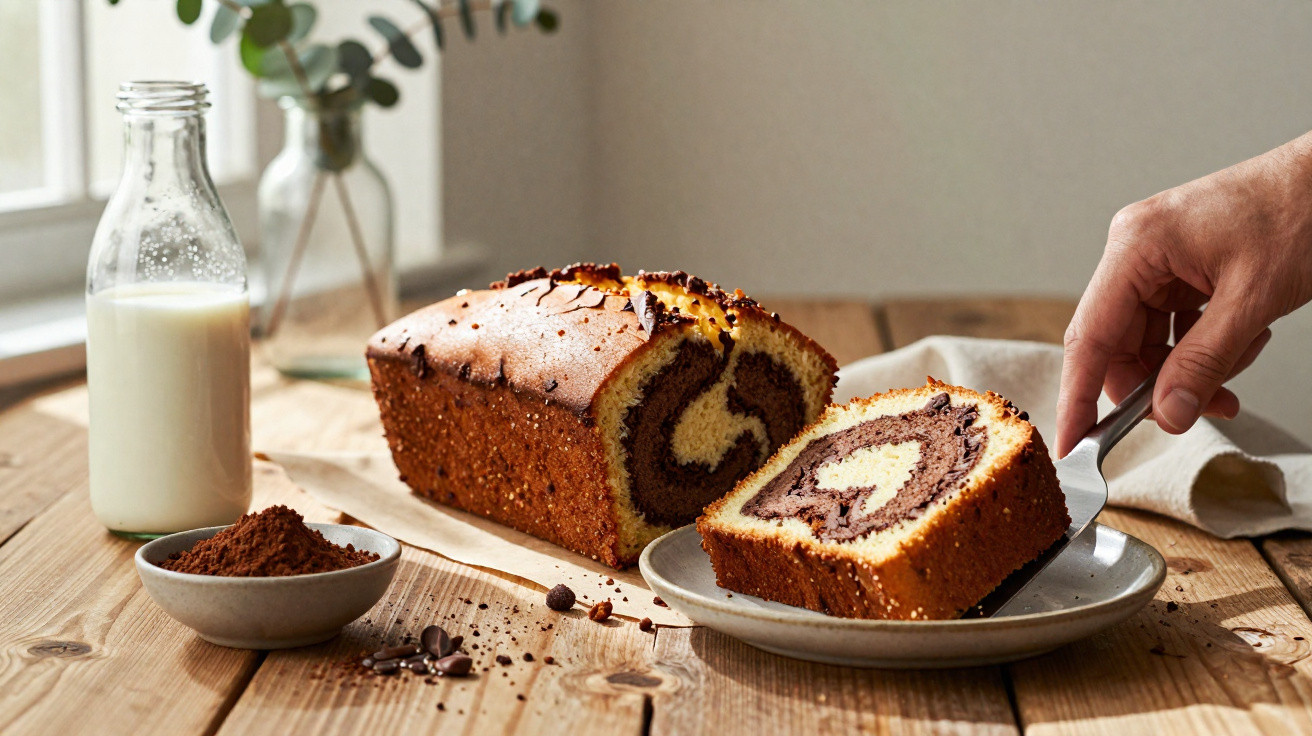
Anyone with children will know the situation: it is late afternoon, stomachs are rumbling, the craving for something sweet is enormous – and the cake in the bread bin has gone dry yet again. This is exactly where a recipe currently winning over many families comes in: an exceptionally moist marble cake made entirely without eggs or butter, yet with a surprisingly light crumb and full-bodied flavour.
Why this marble cake clears every other slice from the cake plate
The concept sounds almost too straightforward: a handful of everyday ingredients, one mixing bowl and a whisk – nothing more. There is no need for a mixer, bain-marie or complicated technique. Even so, the result tastes more like it came from a patisserie than something baked on the spur of the moment.
The trick: simple cupboard staples are combined in a way that creates a texture similar to a classic sponge cake made with eggs and butter – only lighter and often easier to digest.
What makes it especially interesting is that the recipe is entirely plant-based. Plant milk, oil and a pinch of kitchen chemistry take the place of cream, butter and eggs. The outcome is a cake that remains soft even after two or three days rather than becoming crumbly and falling apart.
Ingredients for a simple but clever marble cake
Everything required is likely to be in an average kitchen cupboard or available from a nearby supermarket. For one loaf cake, use roughly the following quantities:
- 200 g plain wheat flour
- 80 g sugar, preferably whole cane sugar or coconut blossom sugar
- 1 sachet baking powder
- 1 small pinch of fine salt
- 200 ml plant milk, with soya or oat working particularly well
- 80 ml neutral oil, such as sunflower or grapeseed oil
- 1 tablespoon apple cider vinegar
- 2 tablespoons unsweetened cocoa powder
Sugar has two jobs in this recipe. Alongside providing sweetness, its molasses or caramel notes add depth of flavour and help retain moisture. Because neutral oil stays liquid at room temperature, it stops the cake becoming firm once cool – a common drawback of butter that is neatly avoided here.
The secret pairing: a plant-based “buttermilk” effect
The real bit of magic happens before the flour is added. Briefly stir together the plant milk and apple cider vinegar, then leave the mixture for a few minutes. During this time, the liquid thickens slightly, much like buttermilk.
The gentle acidity reacts with the baking powder in the oven, creating tiny air bubbles that make the crumb light and tender.
At the same time, the acid relaxes the gluten in the flour. This makes the batter less tough and gives the cake a fine, almost fibrous texture usually associated with cakes containing eggs. Anyone convinced that baking without eggs is impossible will often have a real light-bulb moment here.
One-bowl method: minimal effort, impressive results
In everyday family life, every minute saved matters – as does every mixer that does not need washing up. The preparation can be reduced to just a few steps:
- Put the dry ingredients – flour, sugar, baking powder and salt – into a large bowl and combine thoroughly.
- Allow the plant milk and apple cider vinegar to stand briefly, then pour them into the dry ingredients along with the oil.
- Whisk only until you have a smooth, slightly glossy batter.
One point is crucial: avoid overmixing. Working the batter excessively develops tough gluten, producing a dense cake instead of a fluffy one. Stop as soon as there are no visible pockets of flour.
Two colours, one cake: creating the classic marble pattern
For that memorable “wow” moment when the cake is sliced, you need the contrast between pale and dark batter. Divide the basic batter roughly in half.
Leave the first half plain. Stir the unsweetened cocoa powder into the second portion. If preferred, sift the cocoa first to prevent lumps. Should the dark batter become noticeably thicker, add a small splash of plant milk or water to bring both mixtures back to a similarly spreadable consistency.
How to make a zebra pattern without an art degree
Now for the enjoyable part: layering. Grease and lightly flour a standard loaf tin, or line it with baking paper. Several reliable approaches are possible:
- Alternating layers: Add a thick strip of pale batter, followed by dark batter, then pale again, continuing until both mixtures are used.
- Zebra technique: Spoon one measure of pale batter into the centre of the tin, place one measure of dark batter on top, then repeat with pale and dark batter to create concentric rings.
Finish with a quick flourish: use a knife or wooden skewer to draw gentle waves or loose figure eights through the layers of batter. Do not stir everything together completely. The two colours should twist around each other while still remaining distinct.
Baking without drying out: timing is everything
Preheat the oven to around 180°C conventional heat. Bake the cake on the middle shelf for around 35 to 40 minutes. Keep the oven door firmly shut for the first 20 minutes so the batter does not collapse.
The skewer test remains the best guide: A knife or wooden skewer should come out of the centre without wet batter, but with a few moist crumbs attached.
Leaving the cake in the oven for too long means sacrificing the moisture you want. It is therefore worth testing towards the lower end of the baking time – you can always bake it longer, but you cannot undo overbaking.
Patience after baking: why waiting improves the cake
Naturally, the smell filling the house makes it tempting to cut a slice straight away. This is precisely where many otherwise good sponge cakes go wrong. If turned out while still very hot, the marble cake can easily break or seem underbaked and greasy in the middle.
A better approach is to let it rest in the tin for several minutes, allowing the crumb to settle. Then turn the cake out carefully and leave it to cool on a wire rack. Air can circulate all around it, moisture will not collect underneath, and the surface stays pleasantly tender rather than becoming soggy.
How long does marble cake keep, and how does it stay moist?
Thanks to the oil and unrefined sugar, this marble cake dries out much more slowly than conventional butter-based versions. Stored in an airtight container at room temperature, it is often still remarkably soft on the second or third day.
There is also a practical bonus: the flavour can actually improve as the cocoa and caramel-like sugar notes blend more fully. If you like, lightly toast a thin slice in a frying pan or contact grill on the third day – this creates an appealing contrast between crisp edges and a soft centre.
Variations for every mood: from a nutty boost to lunchbox-friendly bakes
The basic recipe can be adapted according to preference, season and whatever is in the cupboard. These ideas work particularly well:
- Nutty: Replace part of the flour with ground hazelnuts or almonds.
- Fruity: Fold a few diced apple or pear pieces into the pale batter.
- Children’s favourite: Mix chocolate drops into the dark batter so that they melt slightly in the oven.
- Gently spiced: Add a pinch of cinnamon or tonka bean to the basic batter.
For packed lunches, the cake can also be baked in a muffin tin. The baking time will then be considerably shorter, usually around 18 to 22 minutes, so it is worth checking the oven in good time.
Why this cake also has nutritional advantages
Of course, this remains a sweet bake rather than a health drink. Compared with many ready-made products, however, it offers several benefits: omitting dairy products makes the cake suitable for many people with lactose issues or those following a dairy-free diet. Choosing whole cane or coconut blossom sugar also introduces ingredients that are somewhat less heavily processed.
There is a psychological benefit too. An easy, dependable recipe lowers the barrier to baking at home more often. This gives you control over the ingredients, sugar content and portion sizes, while reducing reliance on commercially produced cakes with lengthy ingredient lists.
Many families in particular say that this marble cake quickly becomes their “go-to recipe”: it works as a speedy afternoon cake, something to take into the office, or a birthday base topped with icing – and it succeeds even for people who claim they cannot bake. That is exactly what makes it so dangerously delicious: once you know the recipe by heart, there are hardly any excuses left for not having freshly baked cake at home.

















Comments
No comments yet. Be the first to comment!
Leave a Comment