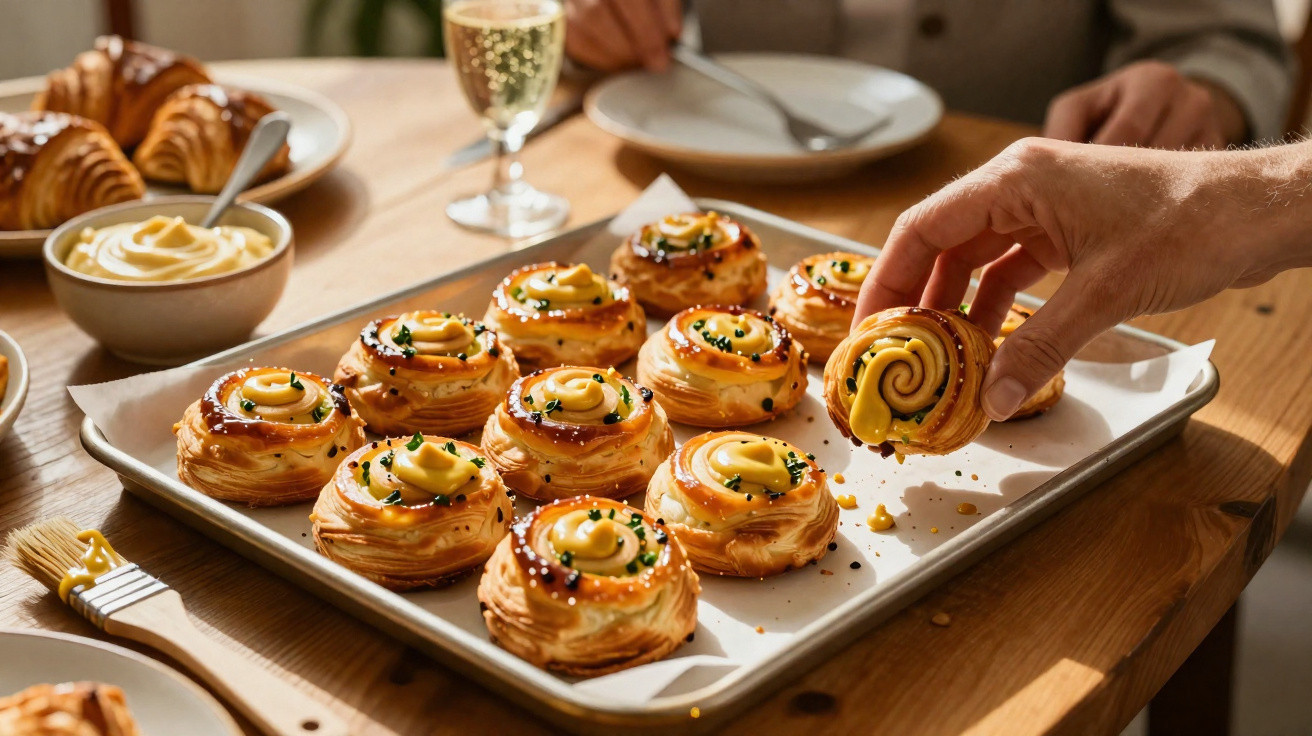
Many hosts will recognise the situation: you put in the effort, yet the very bites that took the most time are the ones left untouched on the buffet. One home cook has now tried a simple twist on her puff pastry rolls – changing just one detail while leaving everything else as it was. Ever since, this snack has been the star of every party.
The surprising game-changer in puff pastry
The starting point sounds entirely unremarkable: ready-rolled chilled puff pastry, seasoned sausage meat, a short spell in the oven, and they are done. The key is a thin, deliberate coating of Dijon mustard spread directly over the pastry before the filling is added.
“The mustard is meant to lift the flavour without taking centre stage – a hint rather than a dominant dollop.”
That paper-thin layer has two effects:
- It gives the puff pastry a gently savoury flavour, so it no longer tastes plain.
- It makes the sausage filling seem more highly seasoned, without requiring extra salt or pepper.
One thing matters: applying too much can make the pastry soggy and prevent it from puffing up as crisp as it should. The mustard should cover the pastry like a light veil, not like a thick sandwich spread.
Essential ingredients for popular party puff pastry rolls
The base
- 1 roll of chilled puff pastry (a rectangular sheet is easier to roll)
- Raw sausage meat or coarse skinless sausage meat
- Dijon mustard (applied in a very thin layer)
Seasoning
- Salt (use sparingly, as many sausage-meat fillings are already salty)
- Freshly ground black pepper
- Dried thyme or other herbs to taste
For a golden finish
- 1 egg yolk, whisked with a splash of water
This provides the basic framework. Everything else comes down to the method – and that is precisely what separates pleasant nibbles from these “Where have they all gone?” rolls.
How to make puff pastry rolls: roll tightly, cut neatly, bake hot
Start with the pastry: unroll it and smooth it flat, ideally on a board or sheet of baking parchment. Next comes the crucial step: spread on an exceptionally thin layer of Dijon mustard. A pastry brush or the back of a spoon works better than a knife, as it allows the mustard to be applied more delicately.
Then season the sausage meat with salt, pepper and thyme. Shape the mixture into long sausage-like strips and place them lengthways on the pastry.
“The more tightly the pastry is rolled around the filling, the better it will hold its shape while baking and the juicier every bite will be.”
The detailed method is as follows:
- Brush the pastry with mustard, using only a fine film.
- Divide the sausage filling over it, shaping it into long strips.
- Roll up the pastry tightly from the long side and press the seam firmly closed.
- Cut the roll into pieces around 3–4 cm wide.
- Place them cut-side up on a baking tray lined with baking parchment.
- Brush with egg yolk and bake at 200°C, conventional heat, for around 18–20 minutes, until the surface is deeply browned.
For especially crisp rolls, leave them in the oven for another one or two minutes, but watch them closely so they do not become too dark.
Creative variations with hardly any extra work
The appeal of this idea is that the method never changes. You can simply adapt the flavour of the filling and mustard with ease. One basic recipe can therefore become several completely different snacks.
Ideas for simple twists
- Wholegrain mustard: Use mustard with whole seeds instead of smooth Dijon mustard for added texture.
- Fiery version: Mix some of the mustard with paprika, chilli or hot pepper.
- With an onion note: Add a thin layer of softened onions over the mustard before topping with the sausage meat.
- Poultry variation: Choose chicken or turkey sausage meat and season it a little more boldly so that it does not taste too mild.
- Vegan filling: Use a seasoned soya mince mixture or ready-made vegan sausage meat instead, while keeping the mustard.
If you are baking several trays, the varieties can be marked easily – sprinkle sesame seeds over one type, poppy seeds or coarse salt over another, for example.
Serving ideas for a buffet, brunch and television night
The rolls work well warm straight from the oven, but they are also good served lukewarm or at room temperature. If you are catering for a larger gathering, it is worth preparing them the day before.
| Occasion | Preparation tips |
|---|---|
| Birthday party | Bake the rolls fully, then warm them briefly in the oven before serving. |
| Brunch | Prepare them as far as slicing, then bake them fresh in the morning. |
| Finger-food buffet | Offer several flavours and cut the pieces smaller. |
| Television night | Serve with dips such as herby quark, a yoghurt-mustard sauce or tomato salsa. |
Beer, dry white wine or simply a well-chilled wine spritzer all pair well with them. The mustard gives the rolls a gentle heat and depth of flavour, making them feel less like “fast food”, even though they are exceptionally quick to prepare.
Why Dijon mustard works so well in puff pastry rolls
Dijon mustard offers a distinctive blend of heat, acidity and subtle seasoning. It has a noticeable flavour without becoming overly bitter, and it works perfectly with meat and puff pastry. Used sparingly, it acts almost like a seasoning layer that brings the whole snack together.
“As it bakes, the mustard seeps slightly into the sausage meat while also flavouring the pastry from the inside – creating that ‘Wow, what’s in these?’ effect.”
Other mustards will work too, of course, but they change the character of the snack. Sweet mustard is more reminiscent of a Bavarian-style sausage breakfast, coarse wholegrain mustard adds bite, and particularly hot mustard makes the rolls sharper and less suitable for children.
Practical tips for even better results
A few small steps will ensure that these puff pastry bites look as good as they taste:
- Let the pastry stand briefly before rolling so that it does not tear.
- Keep the work surface dry; otherwise, the pastry will stick and bake unevenly.
- Do not overcrowd the tray, so that heat can circulate around every roll.
- Leave the rolls to rest for a few minutes after baking, allowing the juices to redistribute.
Anyone who entertains regularly can establish a simple routine: keep a pack of puff pastry in the fridge, some sausage meat in the freezer and a jar of Dijon mustard in the cupboard. That way, the rolls can be prepared in just a few minutes whenever visitors are expected.
What makes this idea so interesting is how dramatically one tiny detail can transform a familiar recipe. A carefully measured hint of mustard turns simple puff pastry sausage rolls into a snack that clears plates in record time – without complicated ingredient lists or lengthy cooking sessions.

















Comments
No comments yet. Be the first to comment!
Leave a Comment