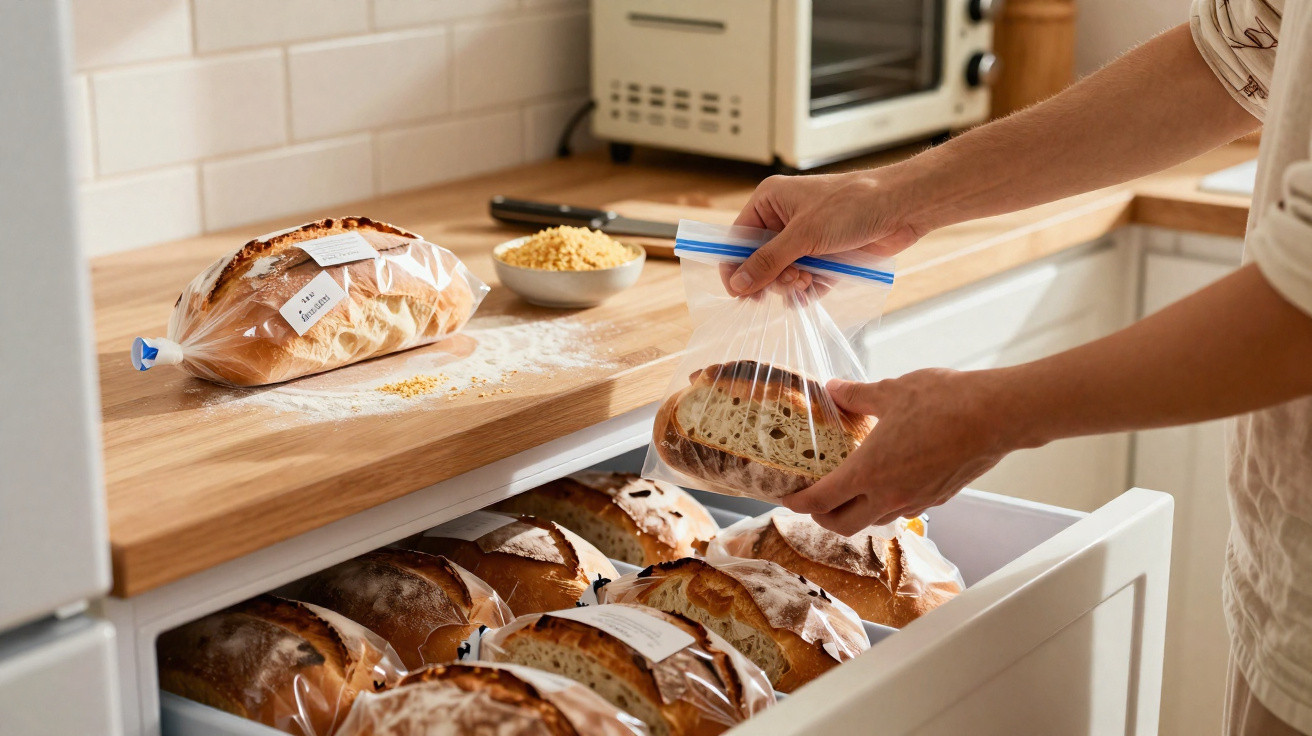
Many people freeze bread “for later” – but most do so at entirely the wrong time, then wonder why the slices turn tough.
People who keep bread in the freezer want to save money and reduce waste. Yet a rubbery crust often ends up in the bin. The freezer itself is rarely to blame; the problem is almost always when and how the bread goes in and comes back out. This is the crucial mistake that can be avoided with a few straightforward steps.
Why fresh bread quickly seems stale
Bread does not become old only once its crust has hardened. The ageing process begins as soon as the loaf leaves the oven. Behind the simple term “stale” lies a chemical process known as starch retrogradation.
During baking, starch molecules in the flour absorb water and “swell up”. This makes the crumb soft, springy and airy. As the loaf cools, the process gradually reverses: the starch molecules rearrange themselves, release water, and the bread becomes firmer while losing flavour.
If you freeze bread only once it already feels dry, you are not preserving freshness but its already developing stale state.
This also explains why defrosted bread can often seem odd: sometimes rubbery, sometimes extremely crumbly. Freezing halts further deterioration, but it cannot undo changes that have already taken place in the starch.
The ideal time to freeze bread
The key rule is simple: put bread into the freezer as early as possible. The best point is when it has cooled completely but still tastes genuinely fresh – rather than waiting until the evening, when plenty of slices have already gone and the remainder seems dull.
Many people habitually wait until they know how much bread is “left over”. From a food chemistry perspective, that is too late. Anyone who knows a loaf will not be eaten that day should set some aside and freeze it immediately after it has cooled.
Differences between white bread and wholemeal bread
Not all types of bread respond to cold in the same way. Light, highly refined bread with a very open crumb copes far less well with the freeze-and-defrost cycle than denser varieties.
- White bread, baguette, ciabatta: large air holes, plenty of air and little fibre. These breads dry out more rapidly and can become tough or crumbly after defrosting if frozen too late.
- Wholemeal and mixed-grain breads: denser, with more bran and fibre. Their structure retains water more effectively, so the bread stays more stable and often copes better with freezing.
Even so, the same rule applies to every variety: the fresher the bread is when frozen, the better the result after defrosting.
Packing bread properly: protection from freezer burn
Packaging matters just as much as timing. Cold alone does not ruin bread, but dry freezer air does. It draws moisture from the crumb and creates pale, dry patches on the surface.
White marks on frozen bread are usually not mould, but signs of drying out or ice crystals.
This effect is called freezer burn. It occurs when air reaches the bread or when freezer temperatures fluctuate frequently, for example because the door is constantly opened.
How to pack bread for the freezer
- Use sturdy freezer bags and press out as much air as possible.
- Alternatively, choose tightly sealing containers, possibly placing a sheet of baking parchment between the bread and the lid.
- Freeze the loaf or slices in suitable portions wherever possible, so there is no need to repeatedly open, defrost and refreeze it.
- Only pack the bread once it has cooled completely; otherwise, condensation forms and later turns into ice crystals.
Mould is easy to distinguish from freezer burn: mouldy patches smell musty, tend to appear greyish, greenish or bluish, and often have a slightly furry texture. Dry, pale marks with no smell are generally harmless, although they do not taste as good.
Whole or sliced – which works best?
Before freezing, there is another decision to make: should bread go into the freezer as a whole loaf or already sliced?
| Option | Advantages | Disadvantages |
|---|---|---|
| Whole loaves | The crumb stays moist for longer inside, with less exposed area for freezer burn | Takes a long time to defrost and cannot be portioned flexibly |
| Sliced bread | Slices can be removed one at a time, ideal for the toaster, with hardly any waste | More surface area, so it dries out faster if poorly packaged |
For single-person households or couples, sliced bread is often the more practical option. It can go straight from the freezer into the toaster, with no defrosting stage needed. Families that get through a lot of bread can also freeze whole loaves and defrost them overnight when required.
Defrosting bread properly: making the crust crisp again
Simply leaving it on the worktop is rarely enough. The bread will soften again, but it will not automatically regain its flavour or crispness. The answer is heat – in the right amount.
If you defrost a loaf at room temperature, finish it in the oven for 5 to 8 minutes at around 150 to 180 degrees. One small trick is to mist the surface with a little water first, or run a wet hand over it. The moisture creates steam while reheating, helping the crust become crisper.
The oven will not turn old bread into a freshly baked miracle, but it does provide a noticeable “freshness repair” for crust and flavour.
Do not bake it for too long or at too high a temperature. Otherwise, the crumb dries out and the loaf becomes rock hard. A toaster or sandwich press is particularly suitable for individual slices.
Straight from the freezer into the oven?
Frozen sliced bread can go directly into the toaster. With whole loaves, an intermediate step is worthwhile: defrost at room temperature first, then briefly crisp it up in the oven. Putting bread into a hot oven while it is still half frozen risks a hard crust and a cold centre.
How long does bread keep in the freezer?
When stored well, bread remains edible in the freezer for several weeks. For the best flavour, aim to use it within one to two months. After that, quality gradually declines: the crumb becomes drier and the flavours become flatter.
A small label stating the date and bread type on the bag is helpful. This ensures the bread that has been stored longest goes into the oven first, while keeping freezer chaos under control.
Practical everyday tips for freezing bread
- Plan straight after buying: If you know you will be eating out frequently over the next few days, freeze part of the bread as soon as you return from the bakery.
- Use leftovers: Even slightly dry bread does not have to be thrown away. It works well for breadcrumbs, croutons or bread bakes – and these options can actually benefit from a slightly drier crumb.
- Organise the freezer: A small box reserved for bread helps separate different types and stops loaves being crushed between frozen vegetables and chips.
Many misunderstandings about bread in the freezer come down to expectations. A freezer is not a magic box that turns an older loaf back into bakery-fresh bread. It only stops processes already under way, nothing more. However, by choosing the right time, packaging carefully and reviving the bread with a little heat, you can get surprisingly close to fresh enjoyment.
Especially at a time of rising food prices, using the freezer correctly is worthwhile. Freezing bread skilfully means throwing away far less, saving real money and still having a crisp slice on the plate almost every day – without having to keep going to the bakery.

















Comments
No comments yet. Be the first to comment!
Leave a Comment