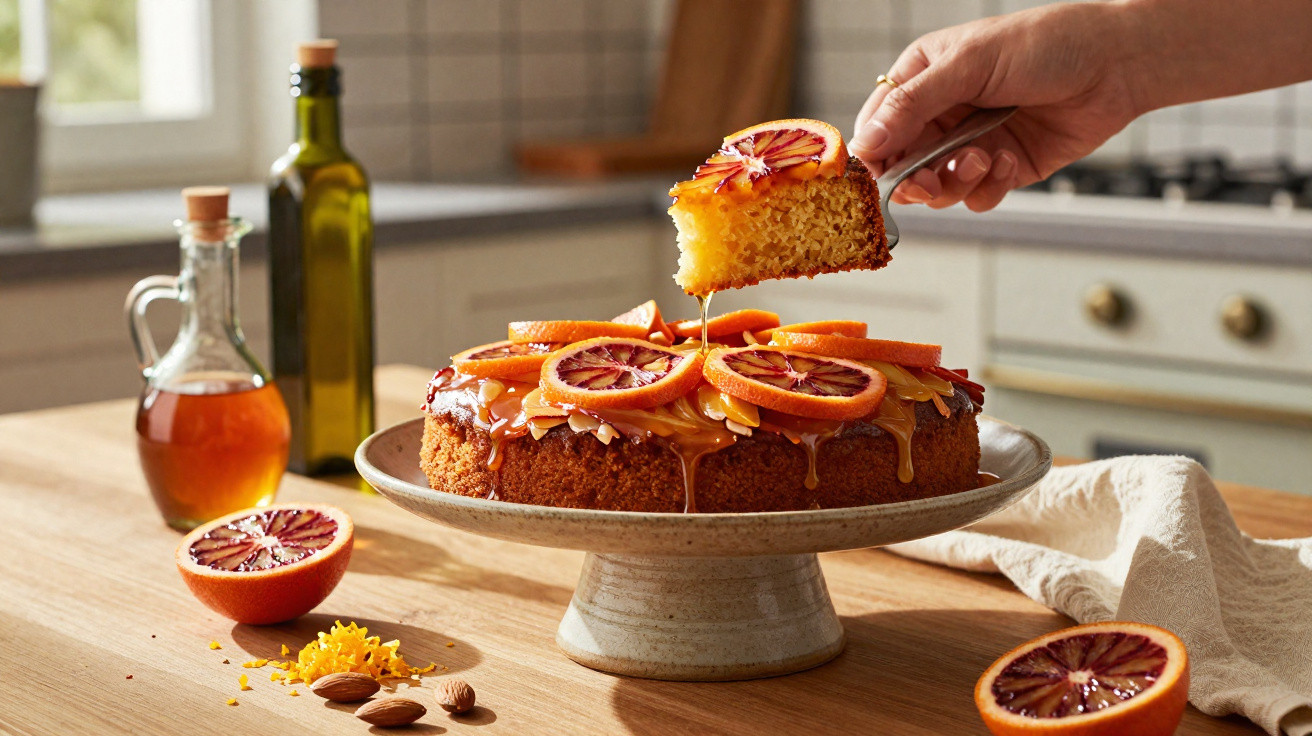
An unassuming sponge cake, a spring afternoon – and a fragrance that fills the entire kitchen.
Anyone who arrives late to the serving plate will miss out.
This cake looks as though it came from a patisserie, yet it requires only a handful of ingredients and a little patience. Its standout feature is an ingredient many people reserve for salads or pasta: it gives the crumb remarkable moisture and an almost melt-in-the-mouth texture – and leaves everyone at the table surprised.
A spring cake with a wow factor
This cake combines citrus, almonds and a generous pour of vegetable oil – specifically, good-quality olive oil. Anyone feeling doubtful is far from alone. Butter is what most people automatically expect in a cake, but this substitution is precisely what sets it apart.
“Rather than heavy butter, olive oil adds delicate fruitiness and keeps the cake moist for days.”
Blood oranges in particular create a flavour combination rarely found in an ordinary sponge cake. Their fresh acidity and faint bitterness are balanced by the oil’s soft, rounded character. Together, they taste noticeably more harmonious without becoming greasy.
The ingredient that surprises everyone: olive oil instead of butter
In the original recipe, olive oil replaces butter entirely. It is not a compromise, but a deliberate technique from Mediterranean cooking, where olive oil has long been used not only in salads but in sweet bakes too.
- Benefit 1: The cake remains soft even after two or three days.
- Benefit 2: Its crumb becomes more tender, almost silky.
- Benefit 3: The citrus flavours come through more clearly.
Choosing the right oil matters. A particularly robust, intensely grassy olive oil can overwhelm the other flavours. A medium-fruity, relatively mild variety is a better choice, as it blends in more harmoniously.
What goes into the orange and almond cake
The bake has a simple foundation based on a classic sponge mixture. The quantities in the original recipe make an aromatic, moist cake for eight to ten people:
| Ingredient | Quantity | Role in the batter |
|---|---|---|
| Self-raising flour | 185 g | Structure and volume |
| Ground almonds | 120 g | Moisture and delicate flavour |
| Icing sugar | 220 g | Fine sweetness and a smooth crumb |
| Olive oil | 125 ml | Fat, binding and moisture |
| Eggs | 3 | Structure, lift and colour |
| Blood orange juice | 125 ml | Moisture, flavour and acidity |
| Zest of one blood orange | from 1 fruit | Intense citrus fragrance |
| Bicarbonate of soda | ½ tsp | A finer crumb and additional lift |
There is also a syrup made with more blood oranges, water and sugar. Thin orange slices are cooked in it, then later arranged over the cake like glossy, lightly translucent discs. It has the appearance of something from a bakery, but is entirely homemade.
Step by step to a moist orange cake
1. Prepare the oranges in syrup
Start with the syrup. Put water, blood orange juice and sugar into a saucepan and bring them slowly to the boil. Add thin slices of orange, then leave them to simmer gently until they are soft and almost transparent.
This stage serves several purposes: the fruit loses some of its bitterness, absorbs sweetness and later contributes both flavour and shine. If desired, reserve the remaining syrup to soak the finished cake afterwards.
2. Mix the batter – with a light touch
The details matter when making a sponge mixture. Mixing for too long makes it tough, while mixing too little leaves lumps behind. The original recipe therefore recommends a clear method:
- Preheat the oven to around 170°C conventional heat.
- Grease and line a round tin measuring about 22 cm with baking paper.
- Thoroughly combine all the dry ingredients: flour, almonds, icing sugar and bicarbonate of soda.
- In a separate bowl, briefly mix the eggs, olive oil, blood orange juice and zest.
- Add the liquid mixture to the flour mixture and stir only until no flour remains visible.
“The batter should look smooth, but not shiny from being ‘overmixed’. Once it is uniform, that is enough.”
Fill the tin, then bake the cake until a wooden skewer inserted into the centre comes out clean. Allow it to cool in the tin afterwards so that it does not break.
Common mistakes – and how to avoid them
Anyone baking this cake and aiming for the same melt-in-the-mouth result should be aware of a few potential pitfalls:
- Olive oil that is too strong: Choose a milder oil so the flavour does not taste soapy.
- Too much bicarbonate of soda: Half a teaspoon is sufficient. Any more can leave an unpleasant aftertaste.
- Baking for too long: The cake will dry out, so test it with a skewer in good time.
- Overmixing: This produces a dense, rubbery crumb. Work gently.
Following these points produces a delicate, slightly moist crumb that almost dissolves on the tongue by itself.
How to give the cake a patisserie-style shine
Once cool, remove the cake from the tin. Now use the prepared orange slices, arranging them closely across the surface with no gaps. Finish by drizzling over syrup until the top looks glossy and slightly sticky.
This step turns a simple sponge cake into a real centrepiece. The benefit is that the syrup lightly soaks into the top layer, intensifying the citrus flavour without making the cake soggy.
Variations with other citrus fruits
If blood oranges are unavailable, the cake can easily be adapted. The combination of almonds, olive oil and citrus remains the same; only the fruit variety changes:
- Oranges: Classic and a little milder, ideal for children.
- Lemons: Much fresher, with pronounced acidity.
- Grapefruit: Bitter and intriguing, better suited to adults.
- A mixture: Juice from orange, lemon and lime for a more complex flavour.
The amount of sugar can be adjusted slightly according to how sharp the fruit is. For a more intense result, increase the amount of zest, as this is where most of the fragrance is found.
How long the cake stays moist
One advantage of this recipe idea is how well the cake keeps. Thanks to the olive oil, juice and syrup, it stays soft for several days when stored in an airtight container at room temperature.
This is especially useful for anyone who likes to prepare ahead: the cake often tastes even better on the second day, once the flavours have had time to combine. Just before serving, it can be drizzled with a little more syrup to make it seem freshly baked.
Why olive oil works in sweet baking
For many people, olive oil in a cake initially sounds unusual. On closer inspection, however, it is an unexpectedly good fit. It contains unsaturated fatty acids and remains stable during baking. The batter dries out less than it can with some light vegetable oils.
At the same time, a good olive oil enhances the fruity notes of citrus. Anyone who has tasted a high-quality oil on its own will recognise its gently fruity, sometimes even apple-like character. Paired with orange or lemon, it creates a harmonious overall flavour that does not taste “savoury” at all.
Anyone wishing to ease into it can combine part of the olive oil with a neutral vegetable oil on their first attempt. This allows the flavour to be introduced gradually without the cake losing its moisture.

















Comments
No comments yet. Be the first to comment!
Leave a Comment