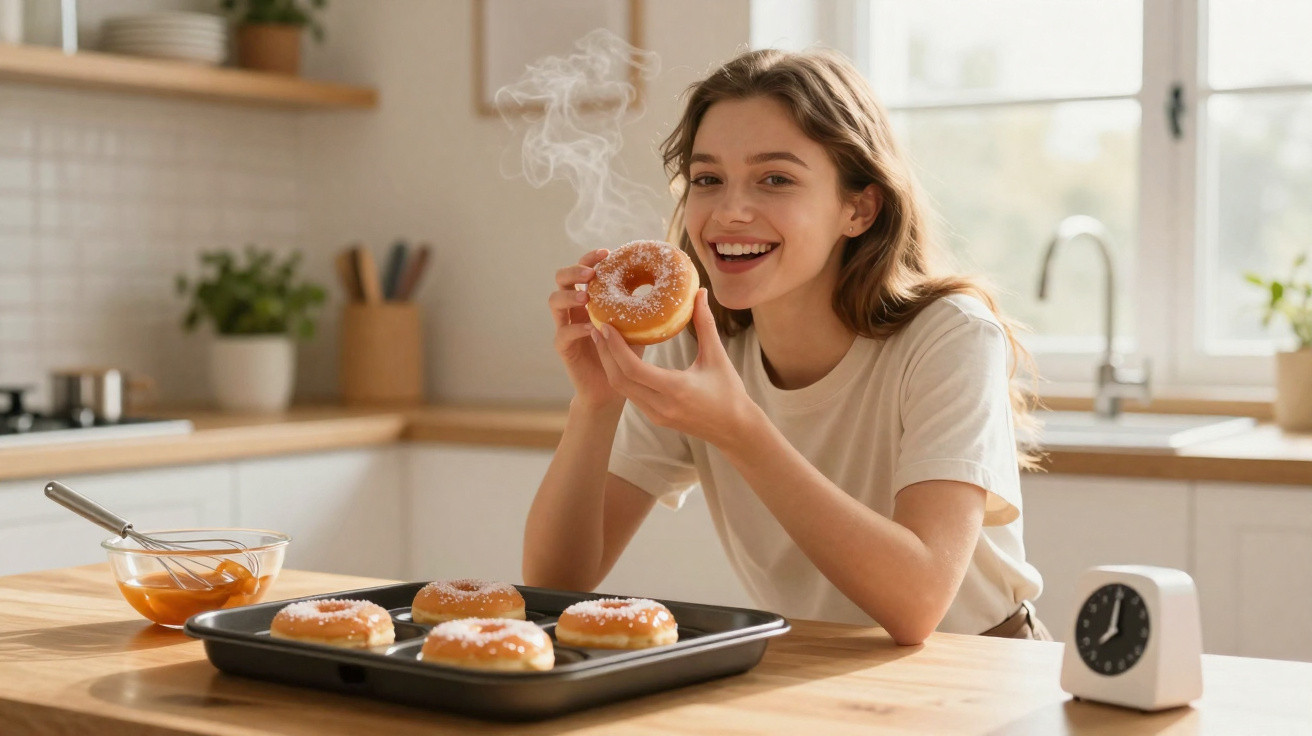
Forget the pan of scorching oil and lengthy wait: a different type of “doughnut” is subtly changing the way we enjoy a treat.
Made with puff pastry, apple and a spell in an air fryer or oven, this speedy recipe transforms a traditionally heavy carnival favourite into an option that is lighter, quicker and suitable for a weeknight.
A 2024 update for a carnival favourite
Mardi Gras has traditionally been a chance to indulge in fat and sugar ahead of Lent, when many people once avoided rich foods for several weeks. The custom remains, even though rigorous religious fasting is now uncommon. Supermarket shelves fill with deep-fried doughnuts, fritters and churros, while the scent of cooking oil takes over home kitchens.
Increasingly, however, home cooks want a festive bake that will not interrupt healthier eating for days afterwards. This is where the 15-minute doughnut shortcut fits in. It borrows the comforting appeal of a beignet while leaving out the deep fryer and yeast.
These doughnuts are built around apple rings wrapped in puff pastry, baked until caramelised, with no deep-frying and no resting time.
The finished result sits somewhere between a doughnut and a miniature apple pie, with crisp, flaky pastry surrounding tender fruit, cinnamon sugar and sufficient sweetness to make it feel celebratory.
What is in these “no-fry” doughnuts?
The recipe uses familiar supermarket staples alongside one useful shortcut: ready-rolled puff pastry. There is no kneading, no bowls for proving dough taking over the worktop, and no need to monitor the temperature of hot oil.
Essential ingredients for around six doughnuts
- 1 large apple, preferably firm and slightly tart
- 1 sheet of ready-rolled puff pastry, preferably rectangular
- 1 teaspoon soft brown or cane sugar
- 1 teaspoon ground cinnamon
- 1 egg yolk combined with 1 tablespoon milk, for brushing
- A small handful of flaked almonds (optional)
- 1 teaspoon icing sugar, for dusting
Sugar, cinnamon and milk are already in most cupboards. Puff pastry may be the only additional purchase, although it has become an understated staple for fast desserts, usually found in the fridge beside pizza bases and ready-rolled pastry cases.
Turning an apple into a doughnut in around 15 minutes
The process is remarkably straightforward. An apple corer or small circular cutter is the only equipment that is particularly helpful, although a sharp knife and some patience will work instead.
Method, step by step
- Wash the apple and cut it into rings roughly 1 cm thick.
- Remove the core from every slice with a corer or small cutter, creating tidy rings.
- Open out the puff pastry and slice it into strips about 2 cm wide.
- Combine the sugar and cinnamon, then dust the pastry strips lightly with some of the mixture.
- Wind the strips around each apple ring, overlapping them slightly until the apple is covered.
- Whisk together the egg yolk and milk, then brush it over the pastry-wrapped rings.
- Scatter over the flaked almonds and the remaining cinnamon sugar.
At this stage, they resemble doughnuts already, although they are still pale and uncooked. Rather than going into a pan of hot oil, place them directly in an air fryer basket or on a baking tray.
Air fryer or oven: which is better?
Both approaches have been tried by home cooks, and each offers a different result.
| Method | Temperature | Approximate time | What you get |
|---|---|---|---|
| Air fryer | 180°C | About 30 minutes | Deep golden colour, slightly more caramelised edges |
| Oven | 200°C | About 20 minutes | Even bake, a little gentler on very thin pastry |
After baking, allow the doughnuts to cool for a short time on a rack before dusting them with icing sugar. As they cool, they become a little firmer, helping the pastry layers stay flaky instead of turning soft and steamy.
By skipping the fryer, you cut down on both fat and mess, while gaining control over texture and flavour.
Why these doughnuts seem lighter than standard versions
Conventional doughnuts are frequently made with enriched yeast dough before being deep-fried at approximately 180°C. As they cook, they take on oil, creating their recognisable rich fried flavour while also increasing calories and saturated fat.
In this recipe, most of the fat comes from puff pastry, which already includes butter or vegetable fat. Since the doughnuts bake rather than sit submerged in oil, the crust does not absorb additional fat. The apple at the centre adds moisture and natural sweetness, allowing for comparatively little added sugar beside a jam-filled ring from a supermarket bakery.
That does not turn them into health food, but it changes the overall balance. They fall between a pastry and a fruit dessert, which is precisely the appeal: a treat that does not feel like a shock to the system.
Tips, variations and little changes with a big effect
Selecting the best apple
The apple is not simply a filling. It influences both the flavour of the entire doughnut and how it performs during baking.
- Firm, tart apples such as Granny Smith retain their form and preserve some bite.
- Sweeter varieties including Gala or Braeburn become softer, producing a comforting centre that is almost like compote.
- Avoid very floury apples, as they may collapse and release too much juice.
Slices that are too thin tend to collapse, whereas overly thick rings can remain slightly undercooked. For most apple varieties, about 1 cm offers a useful middle ground.
Simple flavour upgrades
The basic recipe is uncomplicated, but several small adjustments can give it a new character each time:
- Stir a pinch of nutmeg or mixed spice into the cinnamon sugar.
- Replace the flaked almonds with chopped hazelnuts or pecans.
- For a glossy finish, brush the cooked doughnuts with a little warm apricot jam rather than using icing sugar.
- Offer them warm with plain yoghurt at breakfast, or add a scoop of vanilla ice cream for dessert.
Why 15-minute recipes such as this are becoming popular
The absence of oil is not the only important point. The real appeal lies in combining speed with familiarity. Everyone has an idea of how a doughnut should be: soft, sweet and slightly indulgent. Yet people also recognise that a full yeasted recipe is not always realistic on a Tuesday evening.
Puff pastry and air fryer shortcuts occupy that middle ground. They provide the satisfaction of “baking something proper” without a lengthy ingredient list or specialist ability. Families also benefit because children can help wind the pastry strips and scatter toppings, making it a short kitchen activity instead of a one-person task.
Practical matters: storing, reheating and making batches
As they contain fresh apple, these doughnuts are at their best on the day they are baked. Stored at room temperature in an airtight container, they retain their texture for several hours. Beyond that point, the pastry starts to soften as moisture gradually escapes from the apple.
A few minutes in an air fryer or hot oven can restore some of their crispness. A microwave, on the other hand, usually leaves the pastry chewy. If making a batch, prepare double the amount, cook only what is needed, then refrigerate the remaining pastry-wrapped apple rings for one or two days and bake them fresh later.
From indulgence to routine: how lighter treats influence behaviour
Recipes of this kind also have a psychological dimension. When treats seem a little less “off limits”, people may be more inclined to include them within a balanced way of eating, rather than alternating between strict restriction and complete excess. A baked doughnut containing fruit and a moderate quantity of sugar can fit alongside everyday choices without bringing guilt or a later urge to compensate.
This is not to suggest that puff pastry doughnuts should be eaten daily. Instead, home cooks are expanding their collection of treats based more on fruit, baking and awareness of portions, and less on frying and rich fillings. This recipe is only one example, but it demonstrates how modest technical switches – replacing a fryer with hot air and plain dough with apples – can gradually alter long-established food traditions while keeping the enjoyment intact.

















Comments
No comments yet. Be the first to comment!
Leave a Comment